


Uw mailinglijst is een digitaal portaal – een directe lijn naar uw publiek, een waardevol marketingkanaal en een van de beste plekken om contact te leggen met uw klanten.
Een kwalitatieve nieuwsbrief kan veel doen, van het aankondigen van nieuwe producten, diensten en aanbiedingen, tot het doorgeven van nuttige informatie aan uw publiek en het bevorderen van klantbehoud. U kunt nieuwsbrieven versturen om uw klanten om feedback te vragen, of klantverhalen en praktijkvoorbeelden te laten zien. Maar wat zijn enkele van de beste praktijken als het gaat om het schrijven van nieuwsbrieven voor digitale productwinkels in het bijzonder?
In dit artikel hebben we een korte gids samengesteld om u te helpen uitstekende nieuwsbrieven te maken voor uw eigen digitale productwinkel!
Ken uw redenen
Het is belangrijk om de redenen te begrijpen waarom u überhaupt nieuwsbrieven voor digitale productwinkels verstuurt, omdat het niet iets is wat u willekeurig wilt doen. Waarom zouden uw klanten geïnteresseerd zijn? Wat heeft u te zeggen? Waarom neemt u contact op? Wat hoopt u te bereiken?
Sommige merken kiezen ervoor om hun leden non-stop te bestoken met eindeloze e-mails, in de hoop genoeg verkopen te converteren door het pure volume van marketing. Als dat uw stijl is en het werkt voor u, ga ervoor, maar er valt veel te zeggen voor het behandelen van uw klanten met respect en aandacht voor hun tijd en aandacht.
Wees duidelijk over uw redenen voor het versturen van nieuwsbrieven, of u nu nieuwe producten wilt promoten, nieuwe blogposts wilt delen, nieuws, klantverhalen of iets heel anders. Als u een doel voor ogen heeft, is het veel gemakkelijker om een goed gestructureerde en relevante nieuwsbrief te maken.
U kunt een nieuwsbrief versturen wanneer u wilt:
- Een nieuw product promoten
- Een aanbieding aankondigen
- Om feedback vragen
- Klanten een overzicht geven van recent nieuws en content
- Verhalen en interviews van klanten en experts uit de branche delen
- Nieuwe partnerschappen aankondigen
Uw publiek informeren
Het promoten van uw producten is uiteraard een essentieel onderdeel van het runnen van een bedrijf – maar het promoten van uw producten met kwalitatieve content is de 'sweet spot' die zorgt voor een werkelijk boeiende nieuwsbrief. Hier komt het informeren van uw publiek om de hoek kijken.
Het is niet dat u niet wilt verkopen; het is gewoon dat u zich wilt richten op betrokkenheid en waarde. Hoe meer betrokken uw publiek is, hoe meer klanten u behoudt (en hoe meer producten die klanten zullen kopen).
Als u al een blog heeft, noteer dan welke posts relevant zijn voor uw nieuwe producten. Als u geen blog heeft, overweeg er dan een te starten! Blogposts die nuttige informatie bieden met betrekking tot uw branche kunnen veel nieuwe klanten aantrekken en bestaande klanten terug laten keren naar uw site.
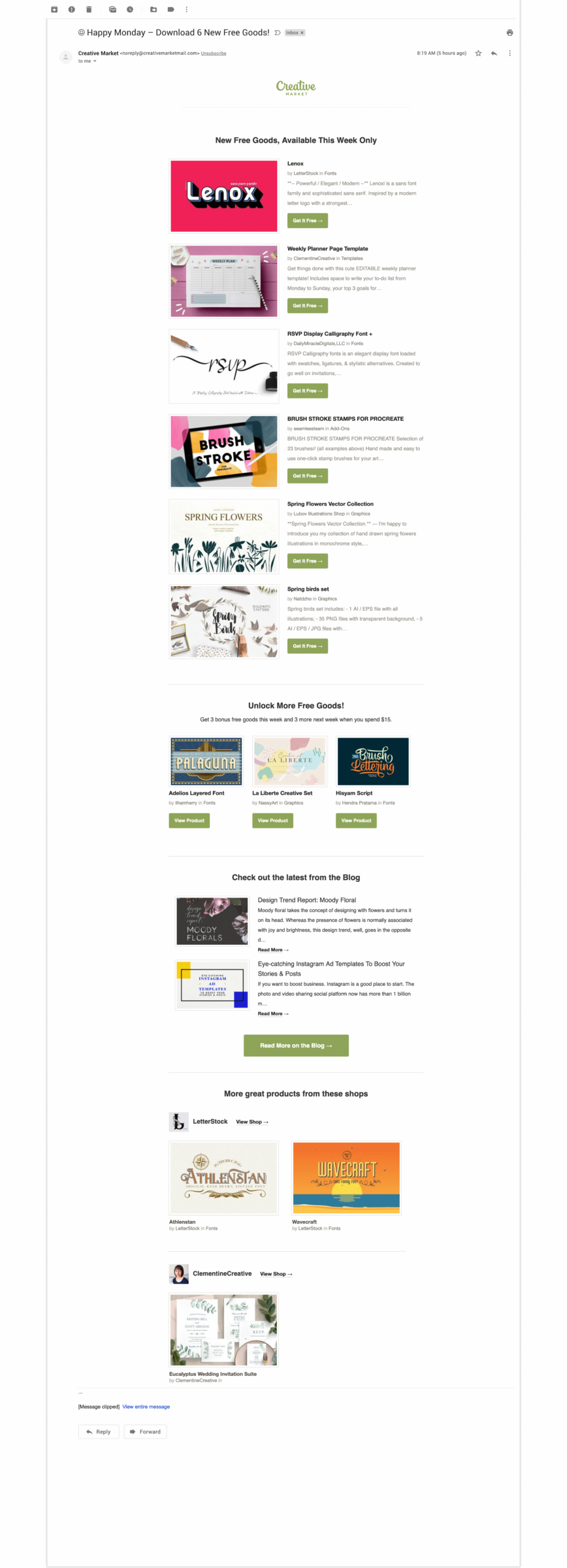
Kijk maar eens naar dit voorbeeld van Creative Market. De nieuwste gratis items worden eerst vermeld, gevolgd door een speciale aanbieding waarbij klanten extra gratis items kunnen krijgen bij besteding van $15, gevolgd door een paar relevante blogposts:
Creëer betekenisvolle berichten
Uw klanten simpelweg vertellen over nieuwe dingen is – op zijn best – functioneel. Op een betekenisvolle manier communiceren daarentegen is gedenkwaardig en effectief.
Een groot deel hiervan is simpelweg relevantie. De meeste mensen zullen zich vrolijk afmelden of uw nieuwsbrieven rechtstreeks naar de spammap sturen als ze te veel inhoud ontvangen die niet relevant is voor hun interesses. Houd dit in gedachten bij het segmenteren van uw e-maillijst (meer hierover later).
Maar het gaat niet alleen om relevantie; attent zijn over de berichten die u naar uw klanten stuurt, gaat hand in hand met het creëren van klantvertrouwen en het opbouwen van relaties die bijdragen aan het langetermijnsucces van uw winkel. Dit betekent dat u, naast het geven van een nauwkeurige (en letterlijke) beschrijving van welk product, aanbieding of inhoud u ook met hen deelt, een emotionele band wilt creëren.
Dit kan iets simpels zijn als de klant de voordelen van het gebruik van het product laten inbeelden; bijvoorbeeld, "laat u inspireren", "bespaar tijd" of "verbeter uw vaardigheden". Of het kunnen dingen zijn als statistieken, getuigenissen of klantvoorbeelden. Alles wat helpt om het concept van uw producten te vertalen naar haalbare resultaten in de echte wereld, zorgt niet alleen voor een veel interessantere lectuur; het overbrugt ook de kloof tussen de klant en de verkoop.
Bied oplossingen voor problemen
Uw klanten hebben zich aangemeld voor uw e-maillijst omdat ze informatie willen over nieuwe productreleases, of omdat ze de inhoud en informatie die u verstrekt waarderen, of beide! In ieder geval zoeken ze naar oplossingen voor hun problemen, of om op de een of andere manier aan hun behoeften te voldoen.
Hoe meer u deze problemen en behoeften kunt identificeren, hoe meer u ze kunt aanspreken via uw nieuwsbrief. Denk na over wat uw doelgroep zoekt en structureer uw teksten, berichten en aanbiedingen daaromheen.
Het aanbieden van oplossingen werkt samen met het creëren van betekenisvolle berichten, omdat de focus ligt op waarde. Klanten waarderen resultaten in de echte wereld – met andere woorden: oplossingen.
Personaliseer de ervaring
Het personaliseren van uw nieuwsbrieven kan enorm effectief zijn als het gaat om het verbinden met bepaalde subgroepen van uw e-maillijst. Denk er eens over na: heeft u verschillende categorieën klanten? Klanten die de neiging hebben bepaalde soorten producten te kopen, of verschillende categorieën inhoud op uw site te consumeren? Degenen die uw producten voor verschillende doeleinden gebruiken (zoals hobbyisten versus professionals) of binnen verschillende sectoren of niches?
Het segmenteren van uw publiek op basis van zaken als aankoopgeschiedenis en gebruikersgedrag kan u helpen om effectiever relevante en nuttige informatie te communiceren aan de juiste mensen. Misschien heeft u een nieuwe reeks producten die bijzonder interessant is voor een bepaalde groep; in dit geval wilt u uw nieuwsbrief (inclusief de producten en aanbiedingen die u promoot, evenals blogposts, nieuws en klantvoorbeelden die u promoot) vormgeven rond wat die groep aanspreekt.
Bandcamp stuurt regelmatig nieuwsbrieven uit met een gepersonaliseerde samenvatting van nieuwe releases, blogposts en artiestenverhalen die de abonnee kunnen aanspreken op basis van de aankoopgeschiedenis:
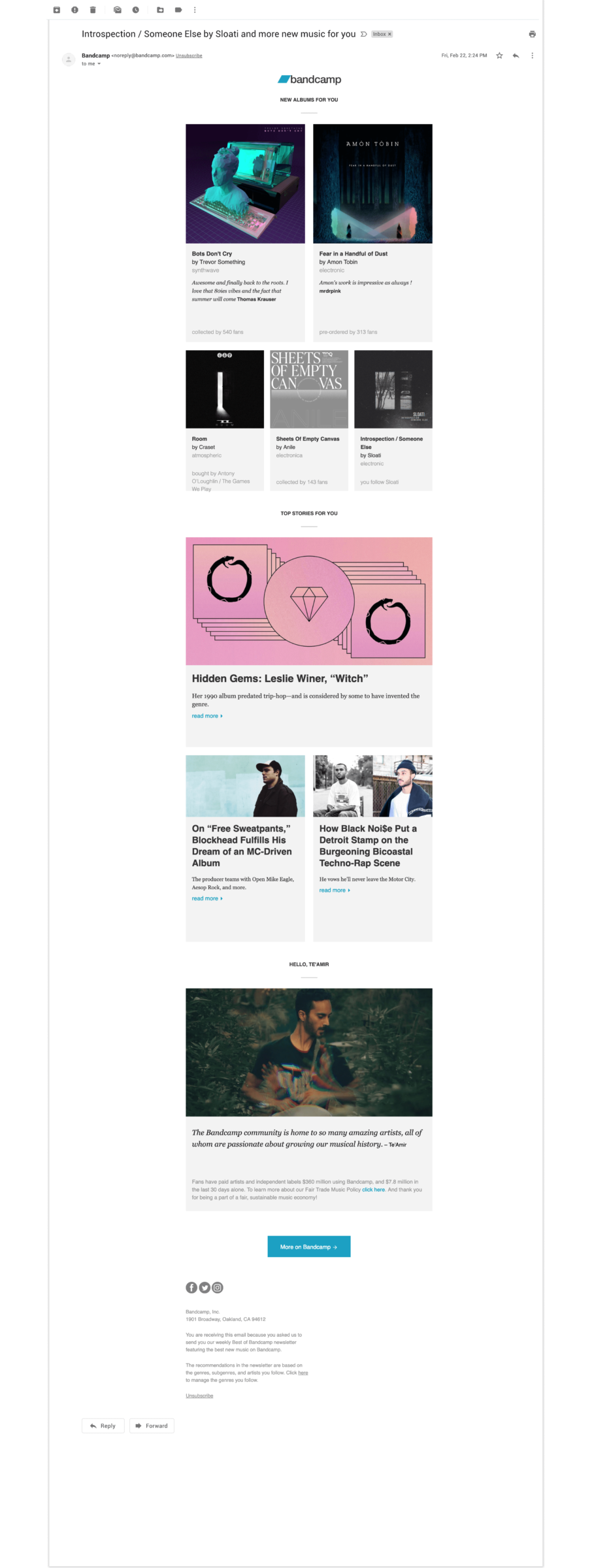
Het personaliseren van de aanhef van een nieuwsbrief voor specifieke abonnees is ook een beproefde methode – en het is een veelvoorkomende functie van de meeste e-mailmarketingdiensten zoals MailChimp. Iets simpels als het aanspreken van uw abonnees met hun naam kan bijdragen aan het ontwikkelen van een persoonlijkere band met hen.
Houd het ontwerp minimaal
Als het gaat om nieuwsbrieven voor digitale productwinkels, is minder vaak meer. Een onopgesmukt, overzichtelijk, minimaal ontwerp maakt het voor abonnees gemakkelijk om de belangrijkste informatie te identificeren – en het zorgt ook voor een veel prettigere ervaring!
Inhoud die is georganiseerd in gemakkelijk te consumeren secties laat uw abonnees zien dat u hun tijd respecteert, en u gaat deze niet verspillen aan overbodige of irrelevante zaken. Onthoud dat mensen genoeg te doen hebben in hun eigen leven, en als u hun aandacht wilt behouden, wilt u zo min mogelijk van hen eisen.
Wees vriendelijk
Wanneer heb je voor het laatst met plezier een zeer technische nieuwsbrief gelezen? Wat zeg je? Nooit?
Oké, misschien ben je daarvan, maar laten we eerlijk zijn: de meeste mensen willen niet te hard nadenken als ze een nieuwsbrief lezen – daar zijn diepgaande posts, cursussen en onderzoeksdocumenten voor! Wat nieuwsbrieven betreft, wilt u dat uw communicatie verteerbaar is.
Bovendien, ook al wilt u uw publiek informeren, het bereiken van de beste resultaten gebeurt door het op een uitnodigende en benaderbare manier te doen. Houd uw taalgebruik vriendelijk; u kunt zelfs dingen gebruiken zoals emoji's en leuke onderwerpregels om dingen te laten opvallen in de inbox van de klant – en voeg ook wat persoonlijkheid toe!
De uitsplitsing
Dus, welke structuur is standaard voor nieuwsbrieven over digitale producten? Gebaseerd op talloze voorbeelden die we hebben gezien (inclusief onze eigen nieuwsbrieven), zou je deze vijf basiselementen in een productgerichte nieuwsbrief moeten hebben:
- Uw bedrijfslogo
- Uw nieuwsbriefkop, zoals:
- De naam van uw product(en)
- “Nieuw bij [merknaam]”
- “Laatste keuzes voor u”
- “Nieuwe aankomsten waar u van zult houden”
- “Speciale aanbieding”
- “Uitverkoop in de hele winkel”
- Afbeeldingen van uitgelichte producten
- Korte beschrijvingen van het product/de producten en de aanbieding(en)
- Call(s) to action links of knoppen (zoals “nu kopen” of “meer informatie”)
U kunt ook opnemen:
- Links naar relevante blogposts
- Links naar andere nuttige bronnen
- Klantverhalen en getuigenissen
- Echte gebruiksscenario's
- Citaten en interviews van branche-experts
- Partnerdeals
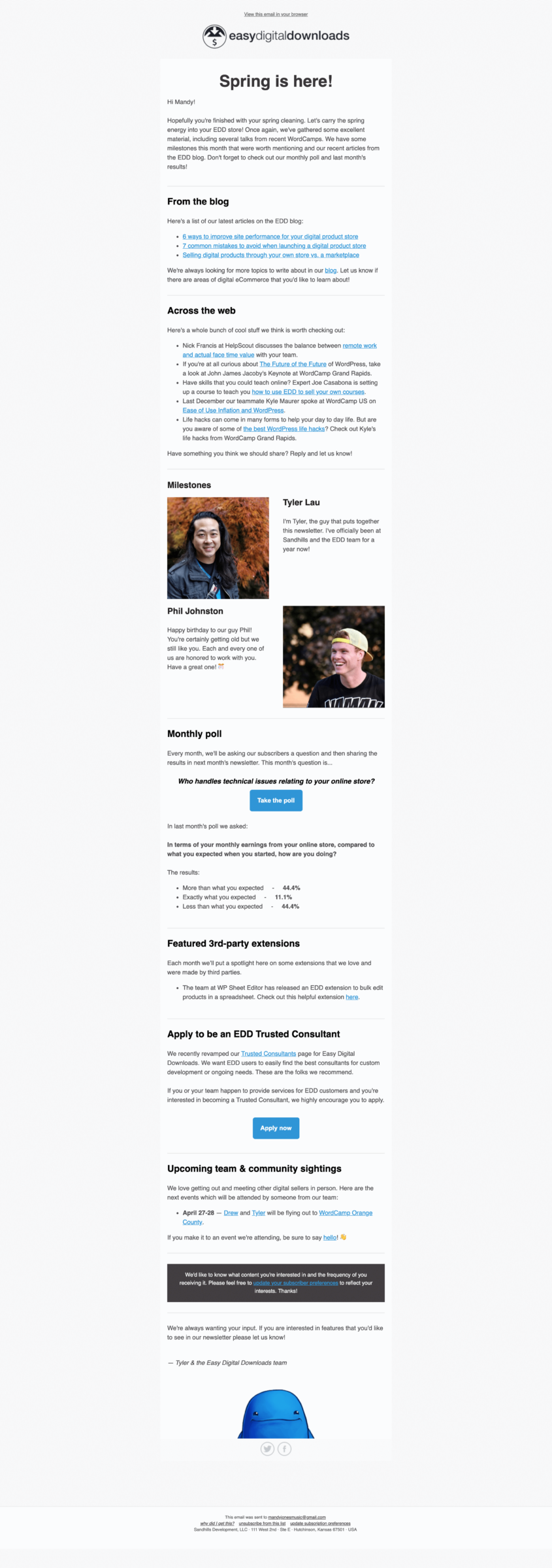
Als je een seizoensgebonden of driemaandelijkse nieuwsbrief samenstelt, overweeg dan om mijlpalen van het bedrijf en teamleden te erkennen, enquêtes en polls in te sluiten, en eventuele andere aankondigingen of weetjes op te nemen waarvan je denkt dat je klanten ze interessant zullen vinden! Bekijk onze eigen nieuwsbrief voor enkele voorbeelden:
Wat zijn jouw meest effectieve praktijken als het gaat om het maken van nieuwsbrieven voor je eigen digitale productwinkel? We horen graag van je, dus laat hieronder een reactie achter en doe mee aan het gesprek!
Illustratie door Jessica Johnston.