

AI-tools veranderen hoe kopers producten vinden, en de verschuiving heeft al invloed op digitale verkopers.
Google AI Overviews verschijnen nu boven organische resultaten in standaardzoekopdrachten. ChatGPT en Perplexity bevelen producten bij naam aan in gespreksgerichte antwoorden. Google AI Mode biedt gebruikers een speciale AI-gestuurde zoekervaring. De meeste digitale productwinkels zijn niet ingesteld om in een van deze te verschijnen.
Deze gids behandelt hoe u dat kunt veranderen: van het schrijven van productbeschrijvingen die AI daadwerkelijk kan lezen tot het toevoegen van schema-markup, het opbouwen van autoriteit buiten de site en ervoor zorgen dat AI-crawlers toegang hebben tot uw winkel.
Als u EDD gebruikt met AIOSEO, kost het meeste hiervan een middag, geen ontwikkelaar nodig.
- Belangrijkste punten
- Waarom AI-tools deel uitmaken van hoe mensen digitale producten vinden
- Schrijf productbeschrijvingen die AI-systemen daadwerkelijk begrijpen
- Voeg de gestructureerde gegevens toe die ervoor zorgen dat u wordt geciteerd
- Gebruik uw productrelaties als een AI-ontdekkingssignaal
- Zorg ervoor dat AI-crawlers uw winkel kunnen vinden
- Bouw de off-site signalen waar AI-tools op vertrouwen
- Houd uw zichtbaarheid in de loop van de tijd groeiend
- Veelgestelde vragen: Digitale producten vinden via AI-zoekopdrachten
Belangrijkste punten
| Conclusie | Detail |
|---|---|
| AI heeft gestructureerde gegevens nodig | Schema-markup helpt ChatGPT en Perplexity uw productpagina's vol vertrouwen te lezen en te citeren. |
| Productbeschrijvingen doen dubbel werk | Schrijf ze voor menselijke kopers en AI-systemen. Specificiteit en natuurlijke taal zijn beide belangrijk. |
| Productrelaties zijn een signaal | Hoe uw producten zich tot elkaar verhouden, vertelt AI wat aan te bevelen wanneer shoppers vragen stellen. |
| Reviews bouwen AI-autoriteit op | Reviews van derden op de juiste platforms zijn een van de sterkste vertrouwenssignalen voor AI-tools. |
| Technische toegang is belangrijk | Als AI-crawlers worden geblokkeerd, helpt niets van het bovenstaande. |
Waarom AI-tools deel uitmaken van hoe mensen digitale producten vinden
Shoppers zoeken niet langer alleen op Google. AI-gestuurde productontdekking vindt op grote schaal plaats en de gegevens erachter zijn moeilijk te negeren.
Alleen al tijdens de feestdagen van 2025 groeide het verkeer naar retailwebsites van AI-tools met 693%, aldus Adobe Analytics. AI-verwezen bezoekers converteerden ook 31% meer dan bezoekers uit andere bronnen. Dat is geen klein signaal.
🧐 Dit is wat dat in de praktijk betekent: Google AI Overviews verschijnen bovenaan de reguliere zoekresultaten, vóór enige organische link. ChatGPT Shopping stelt gebruikers in staat om producten te onderzoeken en te vinden in een gesprek. Perplexity Instant Buy toont producten direct binnen antwoorden. Google AI Mode biedt gebruikers een speciale AI-gestuurde zoekervaring.
Geen van deze vereist dat een gebruiker zijn normale zoekgedrag verandert. Ze zijn er al in ingebouwd.
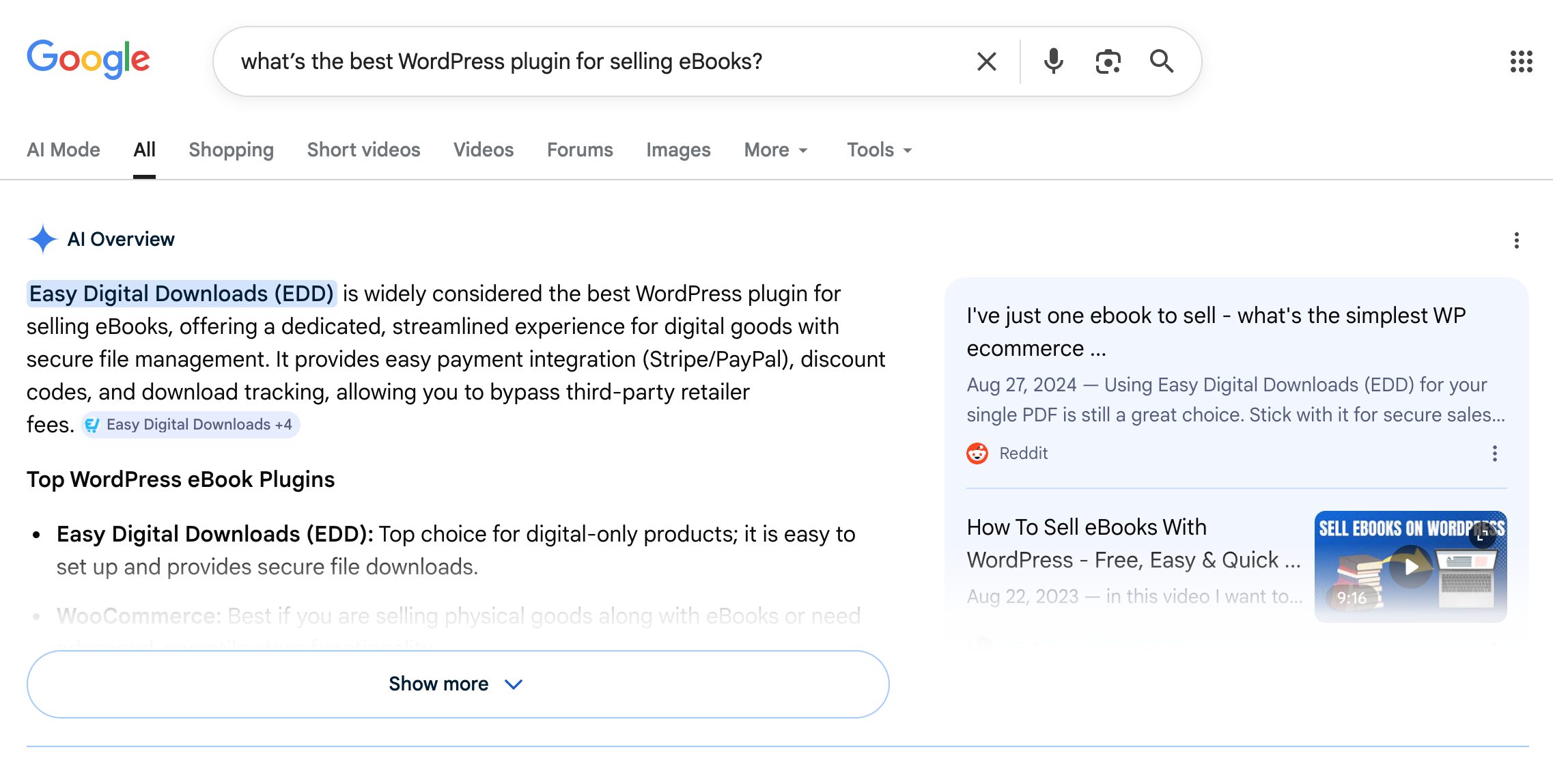
De kans voor verkopers van digitale producten is specifiek. AI-tools linken niet zomaar naar uw winkel. Ze bevelen producten bij naam aan als reactie op vragen als "wat is de beste WordPress-plugin voor het verkopen van e-books?" of "welk cursusplatform rekent geen transactiekosten?". Als uw winkel is ingesteld om geciteerd te worden, kunt u in die antwoorden verschijnen voordat de koper zelfs maar heeft besloten waarnaar hij vervolgens moet zoeken.
Deze praktijk heeft een naam: Generative Engine Optimization (GEO). Het is het proces om uw inhoud en producten citeerbaar te maken door AI-tools. Zie het als SEO voor de AI-laag.
Eén belangrijk onderscheid: traditionele SEO-rankings garanderen geen AI-zichtbaarheid. Een pagina kan #1 scoren op Google en nooit verschijnen in een AI-antwoord. De twee systemen overlappen, maar volgen verschillende regels.
Schrijf productbeschrijvingen die AI-systemen daadwerkelijk begrijpen
Het belangrijkste dat u kunt doen om uw digitale productvermeldingen voor AI te optimaliseren, is uw productbeschrijvingen verbeteren.
AI-tools matchen producten met conversatievragen door uw beschrijvingen te lezen en te vergelijken met wat de gebruiker heeft gevraagd. Dunne of vage beschrijvingen geven AI niet genoeg om mee te werken. Uw producten worden simpelweg niet geciteerd.
Wees specifiek over wat het product doet en voor wie het bedoeld is
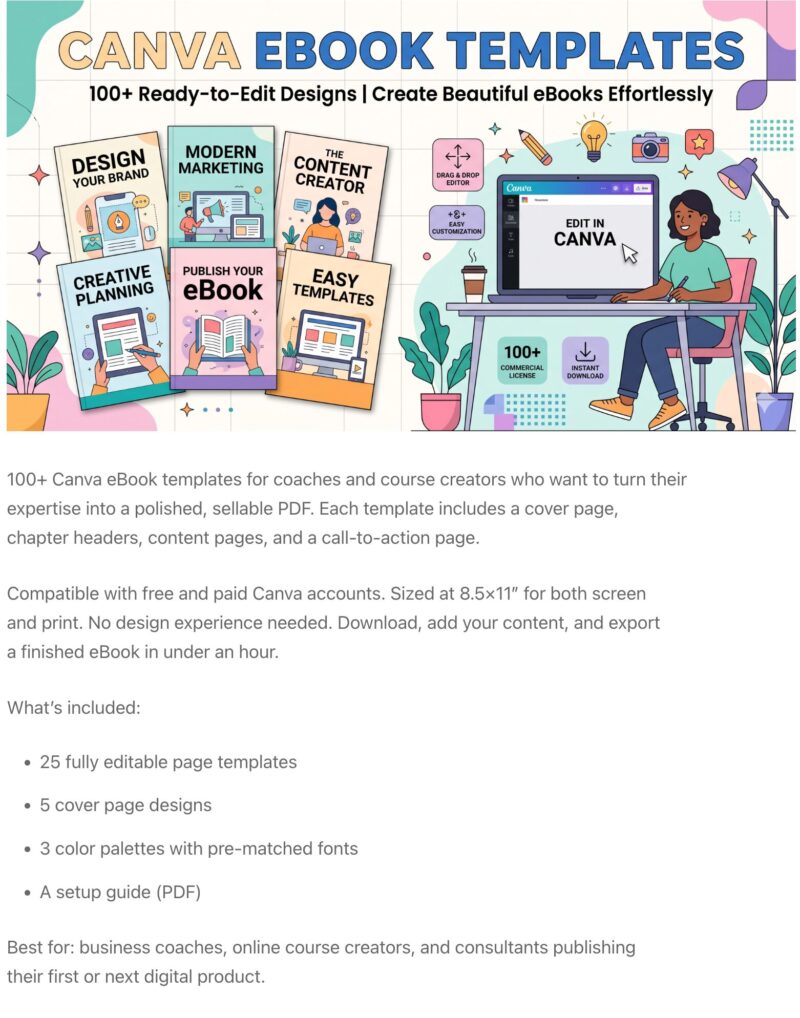
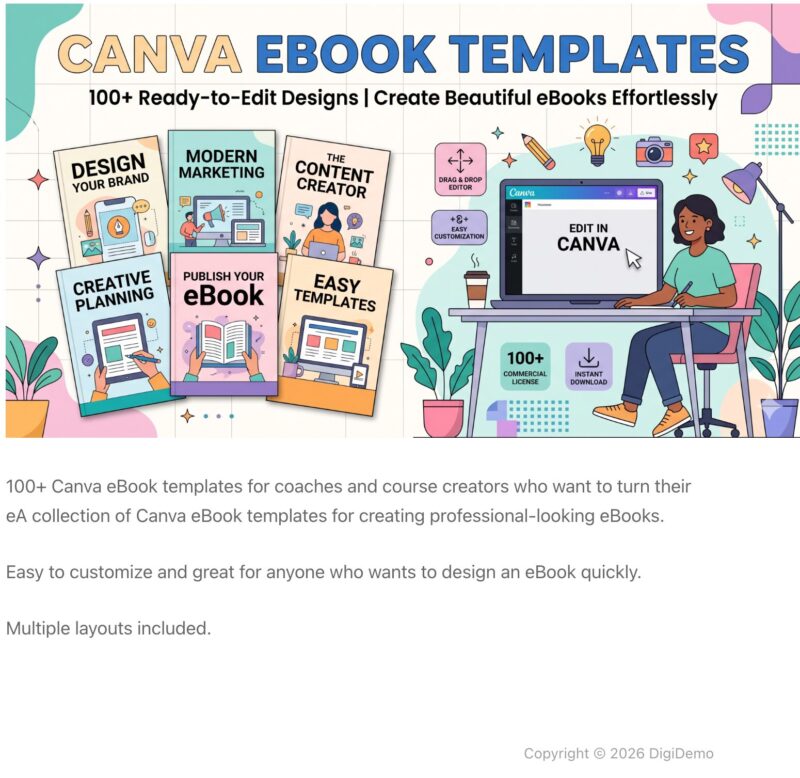
Een product genaamd "Social Media Templates Pack" vertelt een AI-tool bijna niets. Templates voor wie? Voor welk platform? Voor welk resultaat? Wanneer een gebruiker vraagt "wat zijn de beste Instagram-templates voor fitnesscoaches?", slaat AI een vage vermelding over omdat het de match niet kan maken.
De oplossing is specificiteit. Elke productbeschrijving moet vier dingen bevatten: het gebruiksscenario, het formaat, de beoogde doelgroep en het resultaat.
"50 Instagram-story-templates voor fitnesscoaches, bewerkbaar in Canva, formaat voor mobiel en klaar om in minder dan vijf minuten aan te passen" geeft AI iets concreets om mee te werken.
✅
🚫
Beantwoord de vraag “Werkt dit voor mij?” direct
AI-tools verwerken voortdurend op beperkingen gebaseerde zoekopdrachten
- “Werkt deze plugin met WordPress 6.x?”
- “Is dit compatibel met Elementor?”
- “Is deze cursus voor beginners?”
Als uw productpagina die vragen niet beantwoordt, zal AI u niet aanbevelen wanneer gebruikers ze stellen.
Voeg een korte compatibiliteits- of vereisten-sectie toe aan elke productpagina. Behandel het formaat, softwarevereisten, vaardigheidsniveau en precies wat is inbegrepen.
Dit is niet alleen goed voor kopers. Het is het soort inhoud waaruit AI informatie haalt bij het matchen van de specifieke behoeften van een koper met een product.
Door gebruikers gegenereerde inhoud voegt hier ook diepte toe. Klantrecensies, Q&A-antwoorden en getuigenissen op uw productpagina zijn echte GEO-vertrouwenssignalen. AI-tools geven de voorkeur aan pagina's met door derden gevalideerde inhoud.
Voeg de gestructureerde gegevens toe die ervoor zorgen dat u wordt geciteerd
Schema markup is gestructureerde gegevens die AI-systemen precies vertellen wat er op uw pagina staat (de productnaam, prijs, beschrijving, recensies en meer) in een formaat dat ze met vertrouwen kunnen lezen. Zonder dit blijven AI-tools gissen. En als ze gissen, citeren ze meestal iemand anders.
Het goede nieuws: u hoeft geen enkele regel code te schrijven. AIOSEO beheert de schema-generatie met een point-and-click interface direct binnen WordPress.
Productschema
Productschema markeert uw productnaam, prijs, beschrijving en beschikbaarheid, zodat AI-systemen deze nauwkeurig kunnen verwerken. Het is een van de meest directe manieren om een AI-tool te signaleren: “dit is een product, dit doet het, dit kost het.”
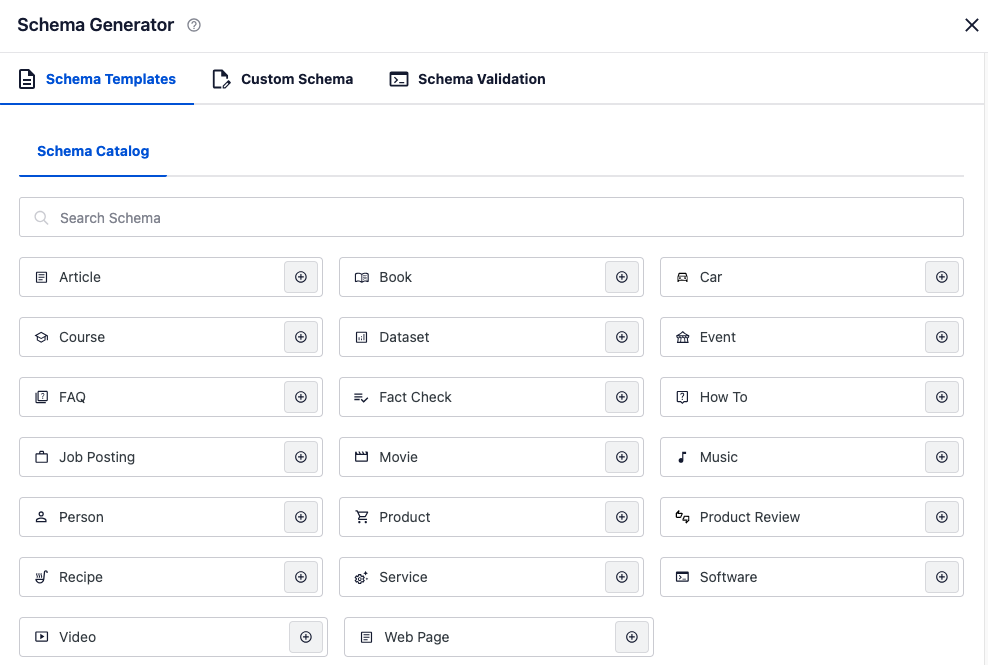
AIOSEO's Schema Generator is de no-code oplossing voor EDD-winkels. De schema-catalogus omvat Product, FAQ, HowTo, Software, Cursus en nog 15+ andere typen, die alles dekken wat verkopers van digitale producten nodig hebben in één interface.
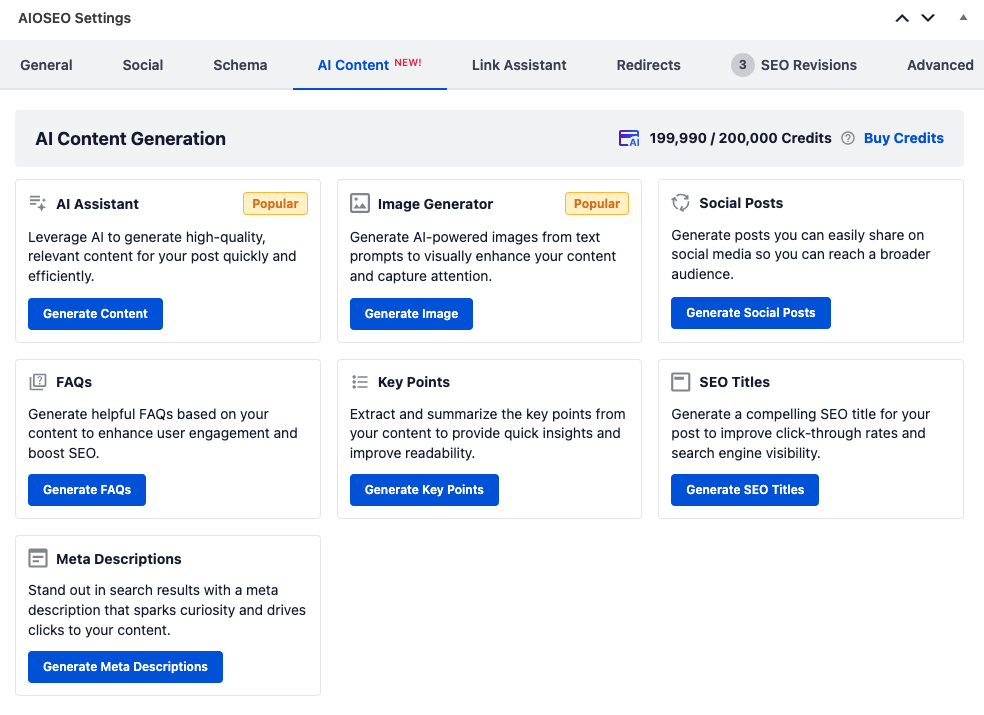
AIOSEO bevat ook een tabblad AI Content Generation dat FAQ's, belangrijke punten, SEO-titels en meta-beschrijvingen rechtstreeks uit uw bestaande inhoud kan genereren.
Dat maakt het gemakkelijker om het soort gestructureerde, specifieke, door AI leesbare inhoud te bouwen die zowel schema als GEO ondersteunt zonder alles vanaf nul te hoeven schrijven.
🔎 Leer meer over de basisprincipes van SEO voor websites met digitale producten.
FAQ Schema
FAQ-schema is een van de schema-typen met de hoogste impact voor AI-citatie. Google AI Overviews en ChatGPT-antwoorden worden vaak rechtstreeks uit FAQ-secties gehaald. Ze zijn gebouwd om geciteerd te worden.
Voeg een korte FAQ toe aan elke productpagina. Concentreer u op de "werkt dit voor mij?"-vragen die uw kopers daadwerkelijk stellen.
Het FAQ-blok van AIOSEO produceert automatisch geldig FAQPage-schema, zonder extra configuratie nodig te zijn naast het schrijven van de vragen en antwoorden.
HowTo Schema
Voor tutorial- of installatiegerichte blogposts en documentatiepagina's helpt HowTo-schema AI-tools om uw stapsgewijze instructies te tonen wanneer gebruikers procedurele vragen stellen.
“Hoe stel ik terugkerende betalingen in WordPress in?” is precies het soort zoekopdracht waarin HowTo-schema u helpt te verschijnen.
Dit schematype is niet van toepassing op productpagina's. Het is voor instructie-inhoud.
AIOSEO's schema-generator bevat HowTo als ingebouwde optie in dezelfde catalogus als alle andere schematypen.
Gebruik uw productrelaties als een AI-ontdekkingssignaal
De meeste handleidingen richten zich op het optimaliseren van individuele pagina's. Dit gedeelte behandelt iets anders: optimalisatie op catalogusniveau.
Het is een van de meest onderbenutte AI-zichtbaarheidstactieken en wordt elders grotendeels onbehandeld gelaten.

Wanneer een AI-tool wordt gevraagd "wat heb ik nodig om online cursussen op WordPress te verkopen?", kijkt het niet alleen naar individuele productpagina's. Het zoekt naar winkels waar gerelateerde producten samen worden gegroepeerd, gelinkt en aanbevolen.
Productrelatiegegevens helpen AI uw catalogus als geheel te begrijpen, niet slechts één product tegelijk.
Hoe EDD Cart Recommendations productrelatiegegevens creëren
Easy Digital Downloads' Cart Recommendations-functie analyseert automatisch uw productcatalogus en toont gerelateerde producten in het Cart Preview-paneel.
Voor AI-ontdekking doet dit twee dingen: het creëert gestructureerde productrelatiesignalen binnen uw winkel, en het houdt productgegevens vers en contextueel verbonden.
AI-tools gebruiken patronen van "ook gekocht" en "vaak gecombineerd" om te begrijpen hoe producten zich tot elkaar verhouden. Dat is dezelfde logica die de AI-productaanbevelingen van EDD aandrijft.
Wanneer uw winkel consequent gerelateerde producten aan elkaar koppelt, bouwt u context op catalogusniveau die AI-tools lezen bij het vormen van aanbevelingen.
Cart Recommendations is beschikbaar op EDD Pro.
Handmatige productrelatiesignalen (voor alle abonnementen)
U heeft geen Pro nodig om te beginnen met het opbouwen van productrelatiesignalen. Een paar consistente gewoonten maken al een betekenisvol verschil.
- Gebruik dezelfde categorieën en tags voor gerelateerde producten.
- Link naar gerelateerde producten binnen uw productbeschrijvingen.
- Maak bundelachtige pagina's die de producten benoemen die ze aanvullen.
Deze praktijken signaleren aan zowel EDD als zoekmachines dat bepaalde producten bij elkaar horen, wat precies de context is waarnaar AI-tools zoeken bij het beantwoorden van vragen op catalogusniveau.
Zorg ervoor dat AI-crawlers uw winkel kunnen vinden
Geen van de bovenstaande tactieken helpt als AI-tools uw winkel überhaupt niet kunnen benaderen.
Dit is de technische basis, en deze wordt vaker verkeerd geconfigureerd dan de meeste verkopers beseffen.
Controleer uw robots.txt-bestand
Uw robots.txt-bestand vertelt webcrawlers wat ze mogen openen op uw site. Als AI-crawlers daar worden geblokkeerd, is uw winkel onzichtbaar voor die tools, ongeacht hoe goed uw inhoud is geoptimaliseerd.
De belangrijkste crawlers om te controleren zijn: GPTBot (ChatGPT), PerplexityBot, ClaudeBot, en OAI-SearchBot. Om te controleren, bezoekt u uwdomein.com/robots.txt in een browser en zoekt u naar Disallow-regels die gericht zijn op die bots.
Eén belangrijk onderscheid: het blokkeren van AI-trainingscrawlers is anders dan het blokkeren van AI-zoekcrawlers. Sommige website-eigenaren kiezen ervoor om te voorkomen dat hun inhoud wordt gebruikt om AI-modellen te trainen.
Dat is een aparte beslissing van het blokkeren van zoektoegang. Als u algemene 'disallow'-regels hebt toegevoegd, zorg er dan voor dat u de zoektoegang niet per ongeluk hebt geblokkeerd.
De robots.txt-editor van AIOSEO laat u crawlerregels rechtstreeks binnen WordPress beheren, zonder handmatig bestanden te bewerken.
Dien een Sitemap in en Houd Inhoud Vers
Een up-to-date XML-sitemap helpt AI-crawlers elke product- en inhoudspagina op uw site te ontdekken, niet alleen de pagina's met inkomende links.
Als een productpagina geen externe links ernaar heeft, is een sitemap mogelijk de enige manier waarop AI-tools deze vinden.
Inhoudsversheid is ook belangrijk. AI-tools geven de voorkeur aan recent bijgewerkte inhoud.
Het bijwerken van een productbeschrijving, het toevoegen van een nieuw FAQ-antwoord of het reageren op een klantbeoordeling tellen allemaal mee als inhoudsupdates. Kleine, regelmatige wijzigingen houden uw pagina's binnen het 'freshness window' zonder dat volledige herschrijvingen nodig zijn.
Maak een llms.txt-bestand
Uw robots.txt-bestand bepaalt wat AI-crawlers kunnen openen. Uw llms.txt-bestand is een ander hulpmiddel voor een andere taak: het geeft AI een speciaal ontworpen gids om uw site te begrijpen zodra deze binnen is.
Zie het zo: robots.txt is de toestemmingslaag en llms.txt is het welkomstpakket dat u aan AI overhandigt zodra deze binnen is.
AIOSEO genereert automatisch twee versies:
- llms.txt: Een standaardbestand waarnaar AI-tools kunnen verwijzen bij het crawlen van uw site
- llms-full.txt: Een uitgebreide versie die uw volledige inhoud bevat, geconverteerd naar Markdown voor sneller crawlen
De functie is standaard ingeschakeld. Om deze te configureren, gaat u naar All in One SEO » Sitemaps en opent u het llms.txt-instellingenpaneel.
Vanaf daar kunt u:
- De sitetitel en -beschrijving instellen die AI ziet bij het lezen van het bestand
- Kiezen welke berichttypen en taxonomieën moeten worden opgenomen
- Een maximaal aantal URL's per berichttype instellen
- Specifieke berichten, pagina's of taxonomie-termen uitsluiten
- Schakel Berichten converteren naar Markdown in voor een schonere, beter crawl-bare versie van uw inhoud
Voor een EDD-winkel is dit een praktisch GEO-voordeel. In plaats van AI uw catalogus uit individuele productpagina's te laten samenstellen, geeft u het een gestructureerde kaart van uw hele winkel, met uw sitebeschrijving en inhoudsprioriteiten al gedefinieerd.
Het vervangt of overschrijft uw robots.txt-regels niet. Het werkt ernaast.
Bouw de off-site signalen waar AI-tools op vertrouwen
On-site optimalisatie helpt AI-tools uw winkel te begrijpen. Off-site signalen helpen hen deze voldoende te vertrouwen om deze aan te bevelen. Beide kanten van de vergelijking zijn belangrijk.
Ontvang Beoordelingen op de Juiste Platforms voor Digitale Producten
Externe beoordelingen wegen zwaar mee bij AI-tools omdat ze moeilijker te manipuleren zijn dan on-site getuigenissen. Niet alle beoordelingsplatforms hebben een gelijk gewicht bij AI-tools.
Voor verkopers van digitale producten zijn de platforms die ertoe doen:
- G2 en Capterra voor software en WordPress-plugins
- Trustpilot voor makers en digitale goederen in het algemeen
- AppSumo voor software en tools
Een consistente aanwezigheid op twee of drie relevante platforms is net zo belangrijk als het toevoegen en weergeven van productrecensies in uw eigen winkel.
Creëer inhoud die andere sites willen citeren
AI-tools bouwen autoriteitssignalen op door te kijken naar wat andere sites linken en vermelden.
Als uw product of winkel voorkomt in nieuwsbrieven van de creator economy, WordPress-overzichten, YouTube-tutorials of nicheblogs, is dat een extern geloofwaardigheidssignaal waar AI-tools naar kijken bij het bepalen wat ze aanbevelen.
Het praktische pad: maak een gratis bron, vergelijkingsgids of nuttige tool die organische links verdient.
Gastposts op WordPress en op makers gerichte publicaties bouwen na verloop van tijd citatieautoriteit op. Elke onafhankelijke vermelding van uw product draagt bij aan het stapeltje extern bewijs dat AI-tools gebruiken om de geloofwaardigheid te verifiëren.
Gebruik een gratis download of demo om ontdekkingspunten te creëren die gecrawld kunnen worden
Het aanbieden van een gratis versie van uw product (een gratis hoofdstuk, demo-niveau of voorbeeld bestand) creëert een extra te crawlen, linkbare asset die AI-tools kunnen indexeren en aanbevelen. Gratis producten krijgen vaker links, verschijnen in meer overzichten en geven AI-tools een reden met lage frictie om u te vermelden.
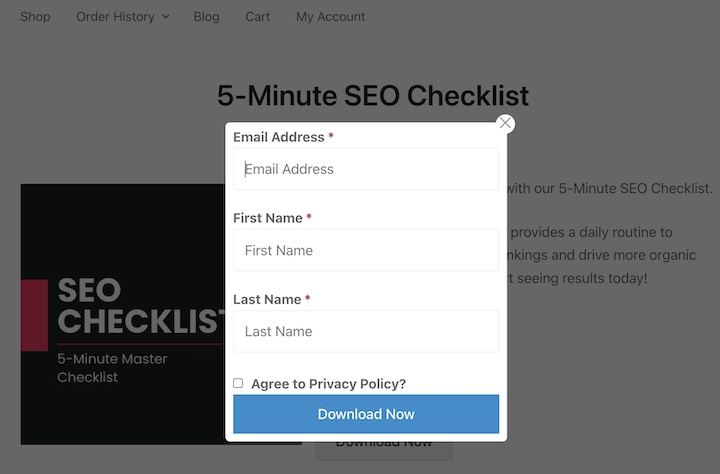
Easy Digital Downloads' Gratis Downloads-functie maakt dit eenvoudig. Hiermee kunt u gratis producten aanbieden die de checkout volledig omzeilen, met een optionele e-mailvastlegging via uw e-mailmarketingintegratie.
Dit is vooral de moeite waard als u software verkoopt (een gratis lite-versie), digitale cursussen (een gratis les) of eBooks (een gratis hoofdstuk). Het is een onderbenutte tactiek, en het werkt.
🔎 Hoe gratis digitale downloads aan te bieden in WordPress
Houd uw zichtbaarheid in de loop van de tijd groeiend
Het vinden van uw producten door AI-zoekopdrachten is geen eenmalig project. Het is een doorlopende contentgewoonte. Dit zijn de praktijken die uw zichtbaarheid in de loop van de tijd laten groeien.
Update inhoud regelmatig. AI-tools geven de voorkeur aan inhoud die binnen de laatste 30 dagen is bijgewerkt. Een regelmatig schema van kleine updates (nieuwe FAQ-antwoorden, vernieuwde productbeschrijvingen, nieuwe klantrecensies) houdt uw pagina's in het 'freshness window' zonder grote herschrijvingen.
Optimaliseer voor 'aanbevelen'-queries, niet alleen voor 'kopen'-queries. De meeste verkopers optimaliseren voor kopers die al weten wat ze willen. Maar AI-ontdekking gebeurt vaak eerder, wanneer een koper nog steeds vraagt 'wat is de beste tool voor [taak]?' of 'wat moet ik gebruiken om cursussen te verkopen zonder platformkosten te betalen?'. Het schrijven van inhoud die die vragen in de aanbevelingsfase beantwoordt, is hoe u wordt geciteerd voordat de koper een aankoopintentie heeft gevormd.
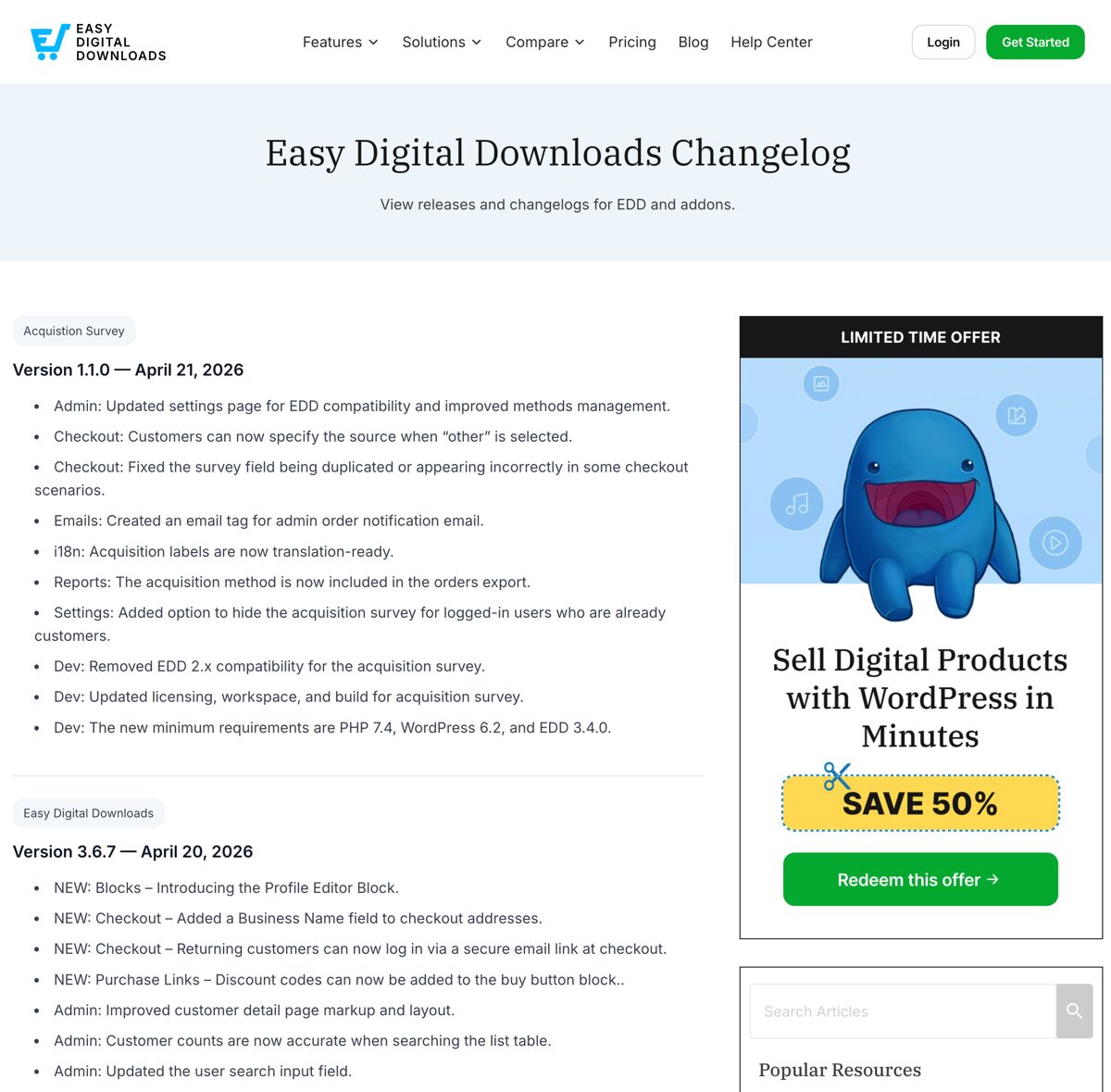
Onderhoud een openbaar changelog als u software of plugins verkoopt Changelogs zijn zeer AI-leesbaar, worden regelmatig bijgewerkt en zijn direct relevant wanneer gebruikers AI-tools vragen stellen over specifieke functies of versies. Ze zijn een van de meest over het hoofd geziene AI-zichtbaarheidsactiva voor softwareverkopers.
Houd uw documentatie openbaar en goed gestructureerd. Documentatiepagina's worden vaak aangehaald door AI-tools voor 'how-to'-vragen. Als u software of plugins verkoopt, zijn goed georganiseerde openbare documenten een van uw sterkste langetermijninvesteringen in AI-zichtbaarheid.
Veelgestelde vragen: Digitale producten vinden via AI-zoekopdrachten
Wat is Generative Engine Optimization (GEO)?
Generative Engine Optimization (GEO) is de praktijk om uw inhoud en producten citeerbaar te maken door AI-tools zoals ChatGPT, Perplexity en Google AI Overviews. Waar traditionele SEO zich richt op ranking in een lijst met links, richt GEO zich op opname in een conversationeel antwoord. Voor verkopers van digitale producten betekent dit dat uw winkel bij naam wordt aanbevolen, en niet alleen wordt vermeld in zoekresultaten.
Hoe weet ik of AI-tools mijn producten aanbevelen?
De meest directe methode is om het zelf te testen. Open ChatGPT, Perplexity en Gemini en stel de vragen die uw kopers zouden stellen: 'wat is de beste plugin voor het verkopen van e-books op WordPress?' of 'welke tool moet ik gebruiken om online cursussen te verkopen zonder platformkosten?' Standaard analysehulpmiddelen volgen AI-verwijzingen nog niet betrouwbaar, dus handmatig testen is momenteel het meest nuttige signaal dat u heeft.
Heeft mijn EDD-winkel een productfeed nodig om in AI-winkelresultaten te verschijnen?
Niet in de traditionele zin. De meeste AI-winkelintegraties zijn gebouwd met fysieke productfeeds in gedachten, en digitale verkopers hebben die niet. De praktische oplossing is gestructureerde gegevens: Productschema, FAQ-schema en beoordelingen van derden vervangen feedgegevens als het gaat om digitale goederen. Een goed gestructureerde Easy Digital Downloads productpagina kan door AI-tools worden gelezen en geciteerd zonder een verkopersfeed.
Voor welk AI-platform moet ik me eerst optimaliseren?
Begin met Google. Gemini en Google AI Overviews halen informatie uit de bestaande index van Google, dus alle SEO-verbeteringen die u aanbrengt, verbeteren ook uw zichtbaarheid in de AI-oppervlakken van Google. Perplexity geeft de voorkeur aan niche-directories en beoordelingen van derden. ChatGPT geeft de voorkeur aan autoriteitssites en goed geciteerde inhoud. Aangezien Google AI Overviews het grootste zoekvolume beïnvloeden, levert beginnen daar de breedste directe impact op.
Heeft het blokkeren van AI-trainingsbots invloed op mijn zoekzichtbaarheid?
Dat kan, als het verkeerd wordt gedaan. Het blokkeren van GPTBot om te trainen op uw inhoud is een aparte beslissing van het blokkeren ervan voor zoeken. Als u een algemene Disallow: / regel voor GPTBot of andere AI-crawlers in uw robots.txt hebt toegevoegd, hebt u zowel training- als zoektoegang geblokkeerd. Als uw intentie is om alleen training te blokkeren, zijn de richtlijnen anders. De robots.txt-editor van AIOSEO maakt het gemakkelijker om de juiste regels in te stellen zonder te gokken naar de syntaxis.
Hoe helpen klantrecensies bij AI-ontdekking?
Recensies op externe platforms zijn een van de sterkste geloofwaardigheidssignalen die AI-tools gebruiken bij het bepalen van aanbevelingen. Ze zijn moeilijker te manipuleren dan getuigenissen op de site, wat ze vanuit AI-perspectief betrouwbaarder maakt. G2 en Capterra wegen het zwaarst voor software en plugins. Trustpilot wordt breed erkend voor digitale goederen. Een consistente aanwezigheid op twee of drie relevante platforms is belangrijker dan een hoog volume aan recensies geconcentreerd op één plek.
Heb ik een ontwikkelaar nodig om schema markup te implementeren voor mijn EDD-winkel?
Nee. AIOSEO's Schema Generator dekt elk schematype dat verkopers van digitale producten nodig hebben: Product, FAQ, HowTo, Software, Cursus en meer. Het gebruikt een point-and-click interface binnen WordPress, geen code vereist. AIOSEO bevat ook een AI Content Generation-tab die FAQ-inhoud, belangrijke punten en metabeschrijvingen uit uw bestaande inhoud kan opstellen. Het is een tool die we zouden aanbevelen voor elke Easy Digital Downloads-winkel die serieus is over AI en zoekzichtbaarheid.
Word Gevonden Waar Uw Kopers Zoeken
AI-ontdekking is geen vervanging voor SEO. Het is de volgende laag daarbovenop. De winkels die in 2026 antwoorden in ChatGPT en Perplexity verschijnen, zijn degenen die nu die laag zijn gaan bouwen.
De acties met de hoogste impact zijn duidelijk. Schrijf productbeschrijvingen die specifiek zijn over gebruiksscenario, doelgroep en resultaat. Voeg schema markup toe met AIOSEO. Gebruik de Cart Recommendations-functie van Easy Digital Downloads om productrelatiesignalen op te bouwen. Verkrijg recensies op de platforms waarnaar AI-tools daadwerkelijk verwijzen. Zorg ervoor dat AI-crawlers niet worden geblokkeerd in uw robots.txt.
Niets hiervan vereist een ontwikkelaar. Het meeste kost een middag.
Klaar om een AI-ready digitale winkel te bouwen? Get Easy Digital Downloads en combineer het met AIOSEO voor schema en SEO.
📣 P.S. Vergeet niet om zich te abonneren op onze nieuwsbrief en ons te volgen op Facebook, Twitter/X, of LinkedIn voor meer WordPress-bronnen!