

Les marketplaces sont un endroit facile pour commencer à vendre. Vous téléchargez vos produits et les acheteurs sont déjà là à les chercher.
Mais ce trafic intégré a un prix. Les commissions des marketplaces réduisent vos marges. Les clients appartiennent à la plateforme, pas à vous. Et lorsque la plateforme modifie ses règles, votre entreprise change avec elle.
De nombreux vendeurs Easy Digital Downloads (EDD) qui sont passés des marketplaces tierces ont constaté des gains réels en vendant directement depuis leurs propres boutiques, l'un d'eux ayant même gagné plus de 856 000 $ en ventes à vie. La différence n'est pas la chance. C'est la propriété.
Si vous êtes prêt à explorer des alternatives aux marketplaces pour vos produits numériques, ce guide présente vos véritables options : les plateformes hébergées qui réduisent vos frais tout en restant simples, et les boutiques auto-hébergées qui vous donnent le contrôle total.
- Points clés à retenir
- Pourquoi les vendeurs quittent les marketplaces
- Ce qu'il faut rechercher dans une alternative de marketplace
- Vos options en un coup d'œil
- Plateformes hébergées : Mieux qu'une marketplace, mais pas la solution complète
- Boutiques auto-hébergées : L'alternative de marketplace qui dure
- Ce qu'il faut considérer avant de changer
- FAQ sur les alternatives de marketplace pour la vente de produits numériques
- Commencez à vendre selon vos propres conditions
Points clés à retenir
| Les frais s'accumulent rapidement | Entre les commissions, les frais de mise en vente et les dépenses publicitaires, les marges des marketplaces diminuent plus vite que la plupart des vendeurs ne s'y attendent. |
| Vos clients ne vous appartiennent pas | Les e-mails des acheteurs appartiennent à la marketplace, pas à vous. Vous ne pouvez pas les emporter si vous partez. |
| Les plateformes hébergées réduisent les frais, pas la dépendance | Vous paierez moins de commission, mais vous restez soumis aux règles et aux changements de prix d'un tiers |
| Les boutiques auto-hébergées vous donnent la pleine propriété | Pas de frais de plateforme, pas d'intermédiaire. Votre liste de clients vous appartient. |
| Le changement est plus simple qu'il n'y paraît | Easy Digital Downloads peut vous permettre de vendre depuis votre propre site WordPress en moins de 10 minutes |
Pourquoi les vendeurs quittent les marketplaces
Les marketplaces tiennent beaucoup de promesses. Trafic intégré. Configuration facile. Pas de surcharge technique. Et elles livrent, du moins au début.
Les problèmes apparaissent plus tard, une fois que votre entreprise se développe et que les véritables coûts deviennent clairs.
- Les frais s'accumulent rapidement : Ce n'est pas seulement la commission. Creative Market prend 50 % de chaque vente. Etsy empile les frais de mise en vente, les frais de transaction et les frais de traitement des paiements les uns sur les autres. Ajoutez le coût de la diffusion de publicités pour rester visible sur une plateforme de plus en plus encombrée, et vos marges réelles peuvent être bien plus faibles qu'elles n'y paraissent.
- Vous ne possédez pas vos relations clients : Lorsque quelqu'un achète chez vous sur une marketplace, ses informations de contact appartiennent à la plateforme. Vous ne pouvez pas lui envoyer d'e-mail, le suivre ou le contacter si votre compte est un jour suspendu. La relation est entre l'acheteur et la marketplace, pas entre l'acheteur et vous.
- Les décisions de la plateforme affectent votre entreprise du jour au lendemain : En juillet 2026, Envato a fait passer tous les auteurs à une commission forfaitaire de 50 %. Les vendeurs qui avaient gagné jusqu'à 87,5 % sous l'ancien modèle à paliers n'ont pas eu leur mot à dire dans ce changement. Etsy a fait quelque chose de similaire en augmentant ses frais de transaction de 5 % à 6,5 % en 2022, et Creative Market a remanié sa structure de commission avec peu d'avis des vendeurs. Lorsque la plateforme modifie les règles, vos revenus en pâtissent immédiatement.
- Votre marque passe au second plan : Sur une place de marché, les acheteurs se souviennent de la plateforme, pas de votre boutique. Chaque page de paiement, chaque e-mail de confirmation et chaque avis porte la marque de la place de marché. Il est plus difficile de fidéliser une clientèle lorsque votre nom est toujours secondaire.
Pour un examen plus approfondi des compromis entre les canaux, notre analyse complète de la vente via votre propre boutique par rapport à une place de marché mérite d'être lue.
Ce qu'il faut rechercher dans une alternative de marketplace
Lorsque vous commencez à examiner les alternatives, deux catégories se présentent rapidement.
Les plateformes hébergées vous offrent votre propre vitrine de marque avec des frais inférieurs à ceux de la plupart des places de marché. La mise en place est rapide, et vous n'avez pas besoin de gérer l'hébergement ou un site web. Gumroad, Payhip, Sellfy et Lemon Squeezy entrent tous dans cette catégorie.
Les boutiques auto-hébergées s'exécutent sur votre propre site web à l'aide de logiciels tels que Easy Digital Downloads ou WooCommerce. Plus de configuration initiale, mais une propriété totale : pas de frais de liste, votre boutique, vos données clients, vos revenus, vos règles.
Quelques questions pour vous aider à déterminer ce qui correspond à votre situation actuelle :
- Combien payez-vous en frais aujourd'hui ? Si les commissions des places de marché absorbent 20 % ou plus de vos revenus, même des frais de plateforme hébergée de 5 % représentent une amélioration significative.
- Avez-vous une liste d'e-mails ? Si oui, une boutique auto-hébergée facilite la vente directe aux personnes qui vous connaissent déjà. Sinon, la création d'une liste devrait être votre première priorité, quelle que soit la plateforme que vous choisissez.
- Quelle part de votre trafic provient de la place de marché ? Plus vous dépendez de la plateforme pour la découverte, plus vous devrez planifier soigneusement votre transition.
Si vous êtes actuellement sur Etsy spécifiquement, notre guide des meilleures alternatives à Etsy pour les vendeurs de produits numériques couvre les options spécifiques à la plateforme plus en détail.
Vos options en un coup d'œil
Voici comment les principales alternatives de places de marché se comparent en termes de frais et d'adéquation :
| Plateforme | Type | Frais de plateforme | Coût mensuel | Idéal pour |
|---|---|---|---|---|
| Gumroad | Hébergé | 10% + 0,50 $/vente | Gratuit | L'étape la plus simple pour quitter une place de marché |
| Payhip | Hébergé | 5 % (plan gratuit) | 0 $ à 99 $/mois | Vendeurs soucieux des coûts |
| Sellfy | Hébergé | 0% | 29 $ à 159 $/mois | Vendeurs hybrides (numérique/physique) |
| Presse-citron | Hébergé | 5 % + 0,50 $/vente | Gratuit | Logiciels/SaaS avec clients mondiaux |
| Easy Digital Downloads | Auto-hébergé | 0% | Variable (plugin + hébergement) | Vendeurs de produits numériques souhaitant une propriété totale |
| WooCommerce | Auto-hébergé | 0% | Variable (plugin + hébergement) | Boutiques mixtes (physique/numérique) |
Toutes les plateformes facturent des frais de traitement de paiement standard (généralement 2,9 % + 0,30 $ par transaction via Stripe ou PayPal) en plus des frais de plateforme indiqués ci-dessus.
Plateformes hébergées : Mieux qu'une place de marché, mais pas la solution complète
Les plateformes hébergées représentent une nette amélioration par rapport à la plupart des places de marché. Des frais moins élevés, votre propre vitrine de marque et une expérience beaucoup plus claire pour les acheteurs.
Gumroad 10 % plus 0,50 $ par vente (ou 30 % via sa place de marché Discover) sans frais mensuels, ce qui en fait l'un des moyens les plus rapides de commencer à vendre de manière indépendante. Le plan gratuit de Payhip ramène cela à 5 %, avec des niveaux payants qui réduisent ou éliminent les frais de transaction. Sellfy et Lemon Squeezy sont également d'excellentes options, surtout si vous vendez des logiciels ou avez besoin d'une gestion fiscale intégrée pour les commandes internationales.
Le hic, c'est que vous êtes toujours sur la plateforme de quelqu'un d'autre. Si Gumroad augmente ses frais, vous n'avez pas votre mot à dire. Si Payhip modifie ses conditions, vous vous adaptez. Sur la plupart des plateformes hébergées, vos données clients sont accessibles mais résident toujours dans leur système. Vous louez à de meilleures conditions, vous ne possédez pas.
Si vous êtes actuellement sur Gumroad et que vous envisagez votre prochaine étape, la migration vers votre propre boutique est plus simple que la plupart des vendeurs ne le pensent. Notre guide sur la migration de Gumroad vers WordPress explique l'ensemble du processus.
Pour les vendeurs qui veulent posséder leur boutique entièrement, l'auto-hébergement est l'endroit où vous voulez atterrir.
Boutiques auto-hébergées : L'alternative de marketplace qui dure
Une boutique auto-hébergée fonctionne sur votre propre site Web. Vous contrôlez le paiement, les données clients, la tarification et la marque. Personne ne peut changer les règles pour vous.
Le compromis est réel : vous devez générer votre propre trafic, et il y a plus de configuration impliquée au départ. Mais pour les vendeurs de produits numériques qui construisent sur le long terme, l'économie bascule considérablement en votre faveur.
Aucun frais de plateforme signifie que vous gardez tout après le traitement des paiements. Votre liste de clients est la vôtre à conserver, exporter et utiliser comme vous le souhaitez. Votre boutique peut évoluer pour devenir tout ce dont votre entreprise a besoin, selon votre calendrier.
Easy Digital Downloads
Easy Digital Downloads (EDD) est l'option la plus spécialement conçue sur cette liste pour les vendeurs de produits numériques. C'est un plugin WordPress conçu spécifiquement pour la vente de biens numériques, et la différence avec les outils de commerce électronique généraux se voit dès le premier jour.
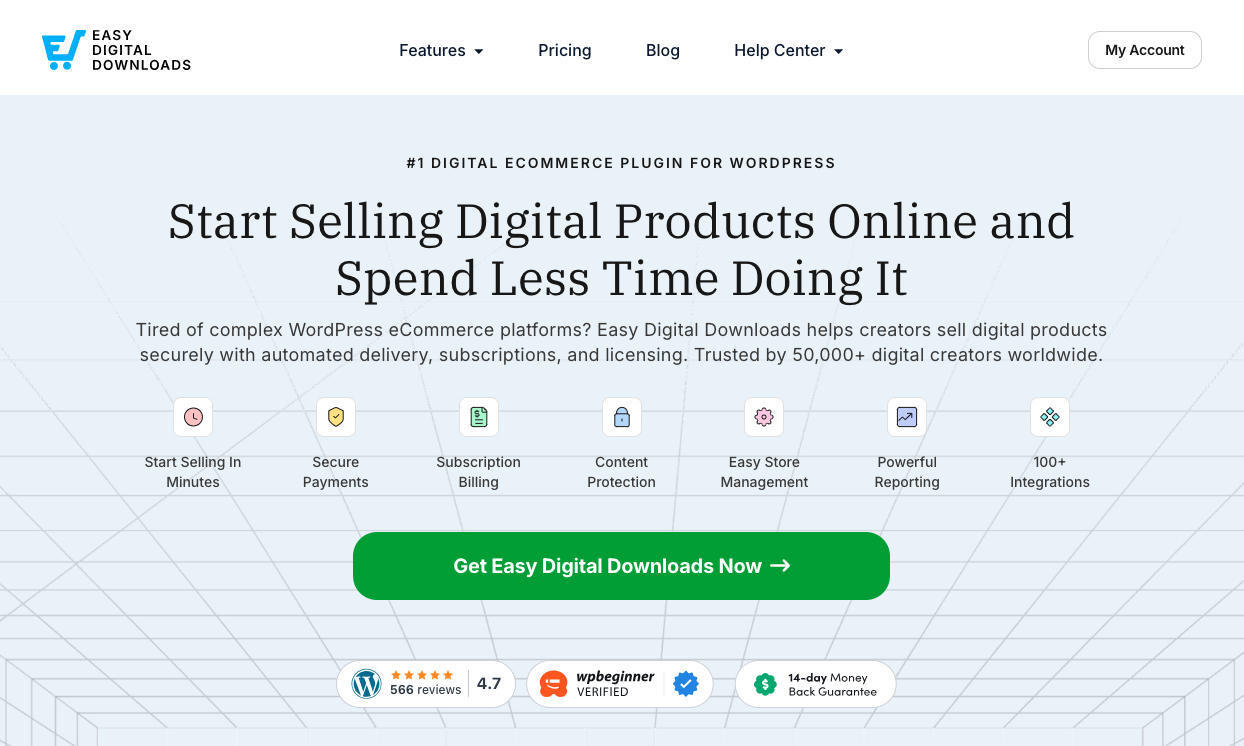
La plupart des plateformes de commerce électronique ont commencé avec des produits physiques et ont ajouté les téléchargements numériques comme une réflexion après coup. Easy Digital Downloads a été conçu dès le départ pour les fichiers, les téléchargements et la livraison numérique. Cette concentration se reflète dans le fonctionnement du paiement, la manière dont les fichiers sont livrés et la façon dont les clients gèrent leurs achats.
Ce que vous obtenez avec EDD :
- Aucun frais de plateforme. Vous conservez tout après le traitement standard des paiements via Stripe, PayPal, Apple Pay ou Google Pay.
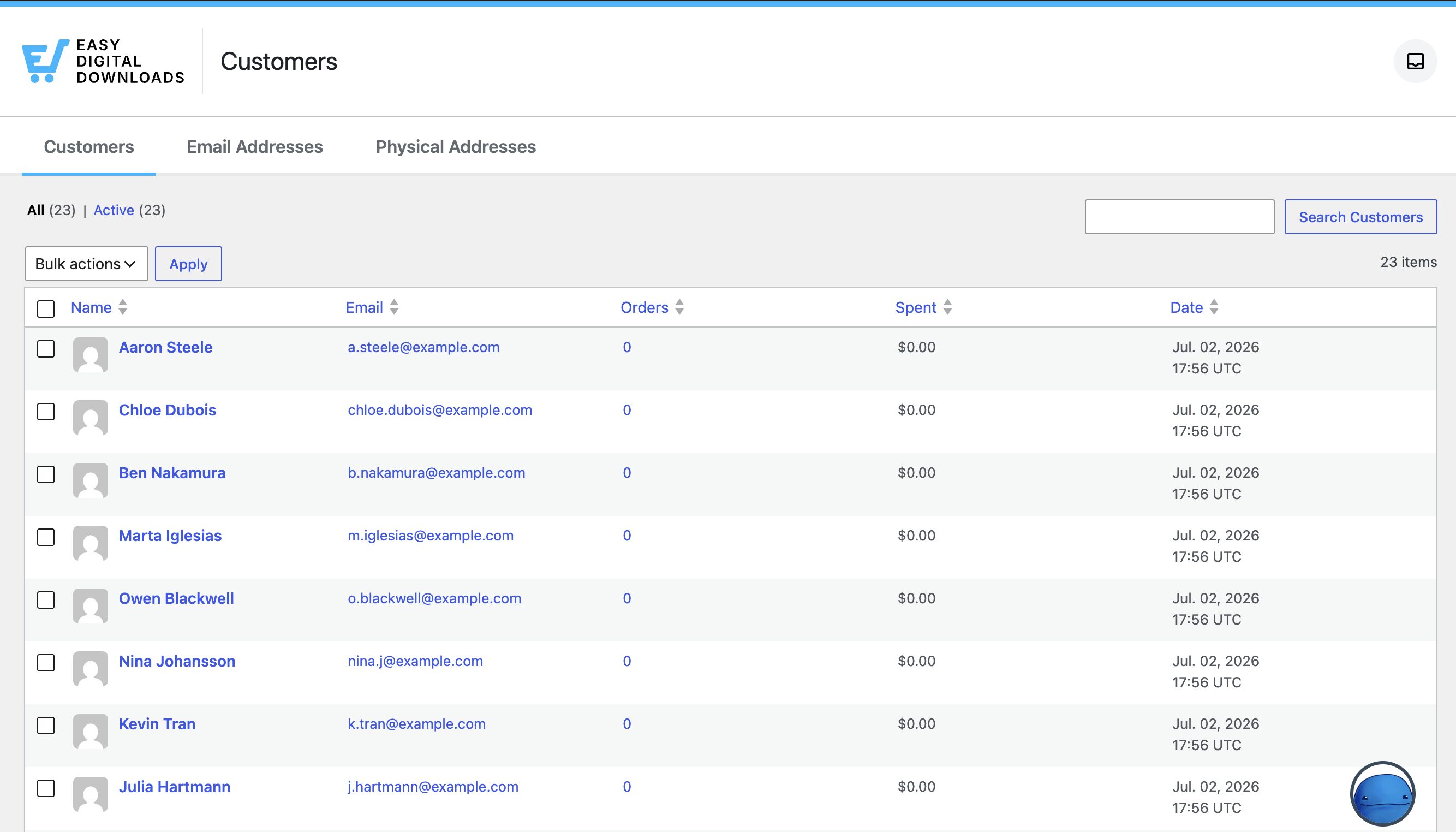
- Propriété totale des données clients. Le nom, l'e-mail et l'historique d'achat de chaque acheteur résident dans votre base de données WordPress. C'est à vous de l'exporter, de l'utiliser et de le conserver.
- Produits illimités. Aucun frais de mise en vente, aucun frais par produit, aucune limite.
- Livraison sécurisée des fichiers. Les liens de téléchargement expirant et les limites de téléchargement protègent vos produits après l'achat.
- Paiements récurrents. Vendez des abonnements et des adhésions avec la fonctionnalité de paiements récurrents d'Easy Digital Downloads, disponible dans les plans payants.
- Licences de logiciel. Vendez des plugins, des thèmes WordPress ou des logiciels ? La fonctionnalité de licences de logiciel d'Easy Digital Downloads gère la génération et la gestion des clés de licence automatiquement, disponible dans les plans payants.
ThemeSelection en est un exemple. Après avoir migré du marché ThemeForest vers Easy Digital Downloads, ils ont gagné plus de 856 000 $ en ventes à vie en vendant directement depuis leur propre boutique. Lorsque vous arrêtez de payer à une plateforme 10 %, 30 % ou 50 % de chaque vente, les calculs changent rapidement.
Une version gratuite est disponible pour vous aider à démarrer, afin que vous puissiez lancer votre boutique et réaliser vos premières ventes avant de vous engager dans un plan payant.
Si vous souhaitez éliminer les frais de transaction supplémentaires et tirer le meilleur parti d'Easy Digital Downloads, je recommande un plan Pro. Vous pouvez explorer les niveaux de prix et suivre notre Guide de démarrage pour vous configurer.
WooCommerce
WooCommerce est l'autre option majeure auto-hébergée sur WordPress. Il est gratuit, largement utilisé et soutenu par un vaste écosystème de thèmes et de plugins.
Cela dit, WooCommerce est avant tout conçu pour le commerce physique. La vente de produits numériques fonctionne, mais cela demande plus de configuration. La livraison des fichiers, les limites de téléchargement et la gestion des clés de licence nécessitent tous une configuration supplémentaire qu'Easy Digital Downloads gère par défaut.
Si vous vendez un mélange de produits physiques et numériques, WooCommerce est un choix raisonnable. Pour les vendeurs concentrés exclusivement sur les produits numériques, Easy Digital Downloads est le choix le plus simple.
Pour un aperçu plus large des alternatives à WooCommerce, notre guide des meilleures alternatives à WooCommerce pour WordPress couvre toute la gamme.
Que faut-il considérer avant de changer
Passer d'une marketplace est simple avec un plan. Voici comment le faire sans perdre de clients ou de trafic dans le processus.
Exportez vos données d'abord. Avant de modifier des paramètres ou d'annuler des comptes, téléchargez tout : fichiers produits, enregistrements clients et historique des commandes. La plupart des plateformes le permettent dans les paramètres de votre compte. Ne supposez pas que vous pourrez y revenir plus tard.
Gardez votre annonce sur la marketplace active pendant la transition. La découverte et le trafic que vous avez là-bas ne vous suivent pas automatiquement vers une nouvelle plateforme. Faire fonctionner les deux en parallèle pendant que vous prenez de l'élan sur votre nouvelle boutique protège vos revenus.
Commencez à collecter des e-mails avant d'annoncer le changement. Votre plus grand avantage avec votre propre boutique est la relation client directe. Si vous ne collectez pas déjà d'e-mails, commencez maintenant. Une simple option de consentement au moment du paiement suffit pour commencer à construire une liste qui vous appartient.
Annoncez votre déménagement à vos acheteurs existants. Si votre plateforme actuelle vous permet de communiquer avec vos clients, faites-leur savoir où vous trouver. Même une courte note indiquant aux acheteurs votre nouveau magasin peut faire une réelle différence.
Donnez-vous une marge de manœuvre. Quelques mois de chevauchement entre votre place de marché et votre nouveau magasin donnent à votre nouvelle plateforme le temps de gagner en traction sans couper prématurément les revenus existants.
FAQ sur les alternatives de marketplace pour la vente de produits numériques
Quelle est la meilleure alternative gratuite aux places de marché pour les produits numériques ?
Pour les frais les plus bas dans l'ensemble et une solution auto-hébergée dont vous avez le contrôle total, Easy Digital Downloads est la solution. Il est spécialement conçu pour vendre des produits numériques sur WordPress, ce qui signifie qu'il est entièrement personnalisable mais convivial. Vous ne payez que les frais de traitement des paiements standard, généralement 2,9 % plus 0,30 $ par transaction. Vous aurez besoin d'un hébergement WordPress (généralement 5 $ à 15 $ par mois), mais aucune coupe supplémentaire n'est prise sur vos ventes.
Quelle plateforme a les frais les plus bas pour la vente de produits numériques ?
Les magasins auto-hébergés n'ont pas de frais de plateforme, ce qui fait d'Easy Digital Downloads et de WooCommerce les options les moins chères à grande échelle. Vous ne payez que les frais de traitement des paiements, qu'EDD vous permet d'éliminer en passant à un plan Pro mensuel. Pour les vendeurs réalisant un volume important, un tarif mensuel fixe s'avère souvent moins cher qu'un pourcentage par transaction.
Ai-je besoin d'un site Web pour vendre des produits numériques sans place de marché ?
Non. Les plateformes hébergées comme Gumroad, Payhip et Sellfy vous donnent un espace de vente dédié sans avoir besoin de votre propre domaine ou hébergement. Mais cela a des compromis et des restrictions. Un magasin auto-hébergé avec Easy Digital Downloads ou WooCommerce nécessite un site WordPress avec hébergement, mais vous donne la pleine propriété et le contrôle de votre magasin et des données clients. De plus, WordPress est gratuit à télécharger et les plans d'hébergement sont incroyablement rentables.
Puis-je emporter mes produits et mes clients lorsque je quitte une place de marché ?
Vos produits oui — la plupart des places de marché vous permettent de télécharger vos fichiers originaux depuis votre compte vendeur. Les clients, c'est plus délicat. Des plateformes comme Etsy et Creative Market ne vous donnent pas les adresses e-mail des acheteurs, vous ne pouvez donc pas exporter votre liste de clients lorsque vous partez. C'est l'un des arguments les plus forts en faveur du passage à votre propre magasin : chaque vente que vous effectuez via EDD ajoute un client à une liste que vous possédez et pouvez contacter directement.
Comment gérer la taxe de vente et la TVA lorsque je vends depuis mon propre magasin ?
Sur les plateformes hébergées comme Gumroad et Payhip, la plateforme collecte et remet la taxe en votre nom. Lorsque vous auto-hébergez avec EDD, vous êtes le vendeur — mais EDD dispose d'outils intégrés pour rendre la conformité gérable. La fonctionnalité EU VAT d'EDD gère automatiquement la TVA pour les clients européens, et la fonctionnalité Right of Withdrawal couvre le droit du consommateur européen d'annuler les achats numériques. Pour la plupart des vendeurs servant principalement des clients américains, la surcharge est minimale pour commencer.
Est-il difficile de passer d'une place de marché à son propre magasin ?
L'aspect technique est plus simple que ce que la plupart des vendeurs attendent. Easy Digital Downloads peut être installé et configuré pour votre première vente en moins d'une heure sur un site WordPress existant. La partie la plus difficile est la transition commerciale : reconstruire le trafic et établir la présence de votre nouveau magasin. Gérer votre marketplace et votre nouveau magasin en parallèle pendant la transition le rend gérable. Vous n'avez pas à tout changer d'un coup. Vous pouvez y aller progressivement.
Commencez à vendre selon vos propres conditions
Les marketplaces sont un point de départ. Ce n'est pas une destination pour les vendeurs qui veulent construire quelque chose qui dure.
Chaque alternative de marketplace de cette liste va dans la même direction : des frais moins élevés, plus de contrôle et une entreprise que vous possédez réellement. Qu'une plateforme hébergée soit la bonne prochaine étape ou que vous soyez prêt à passer directement à l'auto-hébergement, l'objectif est le même. Arrêtez de louer l'accès à vos clients.
Easy Digital Downloads est conçu exactement pour cela : pas de frais de plateforme, propriété complète des données clients et un plugin spécialement conçu pour les vendeurs de produits numériques.
📣 P.S. N'oubliez pas de vous abonner à notre newsletter et de nous suivre sur Facebook, Twitter/X, ou LinkedIn pour plus de ressources WordPress !