

Probeert u de beste prijsmodellen te bepalen voor de verkoop van digitale producten?
U hebt uw hart en ziel gestoken in het creëren van een fantastisch digitaal product - of het nu een e-boek, een tijdbesparende plugin, een boeiende online cursus of een ander type digitale download is.
Maar voordat u op publiceren drukt en de verkopen ziet binnenstromen, is er een cruciale vraag: hoeveel moet u vragen?
Dit is waar uw online bedrijfs prijsmodel om de hoek komt kijken.
🔎 In dit artikel behandel ik:
Wat is een prijsmodel?
Een prijsmodel is een raamwerk dat bepaalt hoe u uw digitale product prijst. Het gaat verder dan simpelweg een geldbedrag erop plakken en houdt rekening met factoren zoals:
- Waargenomen waarde
- Productiekosten
- Markttrends
- Koopgedrag van klanten
Het is de strategie die bedrijfseigenaren gebruiken om de waarde van een digitaal product te bepalen en die waarde te vertalen naar een prijs die resoneert met klanten. Dit is de kernstructuur die bepaalt hoe u geld vraagt voor uw digitale goederen.
Het kan een eenmalige vergoeding zijn, een terugkerend abonnement, of een creatievere aanpak zoals betaal-wat-u-wilt.
Het kiezen van het juiste prijsmodel is essentieel voor eCommerce succes. Het beïnvloedt alles, van uw verkoopvolume en omzet tot de perceptie van klanten en de reputatie van uw merk.
Beschouw prijsstelling als een kaart die uw klanten naar de waarde die u biedt leidt. Een prijsstrategie bouwt voort op het gekozen prijsmodel en omvat de specifieke prijsniveaus, tiers en promotionele aanbiedingen die u binnen uw gekozen model implementeert.
Belang van prijsmodellen & strategieën
Het instellen van de juiste prijs voor uw digitale downloads is een delicate dans. Het moet hoog genoeg zijn om de waarde die u biedt te weerspiegelen en een gezonde winst te genereren, maar ook laag genoeg om klanten aan te trekken en uzelf niet uit de markt te prijzen.
Het kiezen van het beste prijsmodel voor uw digitale productbedrijf is belangrijk omdat het:
- Optimaliseert verkoop & omzet. De juiste prijs kan het verkoopvolume van uw online winkel maximaliseren en ervoor zorgen dat u eerlijk wordt gecompenseerd voor uw werk.
- Trekt de juiste klanten aan. Prijzen geven een boodschap af over de waarde van uw product. U wilt klanten aantrekken die waarderen wat u aanbiedt.
- Bouwt merkperceptie op. Producten van hogere kwaliteit, geprijsd naar rato, bouwen een sterk merkimago op.
Het hebben van een goed gedefinieerde prijsstrategie gaat niet alleen over het terugverdienen van kosten; het gaat over het begrijpen van uw doelgroep, hun behoeften en hoe uw product hun problemen oplost. Het gaat om het vinden van de perfecte balans tussen het maximaliseren van uw winst en ervoor zorgen dat uw product toegankelijk is voor degenen die het het meest nodig hebben.
Factoren voor prijsstelling van digitale producten om te overwegen
Het kiezen van het juiste prijsmodel hangt af van verschillende factoren. U moet bijvoorbeeld rekening houden met productiekosten, prijzen van concurrenten en de waargenomen waarde om de optimale prijsstellingen voor uw gekozen model te bepalen.
Aanvullende factoren om te overwegen zijn:
- Producttype: Overweeg de complexiteit, de doorlopende waarde en de doelgroep van uw product. Welke waarde biedt uw product?
- Klantbehoeften: Begrijp het budget van uw ideale klant en welk soort waarde zij zoeken. Hoe lost uw product klantproblemen op of verbetert het hun leven?
- Bedrijfsdoelstellingen: Geeft u prioriteit aan het maximaliseren van de omzet, klantacquisitie of terugkerende inkomsten?
- Concurrentieanalyse: Onderzoek de prijsmodellen van uw concurrenten en identificeer eventuele potentiële kansen om uzelf te onderscheiden. Kunt u een beter waardevoorstel bieden tegen een vergelijkbare prijs?
Beste Prijsmodellen voor Digitale Producten
Laten we nu de verschillende prijsmodellen verkennen die u ter beschikking staan, samen met hun voor- en nadelen en implementatietips met behulp van Easy Digital Downloads (EDD).
Samenvatting van de beste prijsmodellen voor digitale producten
Deze tabel geeft een overzicht en vergelijking van de beste prijsmodellen:
| Prijsmodel | Definitie | Voordelen | Nadelen | Beste Voor |
|---|---|---|---|---|
| Kosten-gebaseerd | Prijzen vaststellen op basis van de kosten van het produceren en leveren van het product, plus een gewenste winstmarge. | – Eenvoudig te berekenen – Zorgt voor winstgevendheid | – Houdt geen rekening met de door de klant waargenomen waarde – Kan premium producten onderprijzen | Digitale producten met lage ontwikkelingskosten |
| Waarde-gebaseerd | Prijzen vaststellen op basis van de waargenomen waarde van het product voor de klant. | – Maximaliseert omzetpotentieel – Stemt prijzen af op de bereidheid van de klant om te betalen | – Moeilijk om de door de klant waargenomen waarde te bepalen – Kan in sommige markten te duur zijn | Premium digitale producten met hoge waargenomen waarde |
| Gelaagd | Verschillende productversies of functiesets aanbieden tegen verschillende prijzen. | – Spreekt verschillende klantsegmenten aan – Maakt upselling naar hogere niveaus mogelijk | – Kan complex zijn om te beheren – Risico op kannibalisatie tussen niveaus | Softwareproducten met schaalbare functies |
| Abonnement | Het in rekening brengen van een terugkerende vergoeding voor voortdurende toegang tot een product of dienst. | – Voorspelbare terugkerende inkomsten – Stimuleert klantbehoud | – Kan hoge overstapkosten voor klanten met zich meebrengen – Moet voortdurend waarde toevoegen | Digitale diensten met frequente updates of inhoud |
| Freemium | Het aanbieden van een basisversie gratis en het vragen van geld voor premium functies of diensten. | – Trekt gebruikers aan met gratis versie – Mogelijkheid om te upsellen naar betaalde versie | – Moeilijk om gratis gebruikers te converteren naar betaalde gebruikers – Moet gratis en betaalde waarde balanceren | Digitale producten met schaalbare functies |
| Betaal Wat Je Wilt | Klanten de keuze geven hoeveel ze willen betalen voor een product. | – Aantrekkelijk voor prijsgevoelige klanten – Bevordert een positief merkimago | – Moeilijk om inkomsten te voorspellen – Risico op onderprijzing | Digitale producten met lage marginale kosten |
| Productbundeling | Het aanbieden van meerdere producten of diensten samen tegen een gereduceerde prijs. | – Verhoogt de waargenomen waarde – Cross-selling mogelijkheden | – Kan complex zijn om te beheren – Risico op kannibalisatie van individuele producten | Digitale producten met complementaire aanbiedingen |
Onthoud: dit is slechts een beginpunt. Je kunt experimenteren met verschillende modellen of ze zelfs combineren om een hybride prijsstrategie te creëren die perfect aansluit bij jouw unieke product en doelgroep.
1. Kostenprijsstelling
Deze eenvoudige aanpak omvat het berekenen van de kosten die gepaard gaan met het creëren en leveren van uw product (bijv. softwareontwikkeling, ontwerpkosten, contentcreatie) en het toevoegen van een gewenste winstmarge om tot de uiteindelijke prijs te komen.
Dit model bepaalt de prijs van uw product door een opslagpercentage toe te voegen aan de totale kosten van productie, ontwikkeling en distributie. Het is een eenvoudige aanpak die ervoor zorgt dat u uw uitgaven dekt en winst genereert.
Kostenprijsstelling wordt vaak gebruikt voor eenvoudige digitale producten met goed gedefinieerde productiekosten, zoals e-books met minimale ontwerpelementen of stockfoto's met een vastgestelde productiekost.
Hoewel kostenprijsstelling een startpunt biedt, mag het niet de enige factor zijn bij het bepalen van uw uiteindelijke prijs. Zorg ervoor dat u de waardepropositie van uw product, de prijzen van concurrenten en de behoeften van klanten in overweging neemt om ervoor te zorgen dat u de juiste balans vindt.
2. Waardegedreven prijsstelling
Met de waardegerichte prijsaanpak is de prijs gebaseerd op de waargenomen waarde die uw product levert aan de klant, in plaats van op distributiekosten of productiekosten.
Stel je de positieve resultaten of transformaties voor die gebruikers ervaren na het kopen van je download. Focus op de impact en voordelen die je product biedt, zoals de pijnpunten die het verlicht.
Hoe meer je product een probleem oplost, levens verbetert of tijd bespaart, hoe hoger je het kunt prijzen.
Gebruik de krachtige prijsopties van EDD om de voordelen naast het prijskaartje te laten zien. Overweeg succesverhalen of getuigenissen van tevreden klanten uit te lichten.
3. Eenmalige vergoeding (betaal-eenmalig model)
Dit is het klassieke model waarbij klanten een eenmalige vaste prijs vooraf betalen om toegang te krijgen tot uw digitale product. Het is geweldig voor eenvoudige, goed gedefinieerde producten zoals e-books, downloadbare sjablonen, stockfoto's of plug-ins met een enkele functie.
EDD is uitermate geschikt voor eenmalige betalingen. U stelt gewoon een prijs in voor uw product en publiceert het:
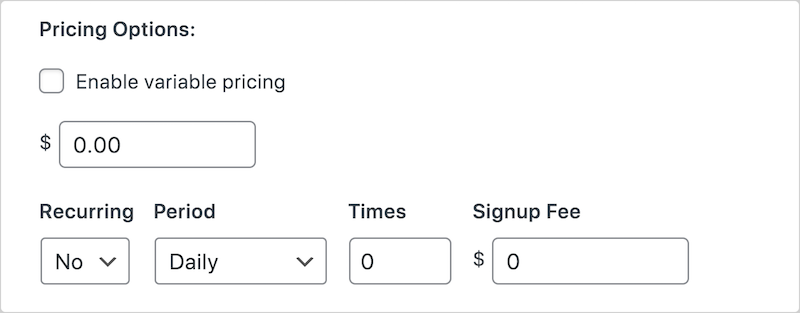
U kunt ook een duidelijke beschrijving toevoegen van wat de klant krijgt voor zijn aankoop.
4. Abonnementsprijsstelling
Met abonnementprijzen betalen klanten een terugkerend bedrag (maandelijks, per kwartaal, jaarlijks) om toegang te krijgen tot uw product of een verzameling producten. Hoewel het mogelijk is om deze structuur voor fysieke producten te gebruiken, is dit prijsmodel populair in digitale marketing omdat het ideaal is voor digitale producten met voortdurende waarde, zoals:
- Software met continue updates
- Exclusieve ledeninhoud
- Toegang tot online communities
Als u een op abonnementen gebaseerd bedrijf runt, zijn er meerdere manieren waarop u uw prijsmodel kunt structureren. Bijvoorbeeld een vast tarief, getrapt, op gebruik gebaseerd, enz. Het meest gebruikte abonnementsprijsmodel onder de meerderheid van de abonnementscommercehandelaren (52%) is een vast tarief.
Dit wordt gevolgd door het goed/beter/best-model (ook bekend als getrapte prijzen, waar ik het hierna over zal hebben).
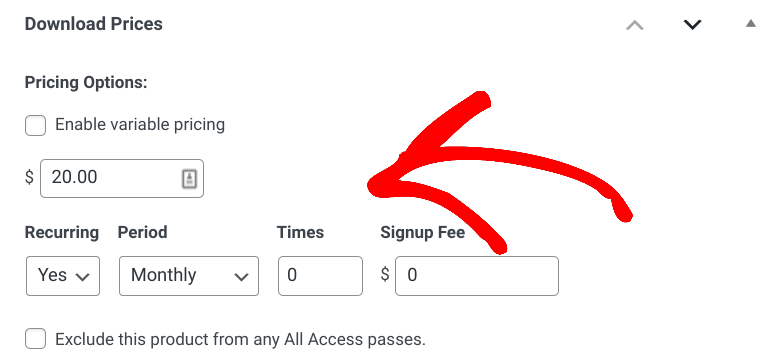
EDD maakt het eenvoudig om abonnementsfacturering in te stellen met extensies zoals Recurring Payments en All Access.
U kunt ook naadloos integreren met plug-ins zoals Restrict Content Pro, MemberPress en Paid Memberships Pro. Deze plug-ins voegen functies toe zoals terugkerende betalingsverwerking en getrapte abonnementsopties aan uw winkel.
5. Gelaagde prijsstelling
Getrapte prijzen zijn een van de beste prijsmodellen voor digitale producten, omdat u hiermee uw product in meerdere niveaus kunt aanbieden met verschillende prijspunten en functiesets.
Dit prijsmodel speelt in op verschillende budgetten en klantbehoeften, waardoor klanten de optie kunnen kiezen die het beste bij hen past. Het is ideaal voor producten met verschillende complexiteitsniveaus of voor het bieden van verschillende toegangsniveaus tot inhoud.
Het zou bijvoorbeeld ideaal zijn voor het aanbieden van een plug-in met een gratis basisversie, een premiumversie met geavanceerde functies en een agentschapsversie met multi-site licenties.
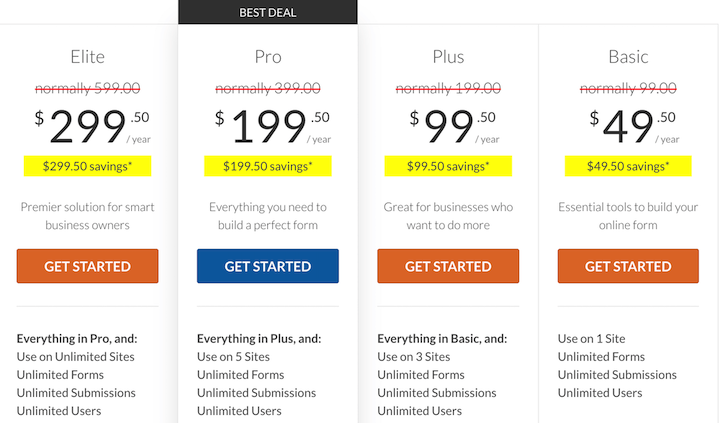
EDD stelt u in staat om meerdere prijsopties voor een enkel product te maken. Elke prijsoptie kan zijn eigen set functies en voordelen hebben die duidelijk worden uiteengezet.
Maak aparte downloadopties binnen EDD voor elk niveau, waarbij duidelijk de functies worden uiteengezet die in elk niveau zijn inbegrepen.
6. Freemium prijsmodel
Vergelijkbaar met getrapte prijzen, biedt deze strategie een gratis basisversie van uw product, waardoor gebruikers worden aangemoedigd om te upgraden naar een premiumversie met extra functies of functionaliteiten.
Als u een klein bedrijf bent, kan freemium een geweldige manier zijn om nieuwe klanten aan te trekken en een gebruikersbestand op te bouwen, terwijl u ook de kernwaarde van uw product laat zien.
EDD stelt u in staat om een gratis download te maken voor de basisversie van uw product. U kunt vervolgens aparte betaalde downloads instellen voor de premiumversies met hun extra functies duidelijk gemarkeerd.
7. Betaal wat u wilt (PWYW)
Met deze aanpak kunnen klanten bepalen hoeveel ze bereid zijn te betalen voor uw product. Hoewel het riskant kan zijn, kan het ook goodwill bevorderen en prijsbewuste klanten aantrekken. Het kan potentieel leiden tot hogere gemiddelde bestelwaarden als andere producten naast de pay-what-you-want-optie worden aangeboden.
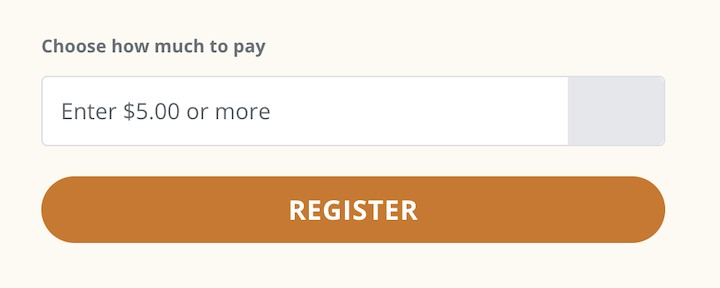
Hoewel het vertrouwen en de waardering van klanten kan bevorderen, is het belangrijk om de verwachtingen te managen en ervoor te zorgen dat u eerlijke compensatie ontvangt voor uw werk.
EDD laat u het PWYW-prijsmodel implementeren met de Custom Prices add-on.
Een andere optie is om het product als gratis download aan te bieden en een prominente “donatie” knop op de productpagina op te nemen, die linkt naar een betalingsverwerker zoals PayPal.
8. Productbundeling
Onze lijst met de beste prijsmodellen voor digitale producten wordt afgesloten met productbundeling. Dit model omvat het combineren van meerdere digitale producten in één enkel pakket tegen een gereduceerde prijs.
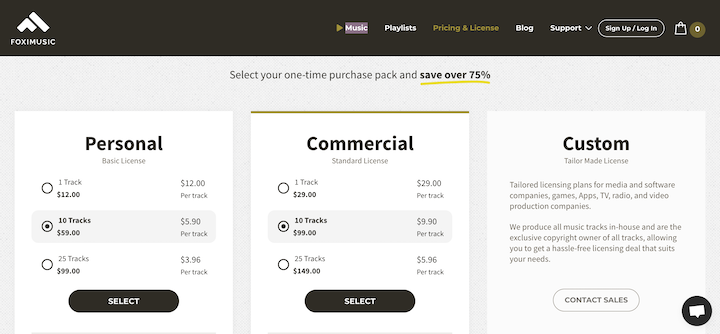
Bundeling stelt u in staat om klanten meer waarde voor hun geld te bieden en hen aan te moedigen extra producten te kopen die ze misschien niet zelf hadden overwogen. Het is een uitstekende manier om aantrekkelijke aanbiedingen te creëren en de verkoop te stimuleren.
EDD's stelt u in staat om eenvoudig meerdere producten te groeperen en een gereduceerde prijs voor de bundel in te stellen.
Tips voor het kiezen van de beste prijsmodellen
Hoewel het kiezen van het juiste prijsmodel cruciaal is, is het slechts een onderdeel van de puzzel.
Nadat u een basisprijsstrategie hebt vastgesteld, kunt u deze tactieken overwegen om uw omzet en klantenbestand te maximaliseren:
Implementeer dynamische prijzen. Dit kan het aanpassen van prijzen omvatten op basis van factoren zoals klantlocatie, aankoopgeschiedenis of zelfs realtime vraag.
Maak gebruik van upselling en cross-selling. Maak gebruik van de Cross-sell en Upsell extensie van EDD om gerelateerde producten aan te bevelen tijdens het afrekenproces. Upselling moedigt klanten aan om een hogere versie van uw huidige product te kopen, terwijl cross-selling complementaire producten suggereert die de waarde van hun oorspronkelijke aankoop verhogen.
Focus op het opbouwen van waarde. Streef er voortdurend naar om de waarde die u aan uw klanten levert te verbeteren. Dit kan het aanbieden van bonusinhoud, updates of exclusieve toegang tot een community omvatten. Door de verwachtingen van de klant te overtreffen, rechtvaardigt u uw prijsstelling en stimuleert u herhaalde aankopen.
Bied een geld-terug-garantie. Overweeg een geld-terug-garantie aan te bieden om het risico voor de klant te beperken en het vertrouwen te vergroten. Dit toont vertrouwen in de waarde van uw product.
Maak gebruik van promotionele strategieën. Gebruik strategische kortingen, coupons en tijdelijke aanbiedingen om een gevoel van urgentie te creëren en aankopen te stimuleren.
Volg belangrijke statistieken. Gebruik de ingebouwde rapportagetools van EDD om belangrijke statistieken te volgen, zoals conversieratio's, gemiddelde orderwaarde en klantacquisitiekosten. Deze gegevens helpen u gebieden voor verbetering te identificeren en uw prijsstrategie te verfijnen.
Verzamel feedback van klanten. Vraag actief om feedback van uw klanten via enquêtes of e-mailcampagnes. Vraag hen naar hun ervaring, inclusief hun perceptie van waarde en of ze de prijsstelling eerlijk vinden.
Experimenteer en analyseer. Wees niet bang om verschillende prijsmodellen te testen en de resultaten te analyseren om te zien welke prijsstelling het beste aansluit bij uw publiek. Gebruik A/B-testtools om verschillende prijspunten en landingspagina's te vergelijken om de meest effectieve aanpak te identificeren.
Veelgestelde vragen over de beste prijsmodellen
Laten we afsluiten met enkele veelgestelde vragen over prijsmodellen en -strategieën voor digitale producten en downloads in WordPress.
Wat is de beste prijsstrategie voor digitale downloads?
Er is geen pask-op-alle-antwoorden. De beste prijsstrategie voor digitale downloads hangt af van uw product, publiek en doelen.
Optimale prijsstelling houdt rekening met productiekosten, concurrentieprijzen en de waargenomen waarde die u aan klanten biedt.
Het bepalen van het optimale prijspunt voor een digitaal product is een veelzijdig proces dat rekening houdt met verschillende factoren:
- Schat productiekosten
- Onderzoek concurrentie
- Definieer uw waardepropositie
- Begrijp uw publiek
- Houd rekening met bedrijfsdoelen
Zodra u deze informatie hebt, kunt u experimenteren met verschillende prijsmodellen (waardegericht, gelaagd, enz.) en verkoopgegevens bijhouden om te zien welke aanpak het beste aansluit bij uw publiek en uw bedrijfsdoelen bereikt.
Kan ik mijn prijsmodel later wijzigen?
Absoluut! Marktcondities, feedback van klanten en productontwikkeling kunnen allemaal een verschuiving in het prijsmodel noodzakelijk maken. Communiceer de wijzigingen duidelijk naar uw bestaande klantenbestand en bied incentives voor een soepele overgang.
Wat is het beste prijsmodel voor een online cursus?
Het beste model voor uw online cursus hangt af van factoren zoals complexiteit, doelgroep en concurrentie. Overweeg waardegerichte, eenmalige betaling of gelaagde prijzen.
Wat zijn de beste prijsmodellen voor de verkoop van software?
Voor software kunnen abonnements-, gelaagde en freemium-modellen effectief zijn, waardoor terugkerende inkomsten mogelijk zijn en aan verschillende behoeften wordt voldaan. Abonnements- en gelaagde modellen zijn vaak ideaal voor SaaS-producten vanwege hun voortdurende waarde en potentieel voor functiedifferentiatie.
Hoe ga ik om met prijsbezwaren van klanten?
Wees voorbereid om de waardepropositie van uw product te verwoorden. Benadruk de voordelen die zij ontvangen en bied aanvullende bronnen zoals getuigenissen of casestudy's.
Implementeer de beste prijsmodellen met EDD
Door uw waardepropositie te begrijpen, te experimenteren met verschillende prijsmodellen en rekening te houden met alle relevante factoren, bent u goed op weg om de beste prijsmodellen te vinden die zowel uw omzet als klanttevredenheid maximaliseren.
Easy Digital Downloads voorziet u van de flexibiliteit en tools om verschillende prijsstrategieën te implementeren voor uw digitale producten en downloads.
Heb je Easy Digital Downloads nog niet? Pak vandaag nog je pas!
Wat is de volgende stap? Ontdek manieren waarop u de verkoop kunt verhogen met Easy Digital Downloads!
📣 PS. Vergeet niet u aan te melden voor onze nieuwsbrief en volg ons op Facebook of Twitter voor meer WordPress-bronnen!