

Most online stores see the majority of carts get abandoned. But you don’t need to accept this as your “normal”. There are clear, practical ways to reduce shopping cart abandonment in WordPress and turn more visitors into paying customers.
Even a small drop in your abandonment rate can mean a big jump in revenue without any extra traffic. Once you understand what causes cart abandonment and how to measure it on your WordPress site, there are specific strategies you can use to reduce it.
In this guide, I’ll walk you through the most effective options for digital product stores.
What Is Shopping Cart Abandonment?
Shopping cart abandonment happens when someone starts to buy but doesn’t finish.
More exactly: a shopper adds at least one product to their online cart, sometimes even starts the checkout process, but leaves before completing the payment.
It’s helpful to break this idea into three related but different behaviors:
| Browsing Abandonment 🔎 | Someone views your product pages or pricing pages, maybe even clicks “Add to cart” but never actually adds anything. This is more about product fit, pricing, or messaging. |
| Cart Abandonment 🛒 | A shopper adds at least one item to their cart but never starts the checkout form. They might bounce right away, or come back later and never finish. |
| Checkout Abandonment 💳 | Someone starts filling out the checkout form (billing details, email, payment method, etc.) but leaves before completing payment. |
Why does this matter?
- Different problems happen at different stages. If people abandon before clicking “Checkout,” you likely have issues with pricing clarity, shipping/taxes, or the cart experience. If they drop off during checkout, it’s usually form friction, payment issues, or trust.
- Fixing the right stage gets better results. When you know where people leave, you can target your fixes and see faster improvements.
When you understand which stage is leaking, you can focus on the right fixes.
Calculating Cart Abandonment Rate
You can’t improve what you don’t track.
Here’s how to calculate your shopping cart abandonment rate and see where you stand.
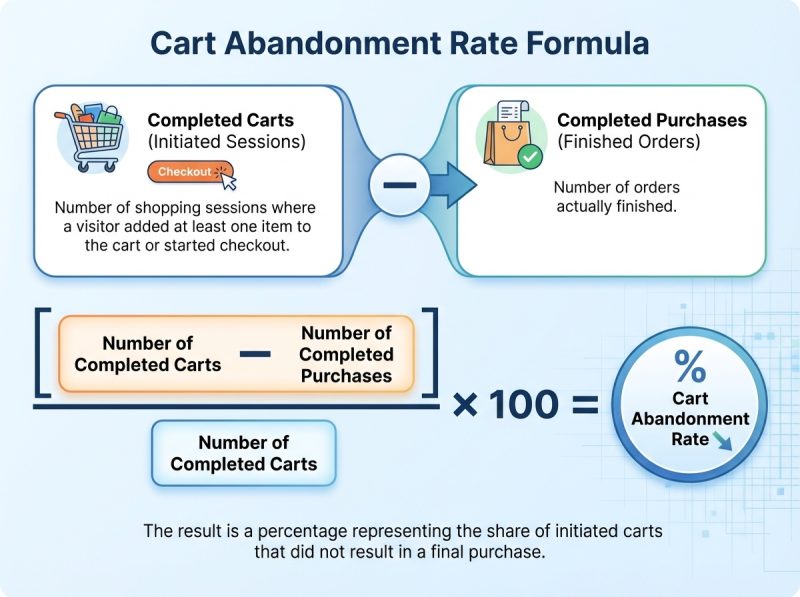
Cart Abandonment Rate Formula
First, define two numbers:
- “Completed carts” is the number of shopping sessions where a visitor added at least one item to the cart or started checkout.
- “Completed purchases” is the number of orders actually finished.
The formula is:
Cart Abandonment Rate = (Number of Completed Carts − Number of Completed Purchases) / Number of Completed Carts × 100
Imagine that, in one week, 200 people started a cart or checkout, and 70 completed their purchase. In that case:
- Completed carts = 200
- Completed purchases = 70
So: 200-70 (130) / 200×100 (2,000) = 0.065.
A 65% cart abandonment rate means about two‑thirds of started carts are lost.
Tools to Track Shopping Cart Abandonment
You don’t have to calculate this by hand. A few tools make it much easier:
You can use Google Analytics 4 (GA4) to track events like product views, add‑to‑cart actions, checkout starts, and purchase completions. Once those are set up, you can build funnels to see where people drop off.
If you prefer a simpler setup, a plugin like MonsterInsights adds eCommerce tracking on top of GA4 with less effort. It gives you reports on cart abandonment, conversion funnels, and average order value inside your WordPress dashboard. You can follow their guide on tracking eCommerce analytics in WordPress.
On the WordPress side, Easy Digital Downloads includes its own reporting tools for revenue, top products, payment methods, and coupon performance. When you combine EDD reports with Google Analytics, you can see both what people do in your store and how that affects your revenue.
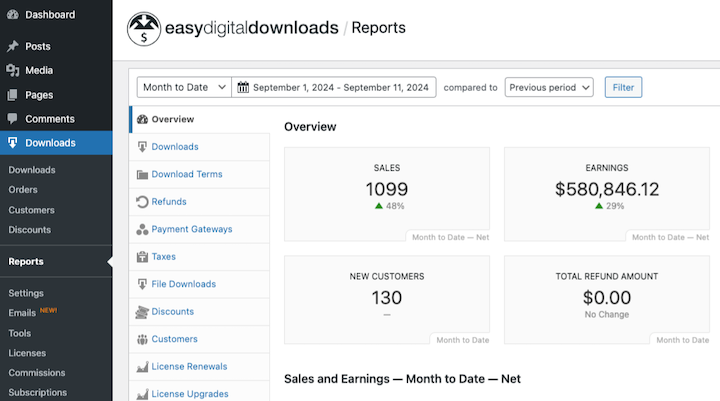
The key is to watch these numbers over time. When you make a change to your checkout, you’ll be able to tell if it’s helping.
Average Cart Abandonment Rates (Benchmarks)
So how do you know if your rate is “good”?
Exact numbers vary by source and industry, but most recent studies put the average cart abandonment rate somewhere between 65% and 80%.
A few rough patterns:
- Desktop tends to have lower abandonment (better typing, bigger screen).
- Mobile often has higher abandonment (harder to type, slower connections, more distractions).
- Digital products can be a bit lower than physical goods because there’s no shipping friction, but you still see high rates from:
- Unclear pricing
- Confusing licensing or access rules
- Trust concerns
🔑 The main takeaway: a high abandonment rate is normal, but it’s also a big opportunity. If you can move from, say, 75% abandonment down to 60%, you can dramatically grow revenue without changing anything about your traffic.
Reasons for Shopping Cart Abandonment
People abandon carts for many reasons. Some are outside your control—like visitors who are only browsing or comparing. Others are problems you can fix.
Some of the most common causes include:
- Unexpected fees & costs. For digital products, this might be unexpected taxes (like EU VAT) or “processing” fees they didn’t see coming.
- Complicated or lengthy checkout. Long forms, too many steps, forced account creation, or unclear progress will cause drop‑offs. Every extra field is a point of friction.
- Lack of trust or security concerns. If your site doesn’t look secure—no SSL lock icon, no familiar payment logos, no visible refund policy or social proof—people hesitate to enter card details.
- Limited or confusing payment options. If you only accept one card type or don’t support common wallets like Apple Pay and Google Pay, many shoppers will stop right there. The same thing happens if you don’t offer local or regional payment methods where they are common. If discount codes don’t work, totals don’t match what was expected, or pricing is hard to understand, customers lose confidence.
- Slow site or technical issues. Slow‑loading pages, broken “Add to cart” buttons, JavaScript errors, or lost sessions will quickly kill conversions. Tiny buttons, small text, forms that don’t fit the screen, and no mobile wallet options make buying on a phone feel like a chore.
Sometimes, cart abandonment rates can be attributed to something as simple as shoppers forgetting they had items in their cart.
In the rest of this guide, I’ll focus on changes that directly address these issues.
How to Reduce Shopping Cart Abandonment
Let’s look at specific, practical ways to reduce shopping cart abandonment in WordPress, especially if you use Easy Digital Downloads.
You don’t need to do everything at once. Start with a couple of high‑impact changes and expand from there.
1. Send Automated Cart Recovery Emails
Not every abandoned cart is gone forever. In fact, an automated email sequence is often the single most effective way to bring those customers back and rescue lost revenue.
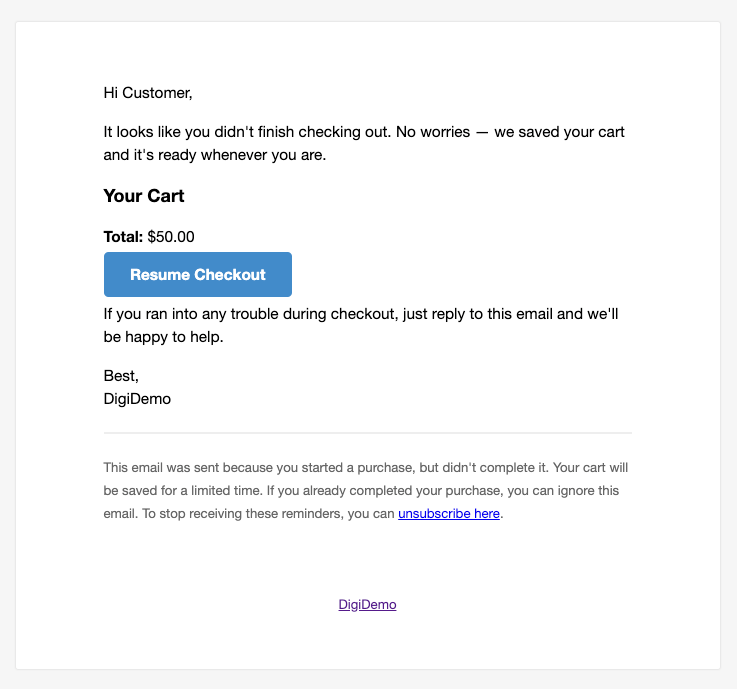
Instead of relying on complicated third-party tools or expensive monthly subscriptions, you can handle follow-ups directly from your WordPress dashboard using the built-in Abandoned Cart Recovery feature in Easy Digital Downloads Pro.
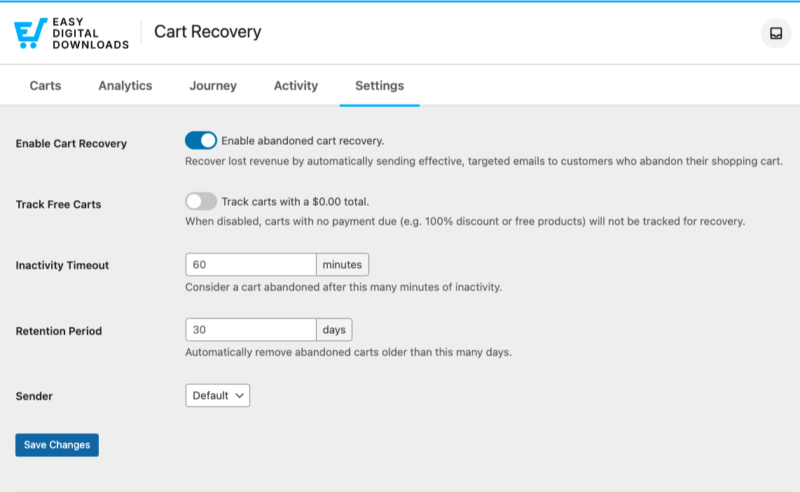
EDD Cart Recovery detects when a cart has been inactive and automatically launches a smart sequence of emails. A proven schedule looks like this:
- Immediate Recovery (30-60 minutes): A quick, friendly nudge while the product is still fresh in their mind.
- Value Reinforcement (24 hours later): A reminder of the product’s benefits, perhaps including social proof or FAQs.
- Final Attempt (2-3 days later): A last call, often including a discount code attached directly to their {cart_link} to sweeten the deal.
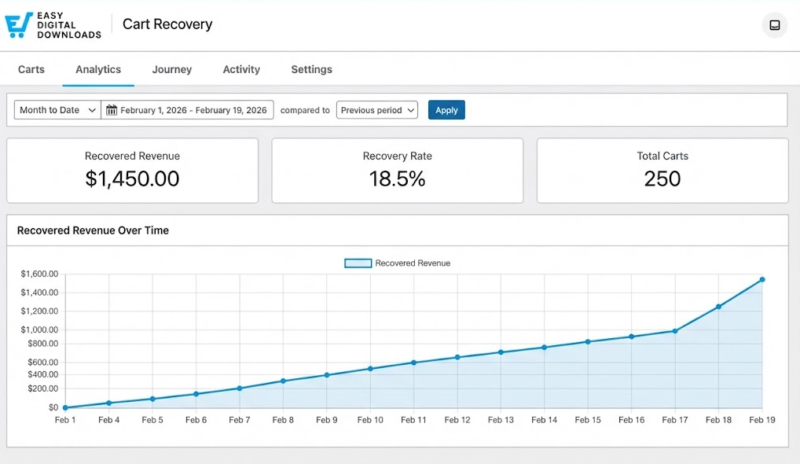
The feature also includes a visual Journey tab, so you can see exactly how carts move from “Abandoned” to “Restored” and “Converted,” giving you a clear picture of your recovered revenue.
🔎 Learn more in our EDD Cart Recovery documentation.
2. Make Total Costs Clear Upfront
One of the easiest wins is to remove surprises. People hate seeing their total jump at the last second.
On your product pages, be as clear as you can about pricing. If you offer different license levels, spell out what each one includes and why it costs more. Use simple tables or short descriptions so buyers can quickly see which option fits them best.
Explain taxes and fees early. If you collect EU VAT or other taxes, tell buyers up front that tax will be calculated based on their location.
Easy Digital Downloads Pro can simplify this with built‑in EU VAT handling, automatically applying the right VAT rate or a reverse charge where required.

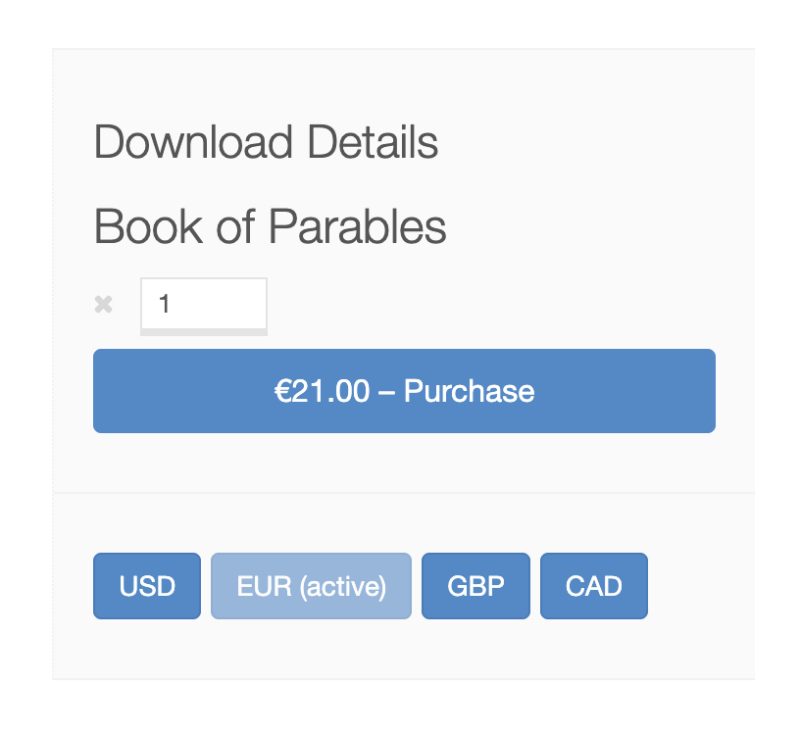
For international stores, showing prices in only one currency can also create friction. The EDD Multi Currency extension auto-detects a visitor’s location and shows prices in their local currency using built‑in geolocation.
3. Simplify the Checkout Process
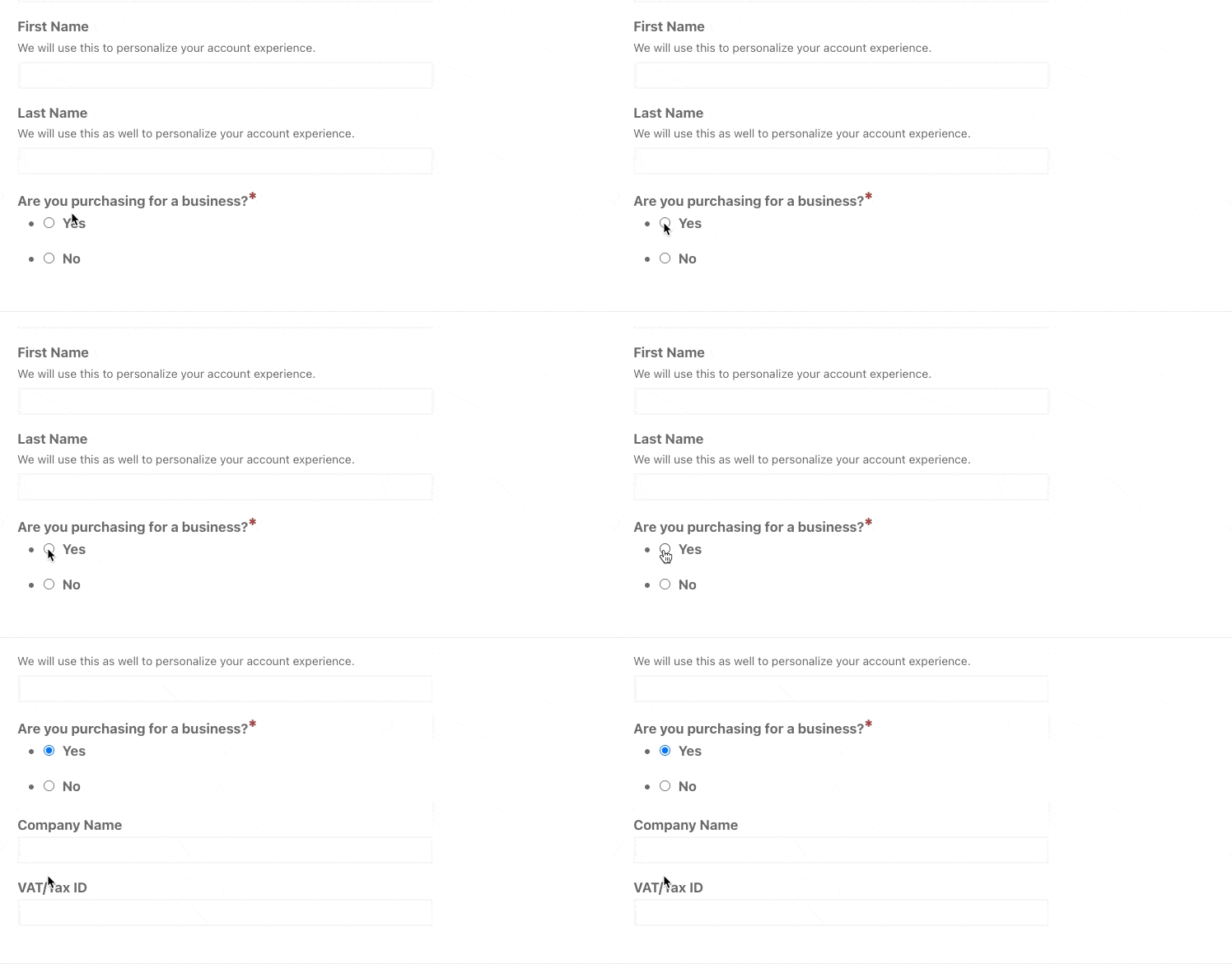
Long, complicated checkouts are one of the most common reasons people give up. For digital products, a name, email address, billing region, and payment details are usually enough. You can safely remove unnecessary fields and shorten the checkout form.

Easy Digital Downloads already gives you a focused checkout page, but you can go further. With Dynamic Conditional Logic, you can build interactive checkout forms that only show extra fields when they’re needed.
4. Provide Multiple Payment Methods
Payment friction is another big cause of abandonment. If someone can’t pay the way they want, they often won’t pay at all.
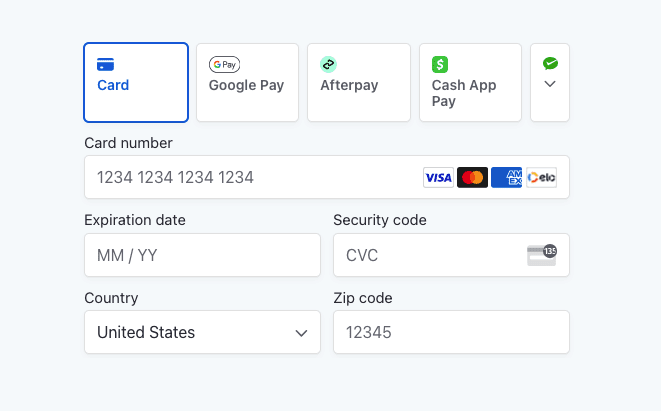
Stripe Payment Gateway is one of the most popular options. It supports major credit and debit cards, Buy Now Pay Later options like Klarna, and digital wallets like Apple Pay and Google Pay. For many shoppers, being able to tap a saved card or use Face ID is far easier than typing a full card number.
5. Offer Guest Checkout & Express Options
Forcing visitors to create an account before buying is a classic way to lose sales.
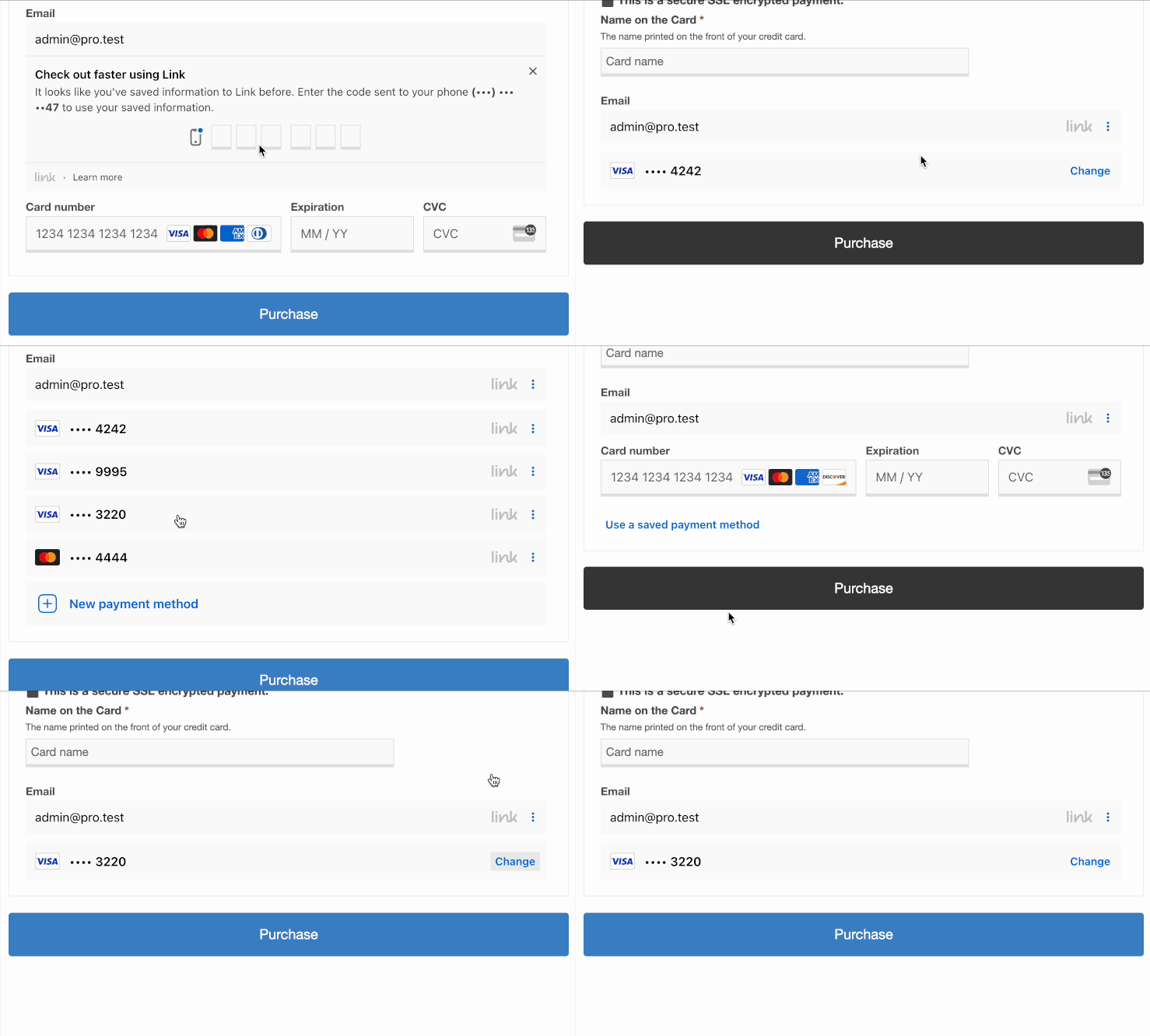
Whenever possible, let people check out as guests. You can always invite people to convert their guest checkout into an account on the thank‑you page or in a follow‑up email later.
Express payment methods help here, too. With Stripe and PayPal connected, you can offer Apple Pay, Google Pay, and PayPal Express directly at checkout. These methods let customers pay in just a couple of taps or clicks using saved cards and billing details.
6. Use Clear, Compelling CTAs & UX
Your main buttons should say exactly what will happen when someone clicks them. Labels like “Add to cart,” “Go to checkout,” and “Complete purchase” are clear and honest.
You can also improve the cart experience by using Cart Preview, which is built into Easy Digital Downloads. It adds a modern slide‑out cart drawer that appears as soon as someone adds a product.

With EDD Pro, you can also enable Cart Recommendations inside the Cart Preview drawer. This adds a “You might also like” section powered by an AI recommendation engine that learns from your product data.

7. Provide Quick Support & Reassurance
Sometimes a shopper is one question away from buying. Placing a chat widget or a “Need help?” link on your checkout pages lets buyers ask questions about licenses, updates, or technical requirements before they commit.
In addition to chat, you can reduce friction by answering FAQs directly on the checkout page. Clear links to a concise FAQ page give shoppers confidence. You can also reassure buyers by highlighting instant access. Phrases like “Get instant access after checkout” remind them of the immediate payoff.
8. Track, Measure & Optimize
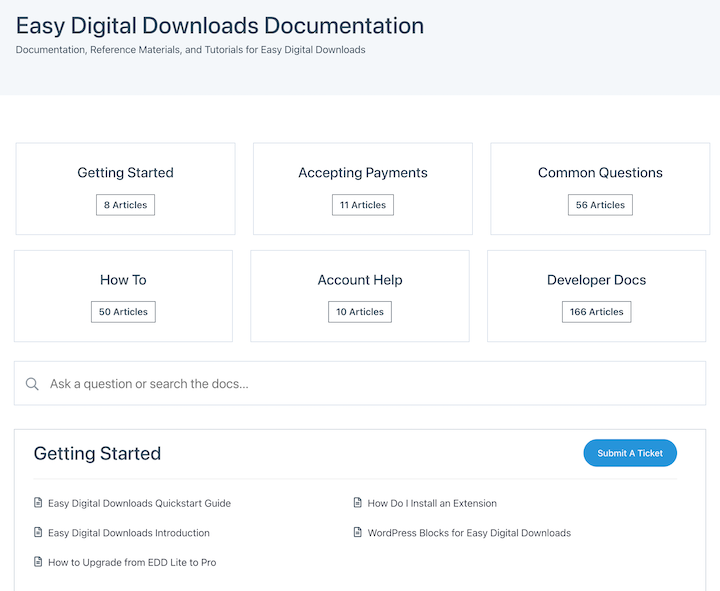
Reducing shopping cart abandonment isn’t a one‑time project; it’s an ongoing process. Use funnel analytics in GA4, or the built-in EDD reporting tools, to map out your path from product view to completed order. Look for the step with the largest drop‑off and focus your improvements there.
Set a recurring time—monthly or quarterly—to review your metrics, note any trends, and pick one or two improvements to implement in the next period. Over time, a series of small improvements will add up to a much smoother checkout and a drastically lower abandonment rate.
FAQs on Reducing Cart Abandonment in WordPress
Let’s wrap up by answering some common questions about shopping cart abandonment in WordPress.
What’s shopping cart abandonment?
Shopping cart abandonment is when a visitor adds at least one item to their cart or starts the checkout process but leaves your site before completing the purchase. It’s the gap between “I’m interested enough to start buying” and “I actually paid.”
What’s a good shopping cart abandonment rate?
Most online stores see cart abandonment somewhere between 65% and 80%. A “good” rate depends on your industry and setup, but many digital product stores aim to get down into the 50–60% range over time. Instead of chasing a perfect number, focus on measuring your current rate and improving it step by step.
What’s the difference between cart abandonment and checkout abandonment?
Cart abandonment covers anyone who added an item to their cart but didn’t complete a purchase. Checkout abandonment is a subset of that group. It refers only to shoppers who started filling out the checkout form and then left before paying. Cart abandonment is often driven by pricing and cart UX issues, while checkout abandonment is usually caused by form friction, payment problems, or trust concerns.
Why do customers abandon their shopping carts?
Customers abandon carts for many reasons, including unexpected extra costs, forced account creation, long or confusing checkout forms, missing payment options, lack of trust, poor mobile experiences, technical errors, and simple distractions. Some visitors also use carts as a way to compare or bookmark products without any intention of buying right away.
How can I reduce shopping cart abandonment in WordPress?
You can reduce shopping cart abandonment by activating automated Cart Recovery emails, making costs and taxes clear up front, simplifying checkout, offering guest checkout and express payment methods, providing multiple trusted payment gateways, building trust with social proof, improving page speed, and offering support on key pages. Tools like Easy Digital Downloads Pro provide all of these features directly within your WordPress dashboard.
Reduce Shopping Cart Abandonment in WordPress
Cart abandonment is part of running an online store, but it doesn’t have to stay as high as it is today.
By automating your recovery emails, making costs and currencies clear from the start, simplifying your checkout with guest options, offering flexible payment methods, and using tools like Cart Preview and AI‑driven Cart Recommendations, you can reduce shopping cart abandonment and increase your revenue without more traffic.
If you sell digital products with WordPress, Easy Digital Downloads gives you most of these tools in one place. EDD Pro and its add‑ons add built-in Abandoned Cart Recovery, multi‑currency support with auto‑detection, EU VAT handling, conditional checkout fields, and AI‑powered product recommendations.
Still using EDD Lite? Upgrade to Pro and unlock access to our advanced, premium features!
📣 P.S. Be sure to subscribe to our newsletter and follow us on Facebook, Twitter/X, or LinkedIn for more WordPress resources!