

Do you want to know the most popular digital products to sell online? You’re in the right place.
Digital products are one of the smartest ways to make money online. There’s no inventory, no shipping, and almost no cost per sale. You create something once and sell it again and again.
The only hard part is choosing what to sell. Let’s fix that.
In this guide, I’ll rank proven digital products and show you what makes each one profitable: typical prices, profit margins, and who each product suits best.
- Key Takeaways
- What Are the Most Popular Digital Products to Sell?
- What Makes a Digital Product Profitable?
- The Most Popular Digital Products to Sell Online
- 1. eBooks
- 2. Online Courses
- 3. AI Prompts and AI Products
- 4. Digital Planners and Journals
- 5. Printables
- 6. Canva and Design App Templates
- 7. Notion Templates
- 8. Spreadsheet Templates
- 9. WordPress Plugins
- 10. WordPress Themes
- 11. Software and Apps
- 12. Web-Based Applications (SaaS)
- 13. Memberships and Subscriptions
- 14. Graphics and Digital Art
- 15. Fonts
- 16. Presets and LUTs
- 17. Stock Photography
- 18. Video
- 19. Music and Audio
- 20. Audiobooks
- 21. 3D Assets and Models
- 22. Documents
- 23. Social Media Content Packs
- 24. Professional Services
- How to Choose What to Sell
- Where Should You Sell Digital Products?
- The Best Way to Sell Digital Products on Your Own Site
- FAQs About the Most Popular Digital Products
- Start Selling the Most Popular Digital Products
Key Takeaways
| Courses and software earn most | Online courses and software top the revenue charts, with prices from $50 to $500+. |
| Templates are the easiest start | Printables, planners, and templates cost almost nothing to create and sell for $3 to $100. |
| Margins beat physical products | Digital products typically keep 70 to 95% of every sale as profit. |
| Your own site keeps more | Selling from your own website avoids the marketplace fees that grow as you grow. |
What Are the Most Popular Digital Products to Sell?
The most popular digital products to sell online are ebooks, online courses, templates, digital planners, printables, software, memberships, and digital art. They’re popular because they cost little to create, deliver instantly, and earn profit margins of 70 to 95% per sale.
The best-sellers fall into a few groups:
- Knowledge products: ebooks, online courses, audiobooks, guides
- Templates and tools: Canva templates, planners, printables, spreadsheets
- Creative assets: digital art, fonts, presets, stock photos, music
- Software: WordPress plugins and themes, apps, SaaS tools
- Recurring products: memberships, subscriptions, content libraries
Below, we’ll break down all of them with the numbers behind each one.
What Makes a Digital Product Profitable?
Before the list, it helps to know why some digital products earn more than others. The most profitable digital products share five traits:
- Low production costs. No materials, no inventory, no shipping. Once the product exists, each sale costs you almost nothing.
- Scalability. You can sell one copy or ten thousand copies with the same effort. Your market is anyone with an internet connection.
- Easy updates. Digital products can be improved and re-released without remaking anything physical. Updates keep a product selling for years.
- Passive income potential. Create once, sell repeatedly. Many sellers earn while they sleep.
- Flexible pricing. Digital products work with one-time prices, bundles, tiered pricing, and subscriptions, so you can test what earns most.
The market is growing fast, too. Statista projects the global digital commerce market will reach about $13 trillion by 2029, with more than 4 billion users.
Keep these five traits in mind as you read the list. The products that score highest on all five tend to be the most profitable digital products you can sell.
The Most Popular Digital Products to Sell Online
Here’s the full list, with a profitability snapshot for each product. Skim for the ones that match your skills, then dig into the details.
1. eBooks
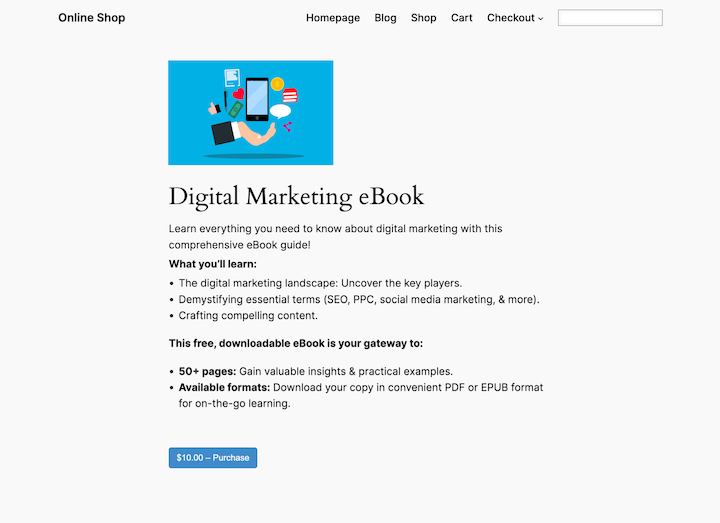
eBooks are one of the most popular digital products for a simple reason: anyone with knowledge can write one. You can teach a skill, share a story, or package your existing blog content into a paid guide that readers keep forever.
They’re easy to create and even easier to deliver. Customers download them instantly after checkout and read them on phones, tablets, e-readers, and computers. You never reprint a run, manage inventory, or deal with a shipping delay.
The format you use matters less than the topic. PDFs work for most niches — they’re universally readable and easy to produce. EPUB files work better for long-form reading on Kindle and Apple Books. Many sellers offer both in the same download.
Specificity is what sells ebooks. A $9 guide on freelance contract negotiation outperforms a $9 guide on “how to be your own boss.” The tighter the problem you solve, the more the reader feels you wrote it for them.
eBooks also work well as a first product. The production time is short, the cost to create is near zero, and a successful ebook tells you what your audience will pay for — before you spend months building a course. Many sellers also use a short free ebook as a lead magnet, then sell a deeper paid version to the readers who opt in.
Profitability snapshot: Typical price $5 to $50. Margins near 95% since production costs are almost zero. Selling from your own site keeps revenue that Amazon KDP or other platforms would take. The global ebook market was valued at $50.61 billion in 2025, according to Fortune Business Insights.
Best for: Writers, bloggers, coaches, and experts in any niche.
Ready to start? See how to sell ebooks from your own site.
2. Online Courses

Online courses are the highest-earning digital product for most creators. People pay premium prices when a course promises a real outcome: a new skill, a career change, a certification, or a faster way to do a job they already have.
What makes courses different from ebooks is the format mix. A good course layers video lessons, written guides, worksheets, and quizzes. Buyers pay more because it feels more complete, and the structure itself signals value.
You can sell courses several ways:
- Single course: One topic, one price. The simplest starting point.
- Course bundle: Group related courses and price the bundle higher than the individual sum. Raises average order value without adding new content.
- Subscription catalog: Sell access to all courses for a monthly or annual fee. Builds recurring revenue and rewards you for consistently adding more.
WordPress makes this accessible without expensive software. EDD’s Content Restriction feature lets you sell access to video lessons, PDFs, and protected pages from the same store you use for everything else. According to our own user surveys, the number of EDD users selling courses quadrupled in a single year — the demand is real and growing.
Profitability snapshot: Typical price $50 to $500+. Advanced professional courses and certification programs often sell for considerably more. High upfront effort, but the strongest revenue ceiling on this list. The global e-learning market is valued at more than $350 billion, according to Grand View Research.
Best for: Experts, teachers, coaches, and anyone with a skill people are actively searching to learn.
Learn more about selling online courses and coaching programs.
3. AI Prompts and AI Products

AI products are the fastest-growing category on this list. Sellers package proven prompts for tools like ChatGPT and Midjourney, sell AI-assisted templates, and write guides that teach non-technical people how to use AI at work.
The buyers are everywhere: marketers, teachers, freelancers, and store owners who want results without learning prompt engineering themselves.
Profitability snapshot: Typical price $3 to $30 for prompt packs on marketplaces like PromptBase, more for full prompt guides and bundles. Very fast to create, so margins are excellent.
Best for: Early adopters who use AI tools daily and can prove their prompts work.
4. Digital Planners and Journals
Digital planners are consistently among the best-selling digital products anywhere. Buyers use them in apps like GoodNotes and Notability, and they love hyperlinked planners that jump between daily, weekly, and monthly views.
Popular formats include life planners, budget trackers, fitness journals, and reading logs. Niches matter here: a wedding planning journal beats a generic planner.
Profitability snapshot: Typical price $10 to $45. Created once in design software, then sold indefinitely.
Best for: Designers and organized people who live by their own systems.
Learn how to sell digital planners.
5. Printables
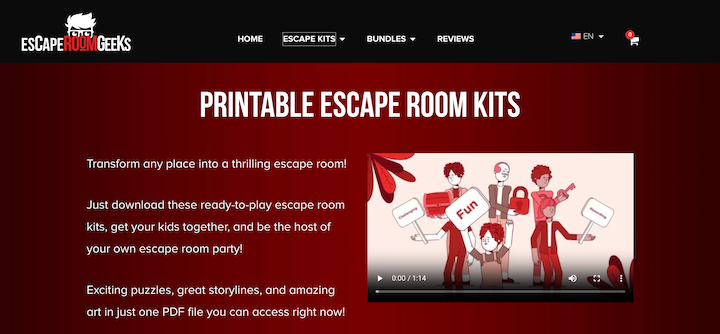
Printables are downloadable files your customers print at home: checklists, wall art, party games, chore charts, worksheets, and more.
They’re one of the easiest digital products to start with. Real example: Escape Room Geeks sells printable escape room kits as a full business.
Profitability snapshot: Typical price $2 to $15 for single printables, with bundles reaching $20 to $40. Low price point, but volume and bundles add up fast, and creation costs are near zero.
Best for: Beginners, teachers, parents, and crafters.
6. Canva and Design App Templates

Canva templates are editable designs your customers customize themselves: social media graphics, presentations, resumes, menus, invitations, and brand kits.
Demand keeps climbing because millions of non-designers use Canva every day and would rather start from a professional template than a blank page.
Profitability snapshot: Typical price $12 to $30 for standard packs, with large bundles and brand kits reaching up to $100. All you need is a free Canva account and design skill you already have.
Best for: Graphic designers and social-media-savvy creators.
7. Notion Templates
Notion templates turn the popular workspace app into ready-made systems: project trackers, content calendars, habit dashboards, CRM setups, and full “life operating systems.”
The Notion user base is large and growing, and power users happily pay for systems that save them setup time. The appeal is the same as any template: buyers want the result without the hours of building it from scratch.
Profitability snapshot: Typical price $10 to $100, with complex business systems sometimes selling for more. Zero software costs to create. Just a Notion account you likely already have.
Best for: Productivity enthusiasts and systems thinkers who’ve already built workflows others would want.
8. Spreadsheet Templates

Spreadsheets deserve their own spot on this list. Nearly everyone uses Excel or Google Sheets at work, and few people enjoy building them from scratch.
Budget trackers, business dashboards, inventory systems, and wedding planning sheets all sell well. The more a spreadsheet replaces expensive software, the more it’s worth.
Profitability snapshot: Typical price $10 to $50. A well-built template sells for years with occasional updates.
Best for: Analysts, accountants, and spreadsheet wizards.
9. WordPress Plugins

WordPress plugins are software additions that extend what a WordPress site can do. With WordPress powering over 40% of the web, the plugin market is enormous and permanent. Every new WordPress site is a potential customer for the right plugin.
Plugins solve specific problems: security, performance, forms, e-commerce, SEO, email opt-ins, booking, and hundreds of other functions. The best-selling plugins tend to solve a pain that most site owners share, not a niche edge case.
The business model that makes plugins especially profitable is annual licensing. You sell a license key, the plugin activates, and the following year the customer is prompted to renew for continued updates and support. A small base of customers paying $49 to $199 per year compounds quickly, and renewal rates for useful plugins are high.
This is the model Easy Digital Downloads was built to support. Thousands of plugin developers and businesses run their licensing and renewals through Easy Digital Downloads.
Profitability snapshot: Typical price $49 to $299 per year per license. Renewal revenue makes this one of the strongest long-term income streams on this list.
Best for: WordPress developers who can identify and solve a common site owner problem.
Learn how to sell WordPress plugins without a marketplace.
10. WordPress Themes

WordPress themes control how a site looks and lays out. There’s consistent demand from new site owners, businesses redesigning, and niche markets like photographers, restaurants, and law firms that want a theme built specifically for how they work.
The niche theme market is where independent sellers compete best. A theme built for yoga studios or podcast hosts commands more attention and justifies a higher price than a generic multipurpose theme competing with the top sellers on ThemeForest.
Like plugins, themes sell well on an annual update and support model. Buyers pay to get the theme, then renew annually for continued updates and compatibility with the latest version of WordPress. Bundles that include child themes, starter templates, and premium add-ons raise the average order.
Profitability snapshot: Typical price $39 to $149 per year. Theme studios that build a recognizable style and maintain a consistent update schedule earn strong renewal revenue. Real example: ThemeSelection has earned over $856,000 in lifetime net earnings using Easy Digital Downloads.
Best for: Web designers and developers with a distinctive visual style.
Learn how to sell WordPress themes without marketplace fees.
11. Software and Apps

Beyond WordPress, the broader software market covers desktop apps, mobile apps, video games, browser extensions, scripts, command-line tools, and developer utilities. Every platform creates demand for software that runs on it.
What separates software from other digital products is the range of revenue models it supports:
- One-time purchase: Customer pays once, owns the software. Simple and low-friction.
- Annual license: Access and updates included; customer renews each year. Steady, predictable income.
- Tiered licensing: Personal, business, and agency tiers at different price points. Captures more revenue from high-value customers.
- Subscription: Monthly or annual payment for access. Highest lifetime value per customer when retention holds.
- In-app upgrades: Free version with paid upgrades. Lowers the barrier to entry and converts users who’ve already seen the value.
The key is solving a problem specific and painful enough that people will pay to fix it. Generic tools compete on price. Specific tools compete on fit.
Profitability snapshot: Pricing varies widely, from $10 to $20 utilities to $500+ professional-grade tools. Subscription and licensing models generate the steadiest income.
Best for: Developers who can identify and solve a specific, painful problem for a defined audience.
Learn how to sell software and apps from your own site.
12. Web-Based Applications (SaaS)

SaaS products run in the browser instead of being downloaded. Customers pay a monthly or annual fee for access, which makes revenue predictable.
The tradeoff is commitment: SaaS needs hosting, maintenance, and support. But a tool that businesses rely on every month is about as durable as online income gets.
Profitability snapshot: Typical subscriptions run $10 to $100+ per month per customer. Slower to build, strongest recurring revenue.
Best for: Technical founders ready to run a product, not just launch one.
Learn more about selling SaaS and tech products.
13. Memberships and Subscriptions

Memberships sell ongoing access instead of a single file. That access can take many forms: a content library, a private community, weekly resources, live Q&A sessions, templates updated monthly, or any combination.
What makes memberships worth building is how revenue compounds. A single course sale ends at checkout. A membership customer pays every month, and the longer they stay, the more valuable they become. A hundred members at $15 per month is $18,000 per year, entirely in recurring revenue.
The challenge is retention. Members stay when they keep getting value. The sellers who do this well are consistent: they add new content on a schedule, engage with the community, and treat the membership like a product they’re always improving, not something they launched once.
Memberships also work well as a second product for creators who already have an audience. An ebook or course introduces buyers to your work; a membership keeps them close and creates a relationship that compounds over time.
Pricing models worth considering:
- Monthly: Lowest barrier to join. Higher churn risk.
- Annual: Higher upfront commitment, much lower churn. Offer a discount to incentivize the switch.
- Founding member rate: Launch at a lower price for early members and grandfather them in. Builds loyalty and urgency at the same time.
Profitability snapshot: Typical price $3 to $25 per month for most creator memberships, though higher-touch coaching or community tiers can run higher. Requires consistent new value, but lifetime customer value beats any one-time product on this list.
Best for: Creators with an audience that wants ongoing access to their expertise, community, or content.g access to their expertise, community, or content.
Learn more about how to sell subscriptions.
14. Graphics and Digital Art
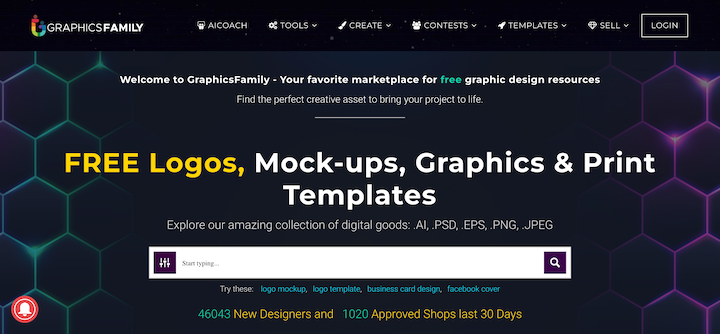
Digital art and graphics cover a wide range: logos, brand kits, icons, illustrations, patterns, clip art, brushes, Procreate stamp sets, background textures, and editable design files in PSD, AI, or Affinity formats.
If you already design for clients, selling graphics is income from work you’ve already done. You create an asset for a client, clean up a generalized version, and sell it to the market. The creative work is finished; you’re just changing who pays for it.
Licensing is where graphics pricing gets most interesting. The same asset can sell under multiple tiers:
- Personal license: For non-commercial use. Lower price, highest volume.
- Commercial license: For products the buyer will sell or use in client work. Higher price.
- Extended or exclusive license: Exclusive rights, or rights for broadcast and mass production. Highest price per sale.
Stock-style assets like icons, textures, and backgrounds earn through volume at accessible prices. Exclusive or commissioned pieces earn through price. Many successful shops run both in parallel: a catalog of affordable stock assets drives traffic and discovery, while premium packs and exclusive licenses drive margin.
Profitability snapshot: Typical price $5 to $200 depending on licensing tier. Bundles and license upgrades raise average order value significantly.
Best for: Graphic designers, illustrators, and digital artists with a consistent visual style.
15. Fonts
Fonts never go out of demand. Designers, brands, and content creators need fresh typefaces for branding, packaging, social graphics, editorial layouts, and web projects. Design trends shift every few years, so today’s in-demand style is tomorrow’s market gap.
A font family (regular, bold, italic, and the weights in between) is worth considerably more than a single cut, so most sellers package their type as a family from the start. Many add extras: matching icons, ornaments, or multilingual character sets that justify a higher price and differentiate from cheaper alternatives.
Licensing is especially important in the font market. The same typeface sells at different prices depending on how it’s used:
- Desktop license: For use in print and static files. The standard entry point.
- Web font license: For embedding in websites via CSS. Often sold separately or as an add-on.
- App or ePub license: For use inside software or digital publications.
- Commercial broadcast license: For video, advertising, and broadcast use. Highest price tier.
Niche styles consistently outperform generic ones from independent sellers. A distinctive handwritten script, a brutalist display face, or a legible condensed font built for a specific use case reaches a buyer who’s been searching for exactly that. A generic sans-serif competes with thousands.
Profitability snapshot: Typical price $9 to $60 per font or family for desktop use. Web and commercial licenses add meaningful revenue on top. A font created once can sell for years with no updates needed.
Best for: Type designers, lettering artists, and calligraphers who want passive income from their craft.
16. Presets and LUTs

Presets are one-click photo edits saved as files you install in Lightroom, Capture One, or similar apps. Open a raw photo, apply the preset, and the exposure, color, contrast, and tone adjustments apply instantly. Photographers use them for batch consistency: shoot a hundred portraits, run the preset, and the entire gallery matches in minutes.
LUTs — Look-Up Tables — are the video equivalent. Drop a LUT onto footage in Premiere Pro, DaVinci Resolve, or Final Cut and it applies a color grade: a specific “look” across the clip. Think of it as a filter for professional video. Videographers, YouTubers, and social media creators use LUTs to maintain a consistent visual style without spending hours on manual color correction.
Both sell to the same core audience: photographers and video creators who want professional results faster. That market has grown dramatically as content creation has become a full-time profession rather than a hobby.

The best-selling preset and LUT packs are tied to a recognizable aesthetic. “Moody film,” “clean and bright,” “cinematic orange and teal.” Buyers aren’t shopping for a technical tool; they’re shopping for a look they’ve seen and want to recreate. If your own editing style earns compliments or gets asked about, that’s your product.
Profitability snapshot: Typical price $10 to $100 per pack. Created from your own editing workflow, so production cost is essentially your time. High-volume sellers often bundle presets, LUTs, and behind-the-scenes tutorials into premium packages at $100 to $200.
Best for: Photographers and videographers with a distinctive, recognizable editing style.
17. Stock Photography

Premium photos remain in steady demand from bloggers, marketers, and businesses. The market is crowded, but specific niches still pay well: authentic workplace photos, regional imagery, and styled product backgrounds.
Selling photos from your own site lets you keep full pricing control, offer subscriptions for unlimited downloads, and build direct relationships with repeat buyers.
Profitability snapshot: Individual photos sell for a few dollars to $50+; subscription bundles and commercial licenses earn more.
Best for: Photographers with a defined niche.
Learn how to create your own photography website.
18. Video

Video products include stock footage, drone clips, motion graphics templates, color-graded cinematic packs, After Effects project files, DaVinci Resolve templates, and editing packs for tools like CapCut and Premiere Pro.
Video commands higher prices than photos because it’s harder to produce. A business that needs a 30-second establishing shot for an ad will pay $50 to $150 for footage that saves them an entire shoot day. That value calculation makes video one of the stronger-margin categories for experienced creators.
The types of video products worth selling:
- Stock footage: Landscape, urban, lifestyle, drone, and abstract clips. Businesses, marketers, and content creators license them for ads, videos, and presentations.
- Motion graphics templates: Lower-thirds, transitions, titles, and animated elements for editing software. YouTubers and video producers buy these in volume.
- After Effects and DaVinci Resolve projects: Pre-built project files for intros, outros, slideshows, and promo videos. Buyers customize and render their own version.
- Editing packs: Transition packs, sound effect bundles, color grade packs. Popular with the growing short-form video creator audience.
The recurring buyer is the most valuable angle in video. A creator who buys your transition pack and likes it comes back for the next one. Building a catalog of related products turns a one-time sale into a long-term customer relationship.
Profitability snapshot: Typical price $20 to $150+ per clip or pack. Templates for popular editing tools sell repeatedly to a consistent audience.
Best for: Videographers, animators, and motion designers with a library of footage or template-building skills.
19. Music and Audio

Audio products go far beyond songs: beats, samples, sound effects, meditation tracks, background music for creators, and audio courses all sell.
Content creators are the biggest growth driver. Every podcast and video needs licensed audio, and creators prefer buying direct from artists.
Profitability snapshot: Typical price $1 to $200 for standard stock licenses, with broadcast, extended, and exclusive-rights licenses running from a few hundred dollars into the thousands. Licensing tiers multiply revenue from the same track.
Best for: Musicians, producers, and sound designers.
See how to sell music and audio content.
20. Audiobooks
Audio is the fastest-growing way people consume books. Listeners buy audiobooks for commutes, workouts, and chores: any moment when reading isn’t possible.
If you’ve already written an ebook, an audiobook is a second product from the same material. The global audiobook market was valued at $11.18 billion in 2025, according to Fortune Business Insights.
Profitability snapshot: Typical price $8 to $30, depending on length. Narrating it yourself keeps costs near zero; selling direct keeps margins that audiobook platforms take away.
Best for: Authors and confident narrators.
21. 3D Assets and Models

3D models, textures, and printable files serve four distinct buyer groups, each willing to pay for quality:
- Game developers: Need characters, environments, props, and UI elements. Indie developers and small studios buy pre-made assets to ship faster and stay within budget.
- Animators and VFX artists: Need rigged characters and detailed scene elements for film, advertising, and motion graphics work.
- AR/VR builders: Need optimized, lightweight models for immersive experiences and mobile apps.
- 3D printing hobbyists and makers: Need STL files — the standard file format for desktop 3D printers — to print physical objects at home. Someone with a Bambu Lab or Prusa printer downloads your STL file and the printer builds the object layer by layer. The file is the product; the buyer supplies the material and machine.
The 3D printing audience alone is growing fast. Desktop 3D printers have dropped significantly in price over the past few years, and the hobbyist community has expanded with them. Popular STL categories include miniatures for tabletop games, replacement parts, home organization pieces, and decorative objects.
This is a more technical niche than most on this list, with less competition from casual sellers. Serious buyers pay serious prices, and come back when a seller consistently produces high-quality assets for their specific use case.
Profitability snapshot: Typical price $5 to $250+ per model or pack. Specialized assets (game-ready characters, architectural models, detailed miniatures) earn the most. Bundles of related assets (a dungeon environment kit, a sci-fi character pack) price well above individual models.
Best for: 3D artists, modelers, and technical designers with experience in Blender, Maya, ZBrush, or similar tools.
22. Documents

Documents turn expertise into a product. A lawyer sells contract templates. An HR consultant sells an employee onboarding kit. A project manager sells a client proposal system. A nutritionist sells a 12-week meal plan. In every case, the buyer gets the output of professional expertise at a fraction of what custom work would cost.
The business buyer is the sweet spot. A contract template that saves a $400 legal fee is an easy $40 sale. A brand style guide template that would cost $1,000 from an agency sells as a $75 download. The value is clear, the justification is simple, and professional buyers aren’t price-sensitive when the alternative is obvious.
Document types that sell consistently:
- Legal and business templates: Contracts, NDAs, partnership agreements, terms of service. High perceived value, strong price tolerance.
- Resume and career documents: Resume templates, cover letter frameworks, LinkedIn profile guides. Broad audience, high search volume.
- Industry reports and guides: Research-backed documents that save the buyer hours of reading. B2B buyers pay well for synthesized expertise.
- Process and system documents: SOPs, onboarding checklists, project management frameworks. Businesses buy these to save setup time.
- Educational documents: Lesson plans, worksheets, study guides. Teachers, tutors, and homeschool parents are active buyers.
Profitability snapshot: Typical price $10 to $100. Professional and B2B documents command the higher end. A strong template with a clear use case sells with almost no marketing effort.
Best for: Consultants, lawyers, HR professionals, educators, and any subject-matter expert whose process others want to replicate.
23. Social Media Content Packs

Social media content packs bundle ready-to-use material for businesses and creators. The buyer for these products is almost always a small business owner, solo creator, or influencer who needs to post consistently but doesn’t have the time or skill to create from scratch.
They would rather pay $30 for a month’s worth of ready content than spend their Sunday figuring it out.
A content pack can include any combination of: editable caption templates, branded story and reel graphics, content calendar spreadsheets, hashtag research documents, engagement prompt lists, and reel or video scripts. The best packs are organized around a specific niche: a content pack for real estate agents, fitness coaches, or coffee shops is worth more than a generic one because the buyer immediately sees themselves in it.
What makes this category especially good for repeat sales: content expires. A Q4 holiday content pack, a back-to-school bundle, a Valentine’s Day kit — seasonal refreshes bring the same buyers back three or four times a year. Sellers who build a library of seasonal and evergreen packs generate consistent revenue from a loyal, returning customer base.
Profitability snapshot: Typical price $15 to $100 per pack, with larger bundles or extended commercial licenses running higher. Niche-specific packs price higher than generic ones. Seasonal refreshes create natural repeat purchase cycles.
Best for: Social media managers, marketers, and designers who understand what performs on a specific platform or in a specific industry.
Learn more about monetizing social followings with digital content.
24. Professional Services

Services aren’t downloads, but productized services sell exactly like digital products: a fixed scope at a fixed price, purchased through your store. Think logo design packages, website audits, coaching sessions, and editing services.
Productizing removes the back-and-forth of custom quotes. Customers see the price, know what they get, and buy.
Profitability snapshot: Typical price $50 to $1,000+ depending on the service. You’re selling time, so margins depend on your rate, not production costs.
Best for: Freelancers and consultants who want bookings without proposals.
How to Choose What to Sell
With this many options, here’s how to narrow it down:
- Start with your skills. The best product is one you can make well. A designer should sell templates before attempting a SaaS.
- Check the demand. Search for your product idea. If people are already selling it, that’s proof of a market. Your job is differentiation, not invention.
- Start small, then expand. A printable or template takes days to launch. A course takes months. Validate your niche with a fast product before building a big one.
For more idea inspiration organized by who you are, see our guide to digital product ideas for passive income. And when you’re ready to build, here’s how to create a digital product that sells.
Where Should You Sell Digital Products?
Once you pick a product, you face the platform dilemma: sell on a marketplace, or sell from your own website?
There are real tradeoffs either way:
| 🟢 Marketplace Pros | 🔴 Marketplace Cons |
|---|---|
| Built-in visitors may help you find an audience faster (no guarantee). | They take a cut of every sale. The more you make, the more they take. |
| Listing a product is easier than building a site. | The customers belong to the platform, not to you. |
| You can test demand quickly. | Little or no direct communication with your buyers. |
| You can’t build your own brand on someone else’s site. | |
| Terms, fees, and rules can change at any time. | |
| Some platforms restrict your pricing or require exclusivity. |
Marketplaces like Etsy or Creative Market can be fine for testing. But every successful seller hits the same wall: the fees scale with your success, and the customer list you’re building belongs to someone else.
The best place to sell your digital products is your own website. You control the brand, the prices, the customer relationships, and the profit. You keep all of your revenue except standard payment processing fees.
For a deeper comparison, see selling through your own store vs. a marketplace.
The Best Way to Sell Digital Products on Your Own Site
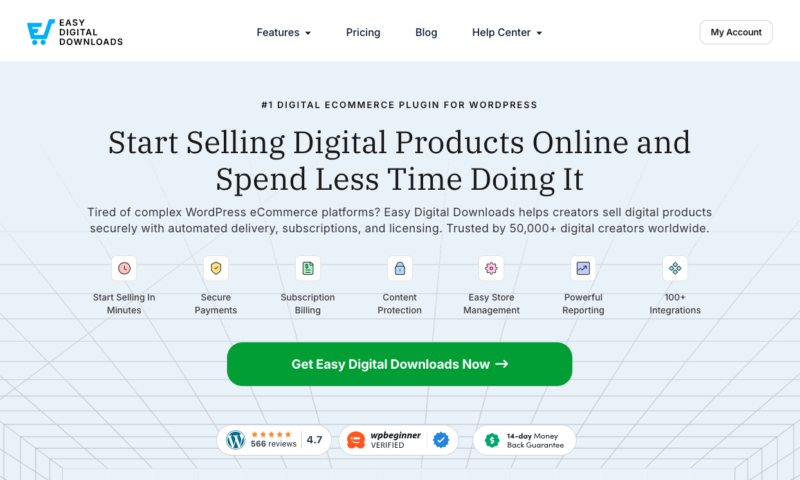
The best way to sell digital products from your own site is WordPress plus Easy Digital Downloads (EDD). WordPress powers over 40% of the web and gives you full ownership of your store. Easy Digital Downloads adds everything a digital product store needs, purpose-built for digital goods.
The free version of EDD includes:
- Protected product files with secure delivery
- A complete shopping cart and checkout
- Stripe, PayPal, and Square payments
- Discount codes
- Customer management and ecommerce reports
You won’t fight through shipping settings and inventory tools built for physical products. EDD only does digital, which is why it stays simple.
More than 50,000 businesses sell with Easy Digital Downloads, from solo creators to software companies like ThemeSelection, which has earned over $856,000 in lifetime net earnings selling templates and themes.
If you want subscription billing, software licensing, or marketing tools as you grow, an EDD Pass unlocks them.
FAQs About the Most Popular Digital Products
Here are quick answers to the most common questions about the best digital products to sell online.
What are the most profitable digital products to sell?
The most profitable digital products are online courses, software with license renewals, memberships, and templates. Courses and software earn the highest prices, while memberships and licensing add recurring revenue. Templates and printables earn less per sale but cost almost nothing to create, so margins stay above 90%.
What digital products sell the most?
Ebooks, online courses, digital planners, Canva templates, and printables sell in the highest volumes. They’re affordable, easy to understand, and serve huge audiences. AI prompt packs are the fastest-growing sellers right now.
How much can you earn selling digital products?
Earnings range from a few hundred dollars a month to six figures a year. Income depends on your product type, pricing, audience size, and marketing. Sellers with recurring products like memberships or software licenses typically earn the most over time.
What digital products can you make with no money?
You can create ebooks, printables, Canva templates, spreadsheets, and AI prompt packs using free tools. Google Docs, Canva’s free plan, and Notion cost nothing. Your only investment is the time to make something worth buying.
Are AI-generated digital products worth selling?
Yes, if you add real value beyond the raw AI output. Tested prompt packs, AI-assisted templates, and guides that teach AI skills all sell well. Products that are obviously unedited AI output don’t survive customer reviews, so quality control matters more in this category, not less.
Where is the best place to sell digital products?
Your own website is the best place to sell digital products because you keep your revenue, your customer relationships, and your brand. Marketplaces like Etsy take fees from every sale and own your customer list. WordPress with Easy Digital Downloads is the most popular way to run your own digital store.
Start Selling the Most Popular Digital Products
You’ve seen what the most popular digital products to sell online are and what makes each one profitable. The pattern is clear: pick a product that matches your skills, start with something fast to launch, and sell it from a site you own.
There’s nothing stopping you from creating something people will pay for. The sellers earning real money with these products all started exactly where you are now.
Want to keep exploring? Check out the trending digital products in high demand right now.
📣 P.S. Be sure to subscribe to our newsletter and follow us on Facebook, Twitter/X, or LinkedIn for more WordPress resources!