

Video keeps growing as one of the most popular types of content online, and more creators are turning it into real income every year. If you want to sell videos online, you have more choices than you might think: one-time downloads, subscriptions, streaming access, or some mix of all three.
This guide walks you through how to sell videos online the smart way.
You’ll learn how to choose the right approach for your content, price your videos, protect your work, and set up your own store with WordPress and Easy Digital Downloads (EDD), no coding required.
Key Takeaways
- Own your sales channel: Selling from your own website keeps more revenue and control than marketplaces or platforms.
- Pick a model first: Choose between one-time downloads, subscriptions, or bundled access before you build your store.
- Price with purpose: Base your price on production quality, length, and how exclusive your content is.
- No coding needed: Easy Digital Downloads handles the WordPress setup, from pricing to file delivery.
Why Sell Videos Online?
There are plenty of reasons to sell videos online instead of relying only on ads or sponsorships.
Selling directly lets you make money from your work without waiting for a brand deal or hoping a platform’s ad revenue share is worth it. People love watching video content, and that demand isn’t slowing down.
When you sell videos online, customers can buy whenever they want. You don’t have to run expensive ad campaigns just to make a sale.
You also get more control over your audience. Using your own website and email list, you can reach specific viewers instead of hoping the right person finds your content by chance.
Types of Videos to Sell Online
Almost any video content can become a paid product, especially if it teaches, entertains, or helps someone solve a problem.
Some popular types of videos to sell online include:
- Online courses and tutorials: Step by step lessons on a skill or topic. Selling digital courses works well if your videos are part of a bigger course.
- Behind the scenes or exclusive content: Vlogs, extended cuts, or bonus footage for your biggest fans.
- Films, shows, or series: Original video projects you want to monetize directly.
- Stock footage: Clips other creators or businesses can license for their own projects.
Choosing How to Sell Your Videos
Before you build anything, decide how you want to sell your videos. That choice affects your website, your pricing, and how you protect your content.
Marketplace, Streaming Platform, or Your Own Website?
You have three broad options for where to sell videos online: a marketplace, a streaming platform, or your own website.
- Marketplaces and stock video sites: Already have an audience, so setup is often faster. The tradeoff is real: they take a cut of every sale, and the customer relationship belongs to the marketplace, not you.
- Streaming platforms: Work well if you want to sell access to video that plays in a browser instead of a downloadable file. That’s a different setup than what this guide covers. If gated streaming access is what you’re after, check out our guide to selling streaming video and audio instead.
- Your own website: Gives you the most control. You keep more of each sale, own the customer relationship, and decide exactly how your store looks and works. It takes more setup than a marketplace, but that work pays off over time.
See our full breakdown of:
- Marketplaces vs. your own store
- Choosing your own website over social media
- What it really costs to run an ecommerce website
This guide focuses on selling video downloads from your own website with WordPress.
Choosing a Monetization Model: One-Time, Subscription, or Bundled
Once you know you’re selling from your own website, pick how customers will pay. Most video sellers use one of three models: a one-time purchase for a single video, a subscription for ongoing access to new content, or bundled access to a whole library at once.
- One-time purchase. The customer pays once and downloads the file. This is the simplest model to set up and the focus of this guide. It works well for standalone videos, courses, or a single in-depth tutorial.
- Subscription. Customers pay on a recurring basis (monthly or yearly) for ongoing access to your video library. This fits well if you publish new videos regularly. EDD’s Recurring Payments feature handles the billing automatically. Read more about building recurring revenue streams if this model interests you.
- Bundled access. Customers pay once, or on a subscription, for access to a group of videos instead of buying each one separately. EDD’s All Access feature makes this easy to set up. See our guide to selling all-access memberships for the full walkthrough.
You don’t have to pick just one forever. Plenty of sellers start with one-time purchases, then add a subscription or bundle option as their video library grows.
How Much Should You Charge for Your Videos?
Video pricing depends mostly on length, production quality, and how exclusive the content is. A short tutorial might sell for a few dollars, while an in-depth course or a full video can reasonably charge $20 to $100 or more.
A few factors that affect what you can charge:
- Length and depth: Longer, more comprehensive videos usually support a higher price than a short clip.
- Production quality: Professional editing, audio, and visuals justify a premium over a casual recording.
- Exclusivity: Content people can’t get anywhere else, like behind the scenes footage or a unique skill, supports higher prices than something widely available.
- Your niche’s going rate: Look at what similar creators charge for comparable content before you settle on a number.
Don’t treat your first price as final. Start with a reasonable number, then adjust based on how customers respond. EDD lets you create variable pricing if you want to offer the same video at different price tiers, like a basic download versus a bundle with bonus footage. For a deeper look at pricing strategy, see our guide to pricing models and strategies.
How to Sell Videos Online With WordPress
Now that you’ve chosen your approach and pricing, it’s time for the actual setup. Here’s how to sell videos online with WordPress and Easy Digital Downloads, from your first plugin install to your first sale.
Step 1: Set Up Your WordPress Site
Already running a WordPress site? Skip ahead to Step 2.
If you don’t have a website yet, WordPress is the best place to start. It’s flexible, it isn’t locked to one platform’s rules, and it’s the foundation nearly every option in this guide builds on.
WordPress itself is free, but you’ll need hosting. I recommend Levamo. It’s built for dynamic WordPress sites, which matters here: Easy Digital Downloads processes checkouts, generates secure download links, and validates purchases in real time, and Levamo’s infrastructure is built to keep that fast without caching getting in the way.

For a full comparison of hosting options, see our WordPress hosting recommendations.
Step 2: Get Easy Digital Downloads
Next, download and install Easy Digital Downloads.
EDD is a WordPress plugin built specifically for selling digital products, including video. Unlike general ecommerce plugins built for physical goods, EDD is purpose built for exactly what you’re doing here. It’s also a strong WooCommerce alternative if you don’t sell anything physical.
The free Core version lets you add digital products, create product pages, and configure payment methods. For the ideal feature set for selling video, grab an EDD Pass to unlock Content Restriction, All Access, Recurring Payments, and Amazon S3 or DropBox integration, all covered later in this guide.
If you need help installing the plugin, see our guide on installing and activating Easy Digital Downloads.
Once EDD is active, you’ll see a new Downloads menu item in your WordPress dashboard. Head to Downloads » Settings » Payments to connect a payment gateway like Stripe or PayPal.
Step 3: Create Your Download Product (Video)
Now it’s time to add your video as a digital product, which EDD refers to as a “Download.”
Go to Downloads » Add Download. Give your video a clear title and write a description that tells potential buyers what they’re getting.
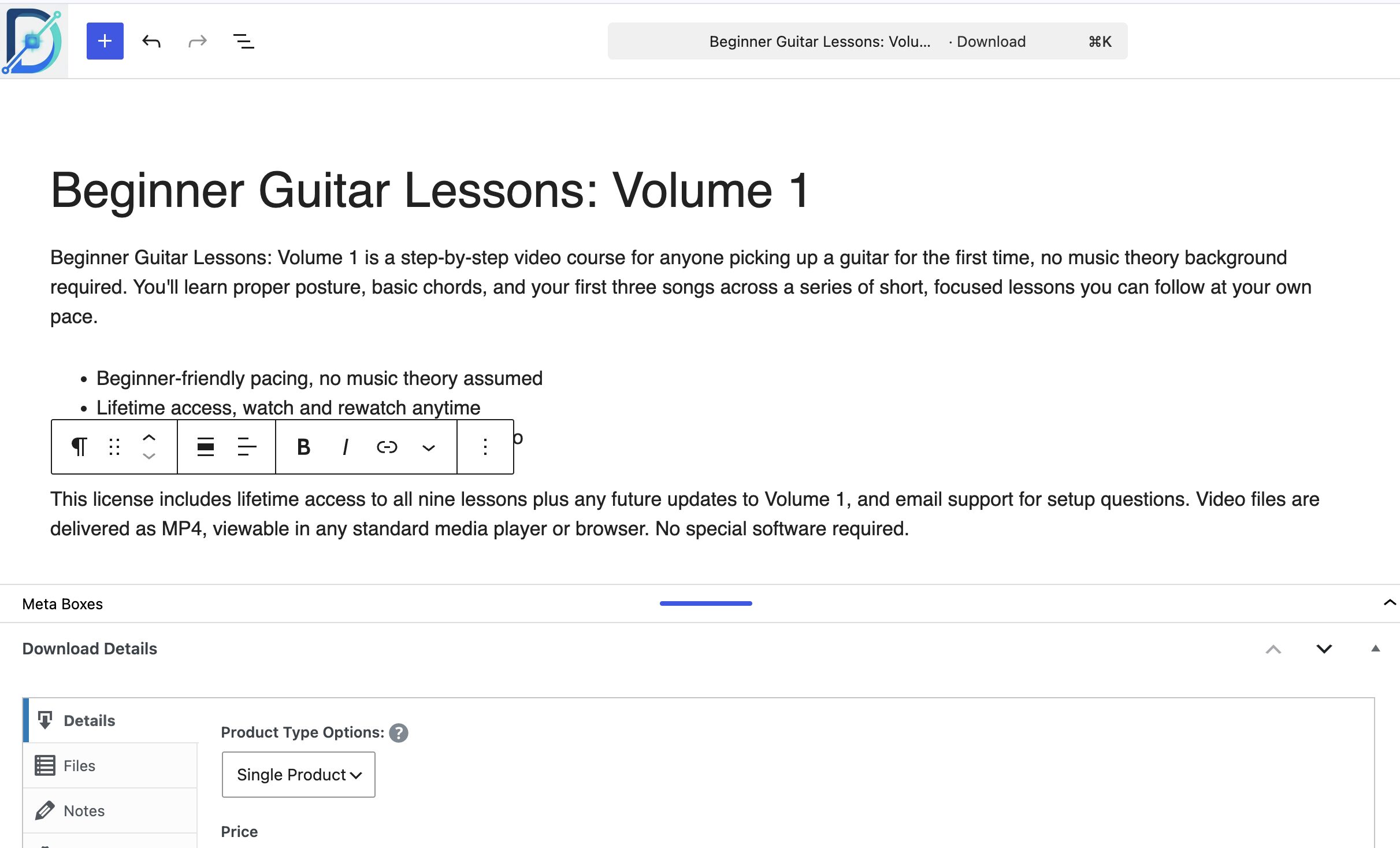
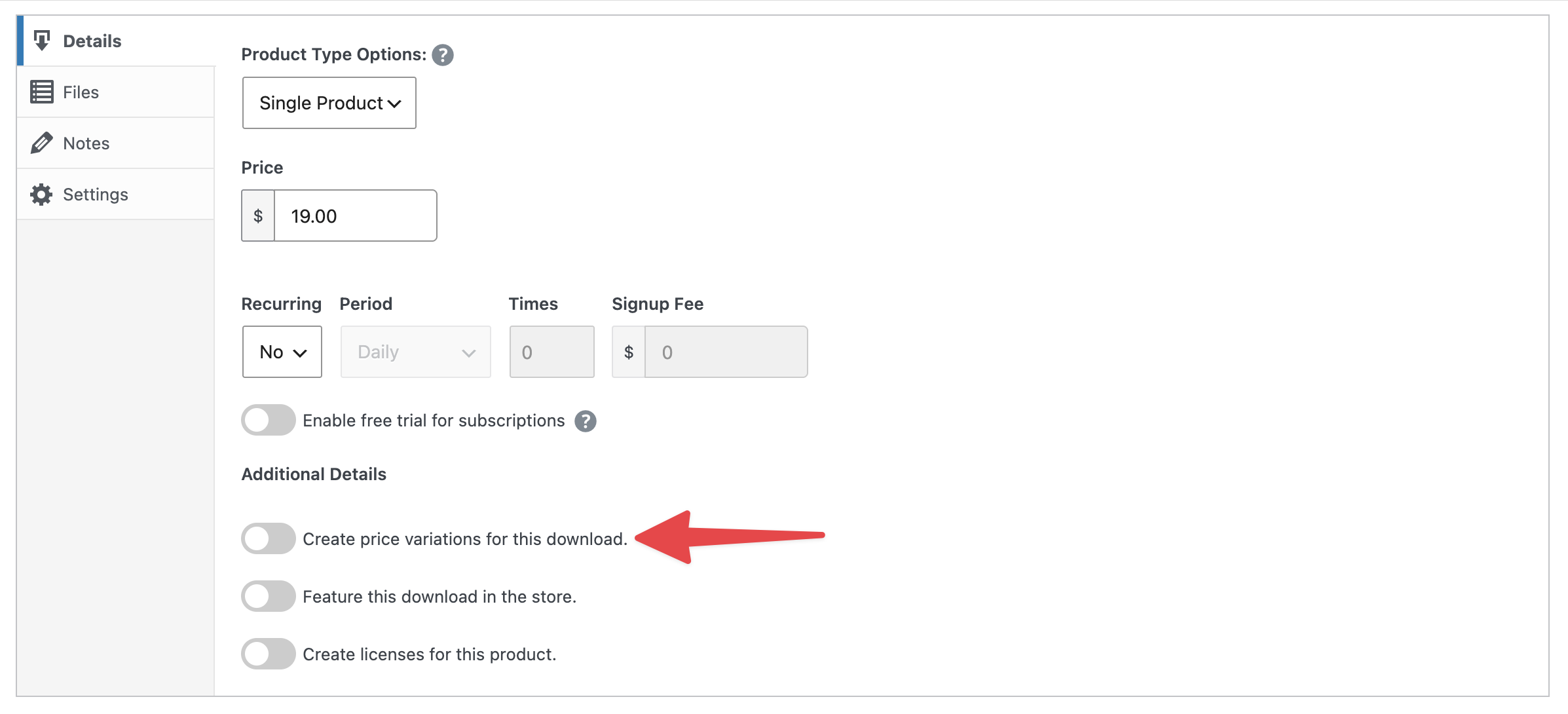
Within the Download Details box beneath the editor, select Product Type and choose Single Product for a standalone video. EDD also supports Bundle and Service, but Single Product is what you want for one video.
Next, set your price in the Price field using the pricing guidance from earlier in this guide. If you want to offer the same video at multiple price points, like a basic version and a bonus-footage bundle, turn on Create price variations for this download to reveal the Prices tab. Learn more about setting up variable pricing.
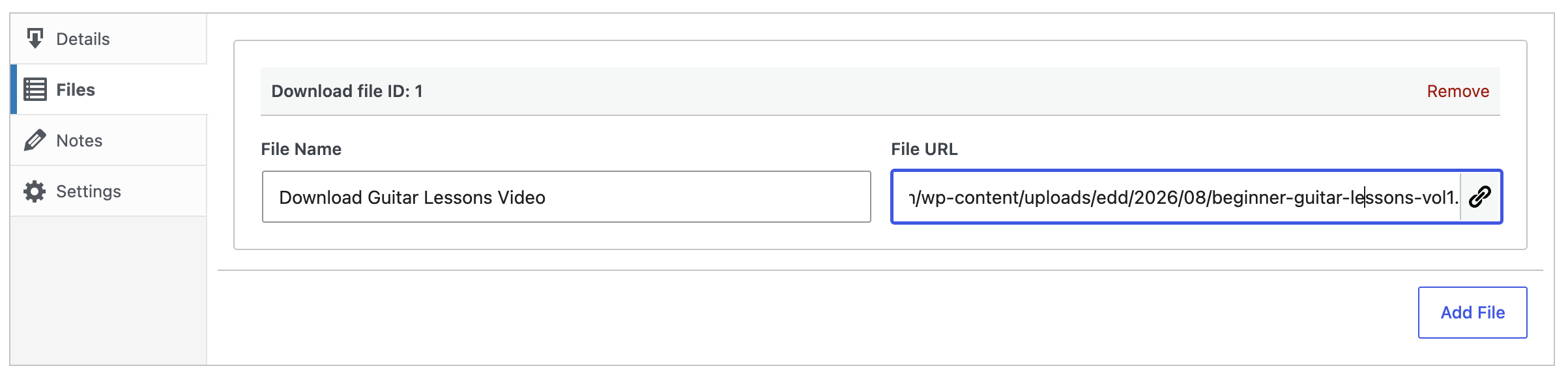
Now upload your actual video. Under the Files tab, add a File Name (the label customers will see, like “Download my video”) and upload your file under File URL. Your file is automatically protected from search engines and non-customers. Use Add File if you’re including more than one file.
Most video files work better as a ZIP file before upload.
For your product’s featured image, use the featured image selector in the sidebar (Set Download Image). This is the product image customers see when browsing your store.
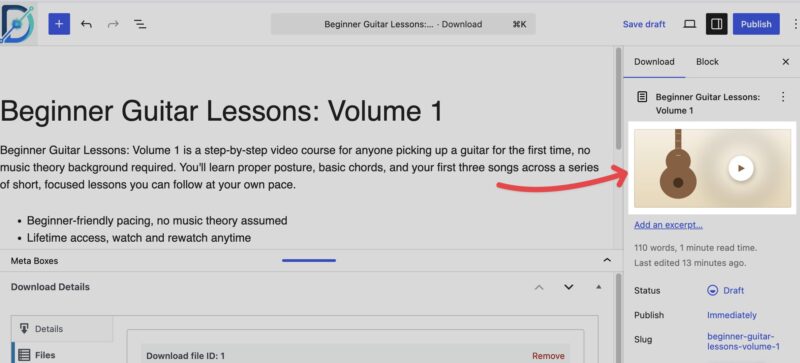
When you’re ready to check your work, click Save draft, then View Preview to see exactly what customers will see on the live product page.
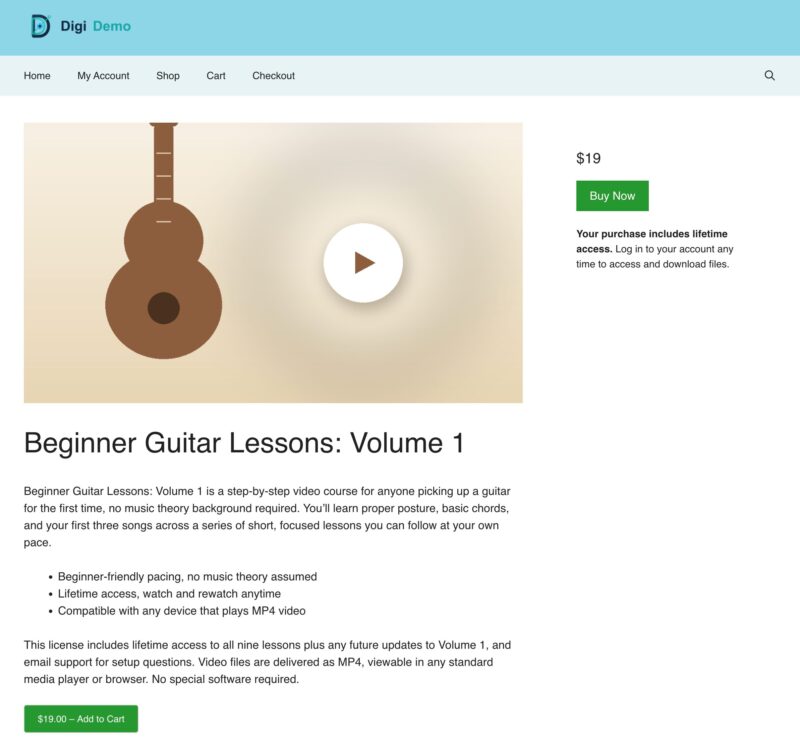
Your site’s overall look will depend on your WordPress theme, so don’t worry if the default styling looks plain at first.
Step 4: Publish and Protect Your Video
Happy with how everything looks? Click Publish. You’ll see a pre-publish checklist with a Visibility setting. Public is right for most stores; use Private or Password protected only if you’re testing the page before launch.
Once a customer buys, they’ll get a purchase confirmation email with a link to download the video. You can customize this email under Downloads » Settings » Emails » Purchase Receipts.
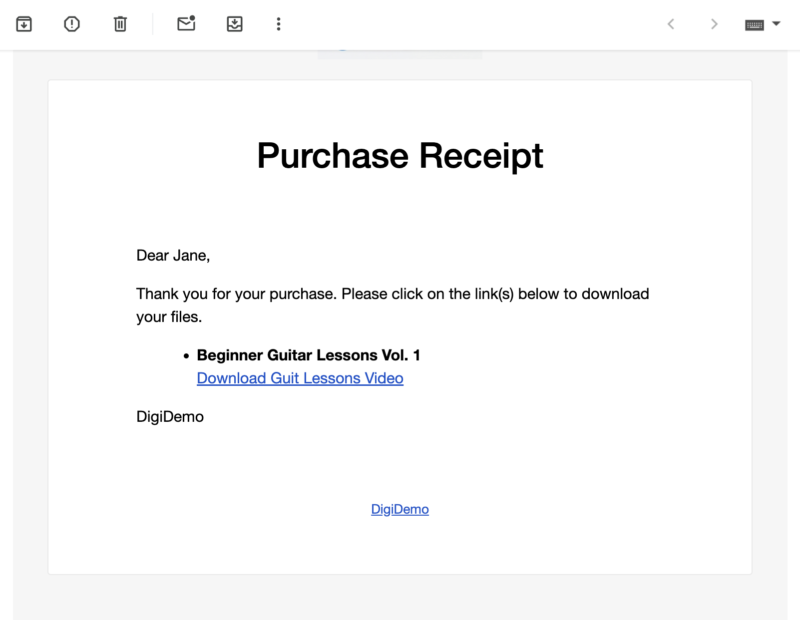
That download link expires automatically after 24 hours by default, which helps prevent casual sharing. You can adjust that expiration window or reissue a link to a customer at any time.
If you’re worried about your video being redistributed after purchase, consider gating access to a streaming page instead of offering a downloadable file at all. EDD’s Content Restriction feature lets you do exactly that, restricting a page so only paying customers can view it.
Our guide to selling streaming video and audio walks through that setup in detail if piracy risk is a bigger concern for your content than convenience.
EDD Bonus Features
Once your video store is running, a few features can help it grow.
- Amazon S3 or Dropbox integration: If you’re selling large video files, your web host might struggle to serve them quickly. These features let you store files on infrastructure built for it.
- Content Restriction: Gate access to a page instead of selling a downloadable file, useful if you want to sell streaming access.
- All Access: Bundle multiple videos together so customers can buy access to your whole library at once instead of one video at a time.
- Recurring Payments: Set up automatic subscription billing for ongoing access to new content.
These features (and more) come with an EDD Pass. See EDD’s pricing to learn more.
How to Promote Your Videos After You Publish
Publishing your video is just the start. A few simple steps after launch can meaningfully increase your sales.
- Build an email list. Customers who buy once are your best audience for future videos. A simple lead magnet, like a free short clip or preview, is an easy way to start collecting emails before someone buys anything.
- Share on social media. Post a trailer, a behind the scenes clip, or a short highlight reel on the platforms your audience already uses. Link back to your product page, not a full copy of the video.
- Optimize your product page for search. People search for the kind of video you’re selling, and a clear, well-structured product page can bring in buyers who’ve never heard of you, including through AI search tools. See our guide to getting your digital products found by AI search for a starting checklist.
- Use YouTube as a teaser channel, not your storefront. A short, free preview on YouTube can drive traffic to your paid version without giving away the whole thing.
None of this needs to happen all at once. Pick one or two promotion channels that fit your audience and build from there.
FAQs About Selling Videos Online
What is the best way to sell videos online?
The best way to sell videos online is through your own website. It gives you the most control over pricing, customer data, and the buying experience. WordPress is the most popular platform for building that website, and Easy Digital Downloads makes it simple to turn your WordPress site into a store for videos and other digital products.
Can I import videos onto my WordPress site?
Yes. If you’re uploading multiple videos at once, you can bulk import them as a CSV file instead of adding each one by hand. In EDD, go to Downloads » Tools » Import/Export and use the Import Download Products option.
How much should I charge for my videos?
It depends on length, production quality, and exclusivity. Short tutorials often sell for a few dollars, while in-depth courses or full-length videos can reasonably charge $20 to $100 or more. Check what similar creators in your niche charge, then adjust your price based on how customers respond.
Can I sell videos as a subscription instead of a one-time purchase?
Yes. EDD’s Recurring Payments feature lets you charge customers on a recurring basis for ongoing access to your video library. This works well if you publish new videos regularly, rather than selling a single one-time download.
How do I protect my videos from piracy?
Easy Digital Downloads automatically protects your download links from search engines and non-customers, and you can set links to expire after a set time. For stronger protection, you can gate a streaming page instead of offering a downloadable file, so customers can watch but never actually download the source file.
Do I need a website to sell videos online?
Not technically. You can use a marketplace or an all-in-one video platform instead. But your own website gives you more control over pricing, branding, and customer data, and you keep more of each sale since you aren’t paying platform fees.
Start Selling Videos With WordPress and EDD
You now have everything you need to sell videos online: a monetization model, a pricing approach, a plan to protect your work, and a step by step path to set it up with WordPress and Easy Digital Downloads.
Start with the model that fits where you are today. Most sellers begin with a straightforward one-time download, then add a subscription or bundled option once they have more videos to offer.
Looking for more ways to sell digital content? Check out:
- How to Sell Photography
- Selling Graphics and Digital Art
- Selling Music and Audio
- The Power Benefits of Selling Digital Products
📣 P.S. Be sure to subscribe to our newsletter and follow us on Facebook, Twitter/X, or LinkedIn for more WordPress resources!