

Platforms like Etsy, Creative Market, and Gumroad make it easy to start selling. But they take a cut of every sale, set the rules, and own the customer relationship. Building your own digital marketplace with WordPress changes that.
You keep the revenue. You own the data. And you set the terms.
Easy Digital Downloads (EDD) gives you everything you need to build a multi-vendor digital marketplace on WordPress: vendor dashboards, automated commissions, product moderation, and integrated payments. You won’t pay a platform fee on any transaction.
This guide walks you through what a digital marketplace is, what it costs to build one, and exactly how to set it up step by step.
Key Takeaways
- Own your platform. WordPress and EDD give you a self-hosted marketplace with no platform fees and no third-party rules.
- Automate commissions. EDD tracks vendor earnings, adjusts for refunds, and processes bulk payouts automatically.
- Full vendor control. You approve vendors, review products, and set commission rates per vendor or globally.
- Keep more revenue. EDD Pro eliminates additional per transaction fees, and there’s no marketplace tax.
- What Is a Digital Product Marketplace?
- What Can You Sell on a WordPress Digital Marketplace?
- How Much Does It Cost to Build a Digital Marketplace?
- Do You Need WooCommerce to Build a Digital Marketplace?
- How to Build a Digital Marketplace With WordPress
- How to Attract Your First Vendors
- FAQs on Creating a Digital Marketplace in WordPress
- What's the difference between a single-vendor store and a digital marketplace?
- Do I need WooCommerce to build a digital marketplace on WordPress?
- How much does it cost to build a WordPress digital marketplace?
- How do vendor commissions work in Easy Digital Downloads?
- Can I control which products vendors publish on my marketplace?
- What types of digital products can vendors sell on my marketplace?
- How do I handle refunds when a vendor makes a sale?
- Build a Digital Product Marketplace You Actually Own
What Is a Digital Product Marketplace?
A digital product marketplace is a platform where multiple independent vendors sell digital files (like eBooks, templates, music, or software) through a single storefront. The platform owner earns a commission on each sale.
You’ll also see this called an online marketplace for digital goods. It’s the same thing: one storefront, multiple sellers, one platform owner collecting commission.
WordPress lets you build and own this infrastructure yourself instead of renting space on a third-party platform.
This is different from a single-vendor store, where only one seller (you) lists products. A marketplace opens your platform to outside creators, and you earn a percentage of every transaction.
👉 The ownership advantage is significant. On a hosted marketplace, the platform controls pricing rules, takes a cut of your revenue, and can shut down your store at any time. On your own WordPress marketplace, you control everything: commission rates, vendor approvals, product standards, and the customer relationship.
What Can You Sell on a WordPress Digital Marketplace?
Easy Digital Downloads powers digital product stores for 50,000+ businesses across 187 countries, with over 30 million orders processed.
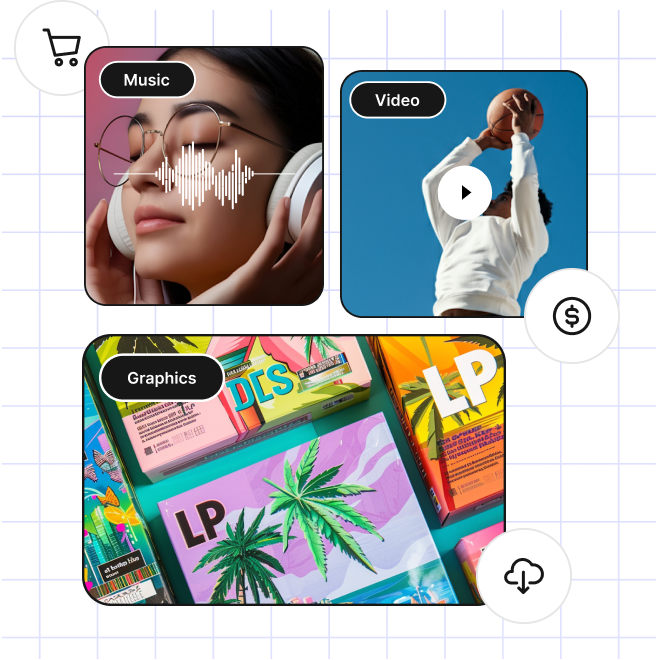
EDD supports any type of digital product file. A few of the most popular categories:
- eBooks, PDFs, and guides
- WordPress themes and plugins
- Design templates and graphics
- Music, audio, and sound effects
- Photography and stock assets
- Software with license keys
- Video courses and tutorials
- Fonts and creative assets
For software vendors, EDD’s Software Licensing feature adds automated license key generation and renewal to the marketplace. Vendors can sell software the same way companies like Envato and ThemeForest do on your platform, under your brand.
How Much Does It Cost to Build a Digital Marketplace?
Most WordPress-based digital marketplaces cost between $365 and $565 per year to run. Here’s what that breaks down to:
| Item | Estimated Cost |
|---|---|
| Domain name | ~$15/yr |
| WordPress hosting | $50–$150/yr |
| Easy Digital Downloads Pro Pass | $299.50/yr |
| Theme (optional) | Free to $100 one-time |
| Total (estimated) | ~$365–$565/yr |
The EDD Professional Pass includes all marketplace features: vendor submissions, commissions, recurring payments, software licensing, and more. There’s no per-transaction platform fee. You pay standard payment processor rates only.
Compare that to hosted alternatives. Creative Market takes 30–45% of every sale. Etsy charges listing fees, a 6.5% transaction fee, and payment processing fees on every order. At any meaningful sales volume, owning your marketplace pays for itself quickly.
Do You Need WooCommerce to Build a Digital Marketplace?
No. WooCommerce is designed for physical and mixed-product stores. For a digital-only marketplace, it adds complexity you don’t need.
| Easy Digital Downloads | WooCommerce + Multi-Vendor Plugin | |
|---|---|---|
| Built for digital products | ✅ | 🆇 (physical-first) |
| Multi-vendor support | Built in (Pro) | Requires separate plugin |
| License key management | Built in (Pro) | Requires separate plugin |
| Setup complexity | Low | High |
| Best for | Digital marketplaces | Physical or mixed stores |
Easy Digital Downloads is purpose-built for digital sellers. It handles file delivery, vendor dashboards, commission tracking, and license keys without the overhead of a general-purpose eCommerce platform.
🔎 Learn more about Easy Digital Downloads vs WooCommerce.
How to Build a Digital Marketplace With WordPress
Easy Digital Downloads makes it straightforward to launch a multi-vendor digital product marketplace. Here’s how to set it up from scratch.
Before you start: Marketplace features require the EDD Professional Pass or higher. This tutorial also assumes you have a WordPress site. If not, you can follow our guide on how to create an online store in WordPress.
If you already have WordPress + EDD Pro, feel free to jump to Step 3.
Step 1: Install Easy Digital Downloads
Choose and purchase your EDD Pro pass from the EDD website and download the plugin from your account dashboard.
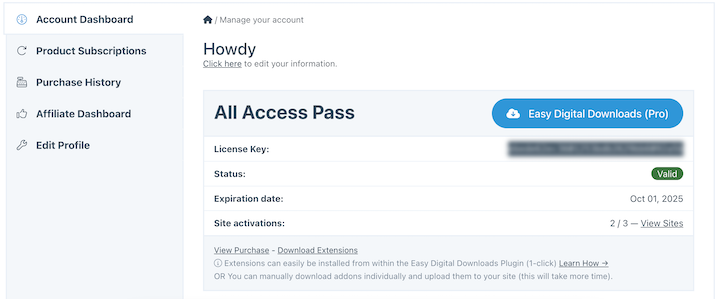
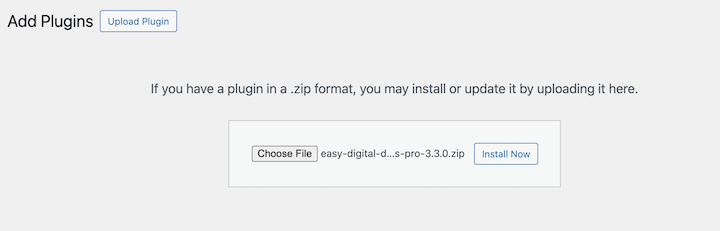
In your WordPress admin, go to Plugins » Add New Plugin » Upload Plugin and select the zip file. Click on Install Now then Activate.
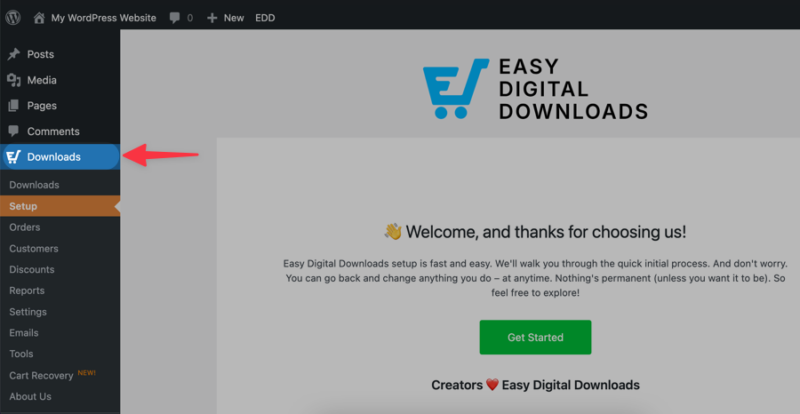
After activation, the EDD setup wizard (Downloads » Setup » Get Started) walks you through the basics: your store currency, the pages EDD needs (checkout, purchase confirmation, purchase history), and your first payment gateway connection.
⚙️ Feel free to refer to our EDD Quickstart Guide or follow the below setup video for step-by-step guidance.
Step 2: Connect Your Payment Gateway
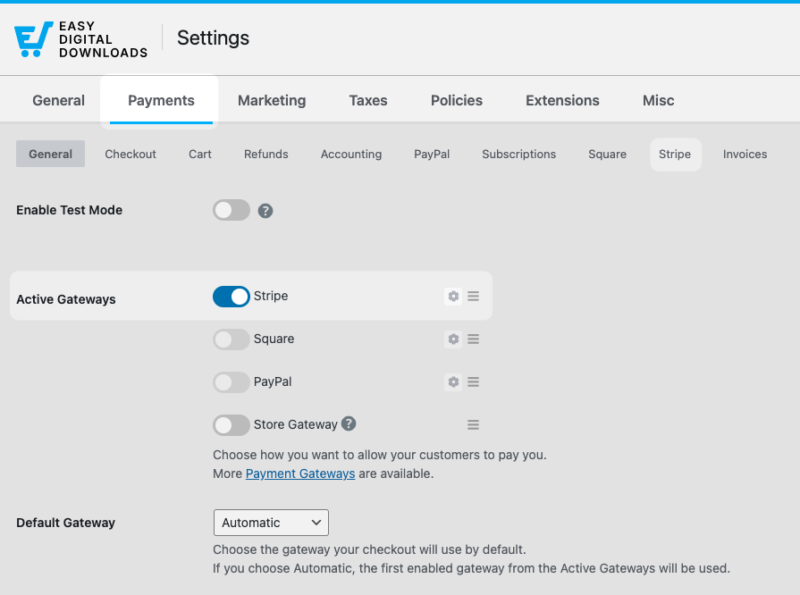
Go to Downloads » Settings » Payments to connect your payment gateway.
Stripe is the recommended option for most marketplaces. It supports 135+ currencies across 46+ countries, processes in seconds, and handles automated vendor payouts directly. PayPal is also available, along with 20+ additional gateways through EDD’s payment integrations.
You won’t pay any additional platform fee to EDD on top of standard processor rates. Stripe charges 2.9% + 30¢ per transaction; that’s the only fee on each sale.
Step 3: Enable Vendor Submissions
Go to Downloads » Extensions and activate the Frontend Submissions feature.
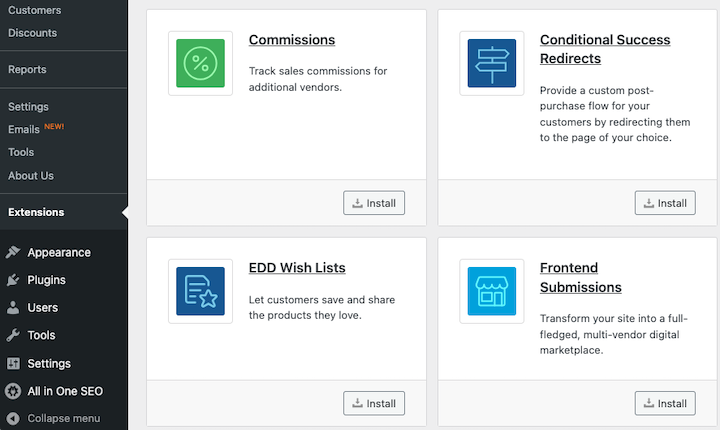
This is the foundation of your marketplace.
FES gives vendors their own dashboard inside your WordPress site without giving them access to your WordPress admin.
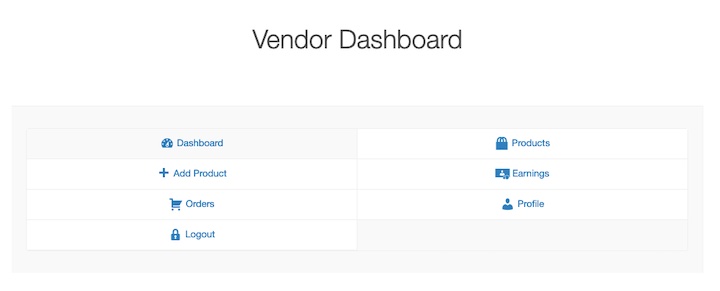
From the vendor dashboard, sellers can:
- Upload and manage their products and files
- Monitor real-time earnings and order history
- Handle customer support tickets
- Track order status
You control the vendor registration form using a drag-and-drop builder, no code required. Add the fields you need: store name, payment details, product category, or anything else you want to collect from applicants.
Step 4: Set Up Commissions
Activate the Commissions feature from Downloads » Extensions. This automates the most time-consuming part of running a marketplace: tracking what each vendor earns and processing their payouts.
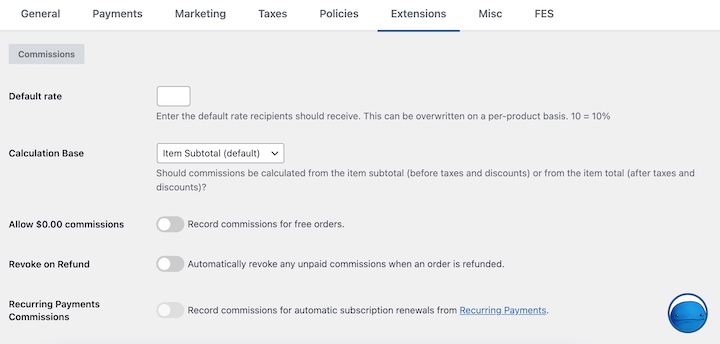
Under Settings » Extensions » Commissions, set a global commission rate (percentage or flat amount) that applies to all vendors, then override it per vendor when needed. If a customer requests a refund, EDD automatically adjusts the vendor’s commission total, no manual reconciliation.
For example, at a 20% commission rate, a $50 template sale nets the vendor $40 and your marketplace $10, and EDD adjusts both amounts instantly if the sale is refunded.
When it’s time to pay out, you can process bulk payouts to multiple vendors at once. You can also export commission data to CSV for your own records.
You can track all commission payments under Downloads » Commissions. This section will show you which commissions have been paid, are pending, or are due.
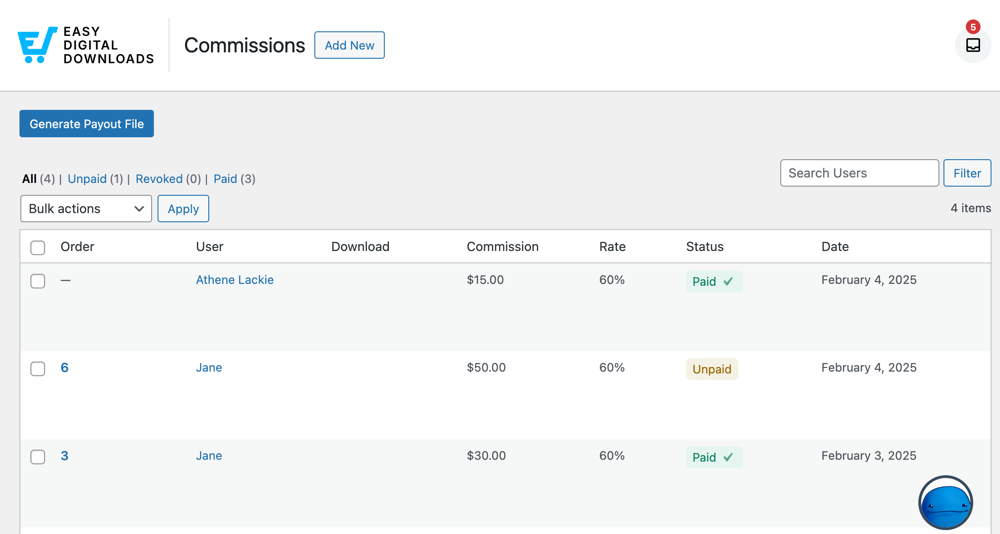
⚙️ Refer to our Commissions setup documentation for additional guidance.
Step 5: Configure Vendor Moderation
Go to Downloads » Settings » FES to configure your settings and vendor approval workflow.
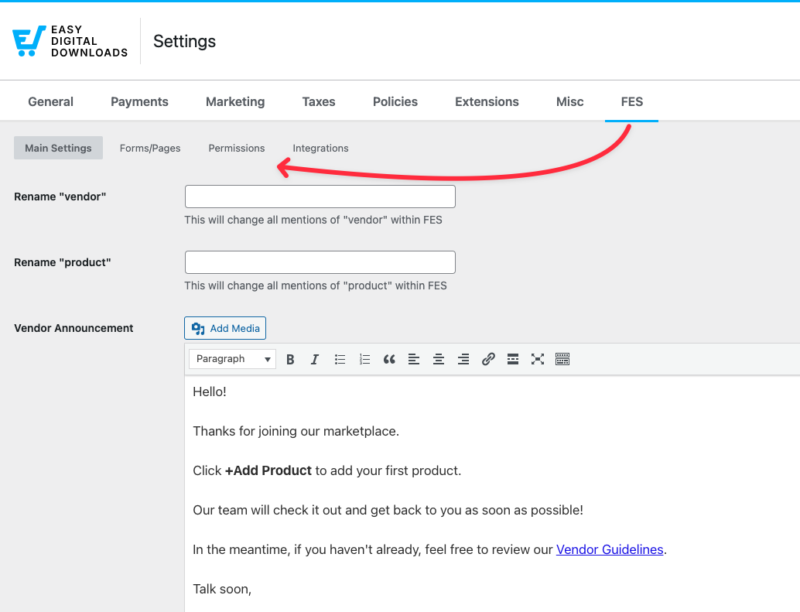
Under Permissions, you can require manual approval for every new vendor application, or set EDD to approve automatically based on your criteria.
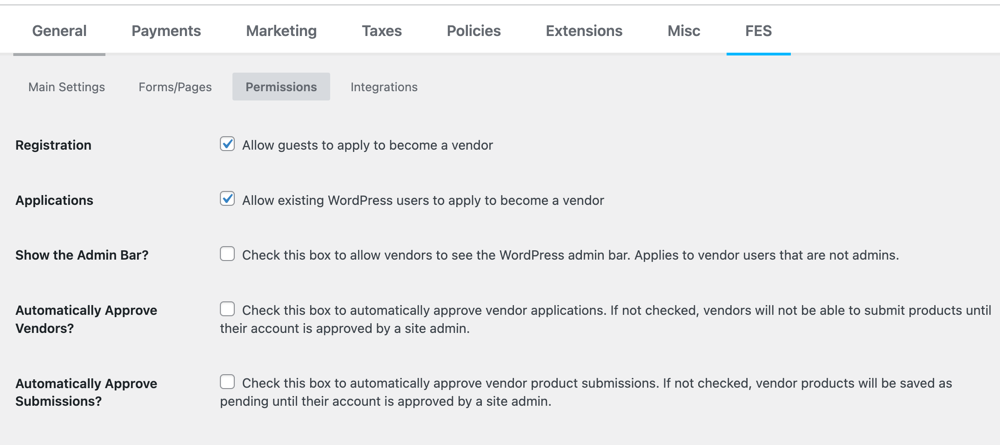
Product moderation works the same way: require admin review before any vendor product goes live, or allow vendors to publish directly. Granular permission controls let you decide exactly what each vendor can edit, see, and access.
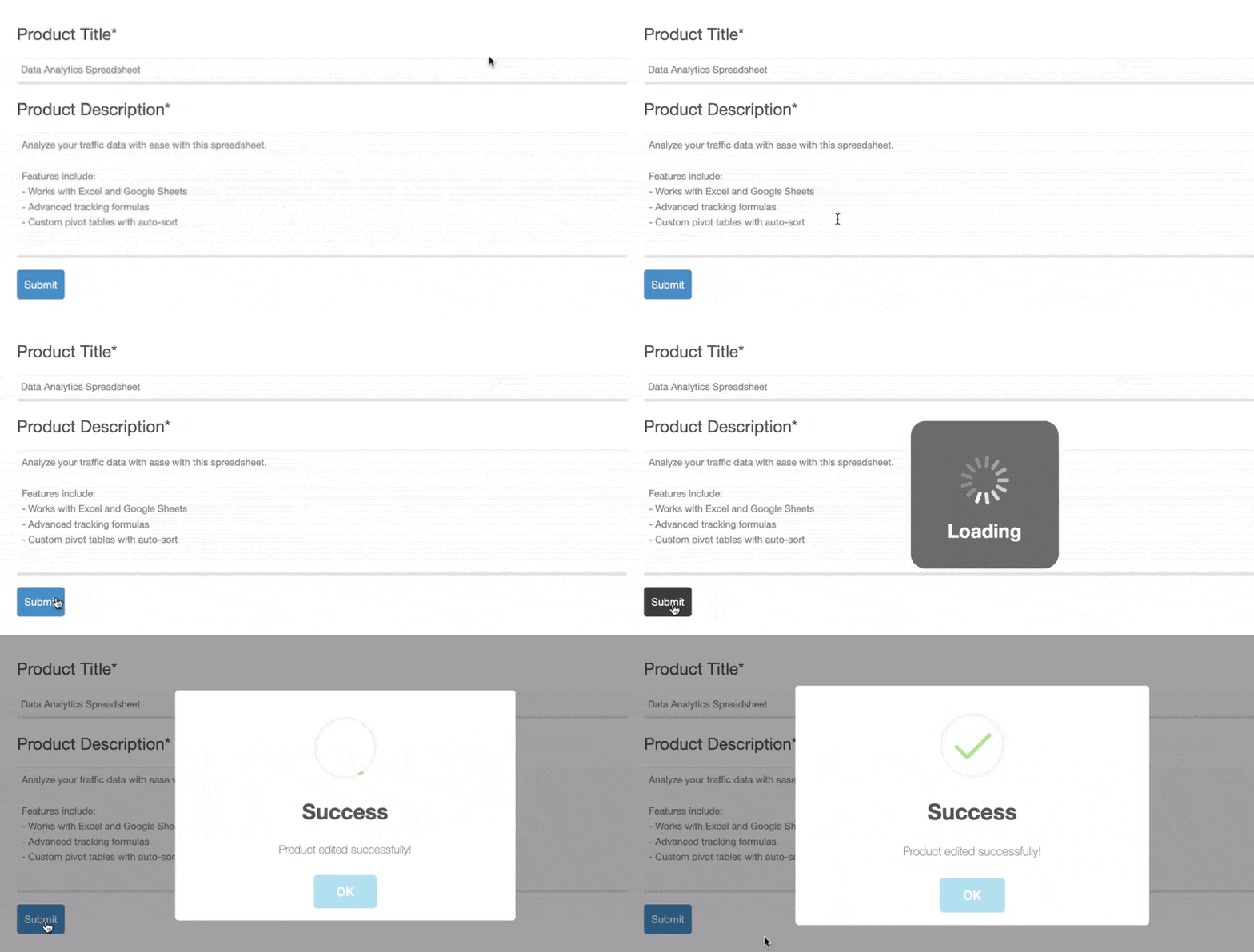
EDD also includes a built-in vendor-to-customer messaging system. Vendors can handle support conversations without your involvement and without exchanging personal contact information.
⚙️ Learn more about Frontend Submissions settings.
Step 6: Customize and Launch
A few final steps before going live:
Choose a theme. Most modern WordPress themes work with EDD. Look for one that supports a clean product grid layout and has a compatible checkout design.
Customize vendor emails. Go to Downloads » Emails » Frontend Submissions to edit the automated messages vendors and customers receive: commission notifications, sale alerts, and payout confirmations.
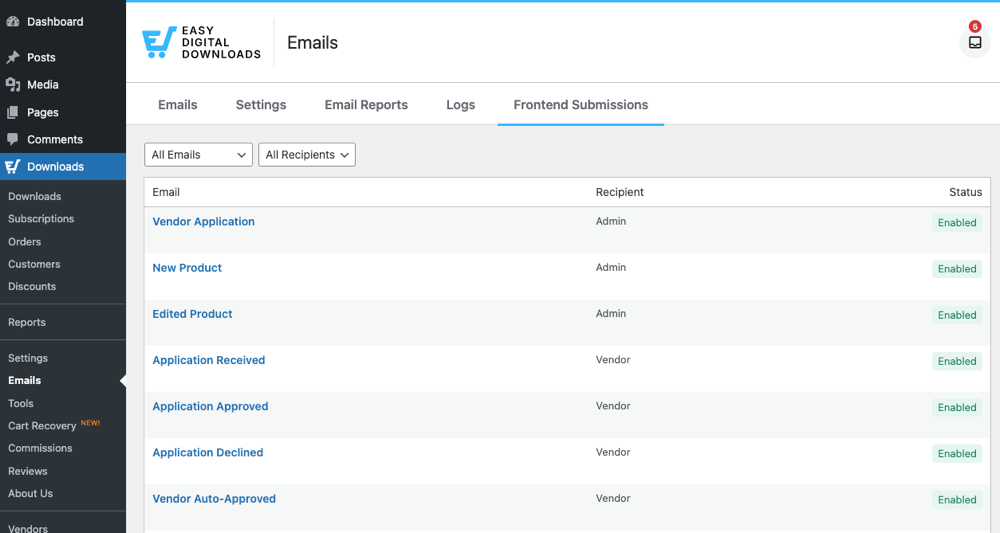
Click on the email template you want to customize. You’ll be able to edit the email subject, heading, and body content.
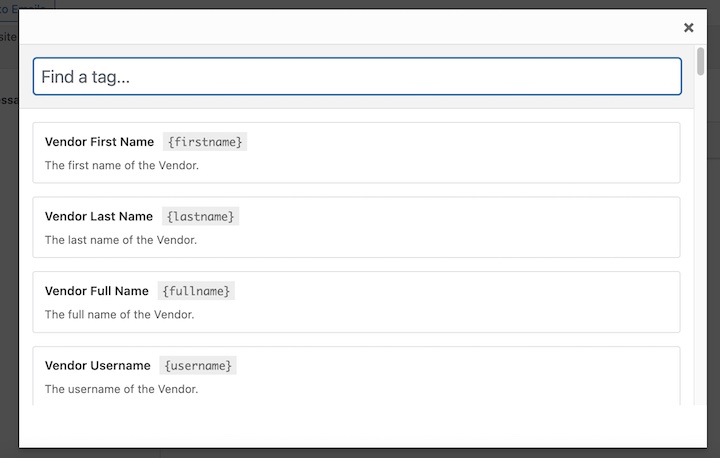
FES uses template email smart tags that allow you to dynamically insert information into the emails, such as vendor names, product titles, and application statuses.
Run a test. Register a test vendor account, submit a product, and complete a test purchase from the buyer side. Confirm that the commission is tracked correctly, the download is delivered, and both the vendor and buyer receive the right emails.
When everything checks out, disable test mode and go live.
How to Attract Your First Vendors
An empty marketplace doesn’t attract buyers, and buyers are what attract vendors. Break this cycle before you launch.
Start with direct outreach. Recruit 5–10 vendors personally before you open public applications. Find existing sellers in your niche and pitch the ownership angle: no platform fees, more control, a direct relationship with their customers.
Offer an early-vendor incentive. A reduced commission rate for the first six months gives sellers a concrete reason to move early. You can set per-vendor commission rates in EDD, so this is easy to manage.
Be specific about your niche. A focused marketplace with 10 great vendors in one category outperforms a broad marketplace with 100 average sellers. Niche specificity also makes it easier to market to buyers.
Use your existing audience. If you already have an email list, blog readers, or social following, they’re your best first source of both vendors and buyers.
Set clear vendor guidelines before you open applications: product quality standards, acceptable file types, response time expectations. The best vendors want to know they’re joining a well-run platform.
FAQs on Creating a Digital Marketplace in WordPress
Let’s wrap up with some frequently asked questions related to starting a digital product marketplace with WordPress.
What’s the difference between a single-vendor store and a digital marketplace?
A single-vendor store has one seller (you) listing and selling products. A digital marketplace is a platform where multiple independent vendors list and sell products. As the marketplace owner, you earn a commission on each sale instead of (or in addition to) selling your own products.
Do I need WooCommerce to build a digital marketplace on WordPress?
No. WooCommerce is designed for physical and mixed-product stores and adds complexity you don’t need for a digital marketplace. Easy Digital Downloads is purpose-built for digital products and includes multi-vendor support, commission tracking, and license key management in one platform.
How much does it cost to build a WordPress digital marketplace?
Most WordPress digital marketplaces cost $365–$565 per year to run, including domain, hosting, and the EDD Professional Pass ($299.50/yr). You’ll also pay standard payment processor fees with no additional platform fee from EDD.
How do vendor commissions work in Easy Digital Downloads?
EDD’s Commissions feature automatically tracks each vendor’s earnings on every sale. You set a global commission rate or override it per vendor. When a refund is issued, EDD adjusts the commission total automatically. You can pay out vendors in bulk via PayPal or export commission data for your own records.
Can I control which products vendors publish on my marketplace?
Yes. EDD gives you full product moderation controls. You can require admin review and approval before any vendor product goes live, or allow vendors to publish directly. You can also set granular permissions for what each vendor can edit, view, and access on their dashboard.
What types of digital products can vendors sell on my marketplace?
Vendors can sell any type of digital file: eBooks, PDFs, design templates, fonts, music, photography, software, video courses, WordPress themes and plugins, and more. For software vendors, EDD’s Software Licensing feature adds automated license key generation and renewal.
How do I handle refunds when a vendor makes a sale?
EDD processes refunds from your admin dashboard. When a refund is issued, the Commissions feature automatically adjusts the vendor’s commission balance, so you’re never paying out earnings on a refunded order. Vendors can also handle refund requests directly from their dashboard, depending on the permissions you set.
Build a Digital Product Marketplace You Actually Own
Third-party marketplaces take a cut of every sale, change their terms without notice, and can shut down your store at any time. With WordPress and Easy Digital Downloads, you own the platform, the customer relationships, and the revenue.
No marketplace tax. No platform risk. No rules you didn’t write.
EDD gives you the vendor tools, commission automation, and payment infrastructure to run a professional digital marketplace, and it’s trusted by 50,000+ businesses worldwide.
Ready to launch your digital marketplace journey? Learn more about building a digital marketplace with EDD or get started with a pass today:
👉 Checkout our ThemeSelection success story to see just how powerful EDD can be for starting an independent digital marketplace!
📣 P.S. Be sure to subscribe to our newsletter and follow us on Facebook, Twitter/X, or LinkedIn for more WordPress resources!